
JBER 4Pack Acoustic Foam Corner Bass Traps
4.2Editor score
Compact design for small rooms
Lightweight and easy to install
Affordable entry-level acoustic solution
Finding the right acoustic treatment is essential for any serious recording environment. Bass traps specifically target low-frequency standing waves that muddy mixes and distort sound. Proper corner placement helps achieve a flatter frequency response and clearer monitoring conditions for professionals and hobbyists alike.
We evaluated ten highly rated bass trap products based on their design, density, fire safety ratings, and user feedback. Each option was analyzed for its ability to absorb low-end energy while fitting typical room corners. Our comparison covers various shapes, sizes, and installation methods to suit different budgets and spaces.
Each pick below highlights specific strengths such as thickness, expandability, and ease of mounting. While ratings reflect current customer satisfaction, individual results may vary depending on room dimensions and construction. Always verify current availability and shipping details before purchasing to ensure you get the best value for your setup.
4.2Editor score

4.5Editor score

4.4Editor score
As an Amazon Associate we earn from qualifying purchases.
The following table presents a side-by-side overview of all ten selected bass trap products. Compare key specifications including dimensions, material type, and package quantity to determine which fits your specific room treatment needs and budget constraints.




This TroyStudio pack offers a solid balance of thickness and affordability for home studio owners. With twelve panels measuring four by four by twelve inches, you have enough material to treat multiple corners effectively. The high density foam construction ensures that it performs better than standard thin wall panels when it comes to absorbing problematic low frequencies.
We may earn a commission when you buy through this link, at no additional cost to you.
The standout feature is the extra thickness combined with high density polyurethane material. This combination makes it particularly effective at attenuating low pitched sounds that often cause muffled bass in untreated rooms. Users report clearer monitoring conditions after installation, which is critical for accurate mixing decisions. The CA117 flame retardant certification also adds a layer of safety for enclosed spaces.
While the panels are lightweight and easy to handle, you will need to purchase mounting adhesive separately. Some users find the installation process slightly more involved than self adhesive options. However, the trade-off is worth it for the structural integrity and long-term durability of the foam once properly secured to the wall corners.
If you are looking for a reliable and cost-effective solution to improve your room acoustics, this pack is an excellent choice. It is suitable for musicians, podcasters, and voice over artists who need better bass control without breaking the bank. We recommend pairing it with reflection point panels for a complete acoustic treatment system.
The extra thickness and density allow these traps to absorb more low-end energy than standard foam, leading to flatter frequency response in your monitoring position.
Made from high density polyurethane that meets CA117 standards, these traps are safe for home use and built to last without degrading over time.
We may earn a commission when you buy through this link, at no additional cost to you.
This eight pack provides substantial coverage with each trap measuring eight by eight by twelve inches. The deep dimensions allow for significant surface area contact with corner walls, which is essential for trapping low frequency standing waves. The high density foam is designed to be durable while still being easy to cut if needed for custom fits.
We may earn a commission when you buy through this link, at no additional cost to you.
The fire proof certification gives users confidence when installing these panels in residential spaces or shared studios. Many reviewers note that the foam arrives compressed to save on shipping costs. It is important to allow the traps to sit in a ventilated area for at least twenty four to forty eight hours to expand to their full shape before installation.
The compression shipping method can be a minor inconvenience as you must wait for the product to return to normal shape. Additionally, you will need to purchase double sided tape or spray adhesive separately since they are not included in the box. These are manageable steps that do not detract from the overall value of the product.
Ideal for home theaters and recording studios that need robust corner treatment, this option balances price and performance well. The large size means you need fewer units to cover a standard room compared to smaller panels. We recommend this for users who want deep absorption without spending a premium price.
With eight by eight inch face dimensions, these traps cover more wall area than smaller options, making them efficient for treating large room corners.
Passed CA117 testing standards, these foam traps meet safety requirements for fire retardancy, ensuring a safer environment for your studio equipment.
We may earn a commission when you buy through this link, at no additional cost to you.
These pyramid shaped traps are purpose-built for the three-surface junction where two walls meet the ceiling. This specific design addresses a common low-frequency buildup point that flat panels often miss. Each unit is sixteen point five inches on the face with a deep open-cell polyurethane foam core to maximize absorption efficiency.
We may earn a commission when you buy through this link, at no additional cost to you.
The depth of these traps provides substantially more porous treatment than standard acoustic wall panels. This extra thickness helps reduce boomy and muddy corner buildup, making bass notes and kick drums easier to evaluate during critical listening sessions. By treating ceiling corners, you preserve vertical wall corners for other stacking options or aesthetic designs.
While effective, the larger size means you need to consider how these fit into your room layout visually. The four pack allows you to treat up to four ceiling corners simultaneously which is great for symmetrical rooms. However, larger studios might require additional packs to ensure complete coverage of all ceiling intersection points.
This product is an excellent addition to a complete room treatment system. Pairing these with vertical delta traps or foam panels at reflection points creates a balanced acoustic environment. We recommend it for home theater and studio users who want targeted ceiling corner treatment without cluttering the vertical walls.
The triangular design fits perfectly into ceiling corners where sound energy often collects, addressing a hard-to-treat area effectively.
Deep open-cell foam construction allows for better absorption of low frequencies than flat panels, reducing muddy sounds significantly.
We may earn a commission when you buy through this link, at no additional cost to you.
This twenty four pack is essentially a double batch of the highly rated twelve pack option. It offers the same dense thick studio bass foam construction but in a larger quantity. For users with large recording spaces or multiple rooms to treat, this provides excellent value and ensures you have enough material for comprehensive coverage without buying multiple separate orders.
We may earn a commission when you buy through this link, at no additional cost to you.
The panels maintain the same dimensions of four by four by twelve inches, offering consistent performance across the entire set. The high density polyurethane material ensures they are effective at attenuating low pitched sounds. Many users appreciate having the extra supply to cover additional corners or to have backups for future renovations or repairs.
One consideration is the sheer volume of installation required. Twenty four panels mean more time spent measuring, cutting, and adhering them to walls. However, for professional studios or dedicated home studios where acoustic performance is paramount, the extra effort pays off in clearer audio quality and reduced reverberation throughout the space.
We recommend this pack for users who are outfitting a dedicated studio space from scratch. The quantity allows you to treat all vertical corners and potentially some ceiling junctions. It is a practical choice for those who prioritize comprehensive acoustic treatment over minimal setup time.
Buying in a larger pack often reduces the cost per unit, making it a budget-friendly way to treat multiple corners in a big room.
Same foam density and fire rating as the smaller pack, ensuring reliable performance across all treated areas in your room.
We may earn a commission when you buy through this link, at no additional cost to you.
The Delta Bass Traps are specifically designed for dihedral junctions where two walls meet. Their flat top and bottom surfaces allow multiple units to stack into a continuous vertical column. This modular approach lets you scale treatment from partial height to full floor-to-ceiling coverage based on your specific acoustic needs.
We may earn a commission when you buy through this link, at no additional cost to you.
Each unit measures sixteen point five inches wide with substantial porous depth that exceeds standard acoustic wall panels. This depth adds significant mass and absorption capacity to the corner where low-frequency buildup commonly collects. By stacking these traps, you create a thick barrier that effectively reduces boomy corner buildup for cleaner monitoring.
While effective, stacking requires some planning to ensure the units align properly. You may need more packs if you want full floor-to-ceiling treatment since each pack only contains two units. However, the flexibility to customize the height of your treatment makes this a versatile option for various room sizes and layouts.
We recommend pairing these with ceiling corner traps for a complete system. Using one pair for targeted wall corners or combining multiple packs offers flexibility that fixed size traps cannot match. This is ideal for studios that want precise control over their corner treatment configuration.
The flat design allows you to stack traps vertically to customize the height of your corner treatment for maximum effect.
Focused on where two walls meet, these traps address the most common area for low-frequency buildup in rectangular rooms.
We may earn a commission when you buy through this link, at no additional cost to you.
This sixteen pack provides a large quantity of column acoustic wedge foam to finish off your wall panels. The column design is often used as a corner treatment to blend with standard wedge panels on flat walls. It helps reduce reverb and flutter echoes in smaller to medium size rooms making it a versatile option for various studios.
We may earn a commission when you buy through this link, at no additional cost to you.
The panels are fire retardant and effective for spot treating sound on walls in your studio or office. Users find them useful for reducing unwanted noise and acoustic reflections that can muddy recordings. While they may not be as thick as super chunk traps, they offer a clean aesthetic while adding necessary absorption to corners.
These units come compressed in a vacuum package. You must open the package and let them sit in a ventilated place for twenty four to forty eight hours. Alternatively you can rinse them with water and dry them using a hair dryer or sun exposure to speed up the expansion process before mounting them on your walls.
We suggest this for users who are doing a full room treatment with matching wall panels. The quantity ensures you can finish all corners while maintaining a consistent look. It is a practical choice for home offices and smaller studios where a uniform aesthetic is desired alongside acoustic improvements.
The column shape helps finish off corner treatments seamlessly with wall panels, creating a unified professional look in your studio.
Effective at reducing reverb and flutter echoes, these traps help improve clarity in recording and listening environments.
We may earn a commission when you buy through this link, at no additional cost to you.
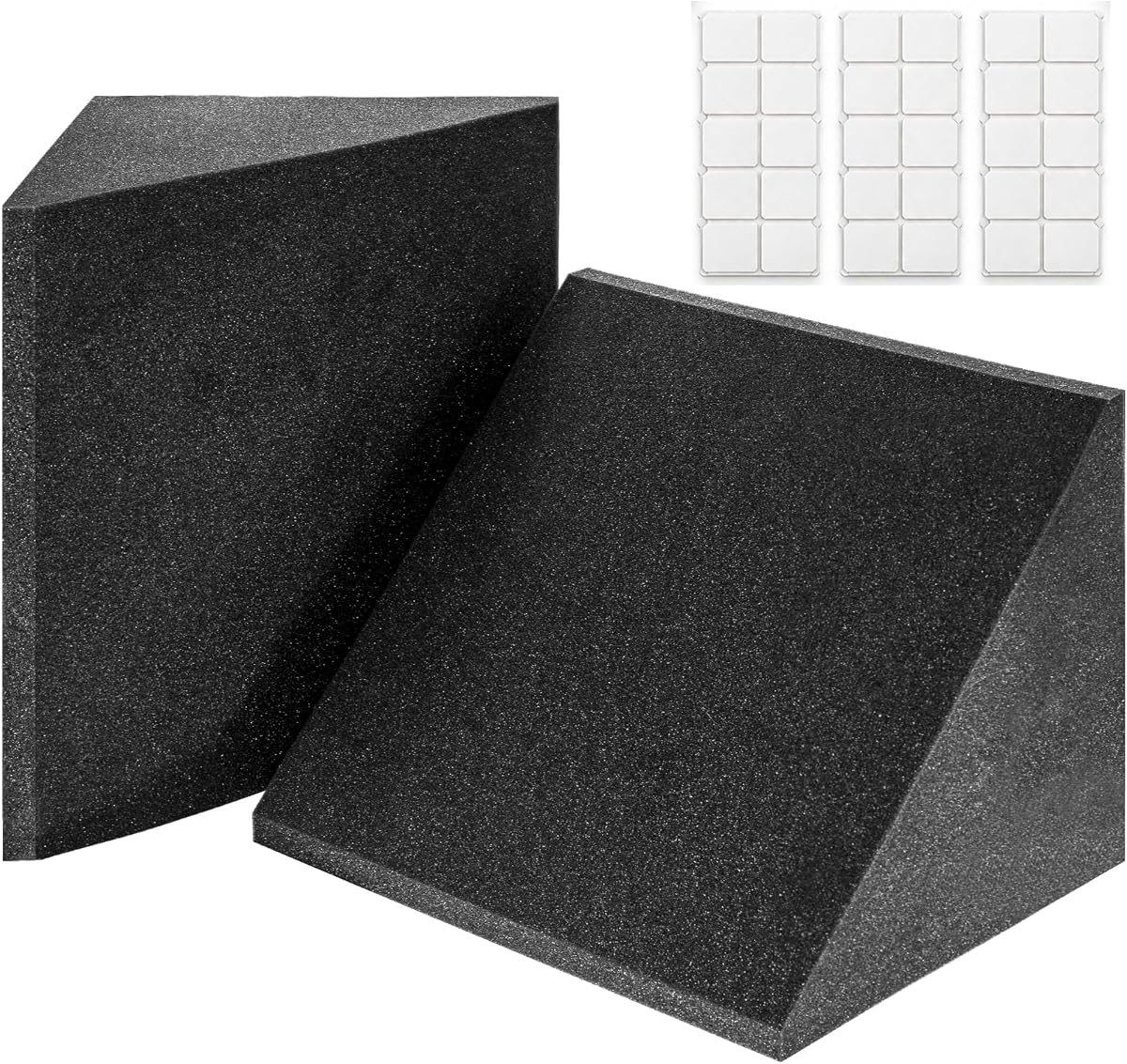
This four pack features triangular acoustic foam traps designed specifically for room corners where sound energy collects. Each unit is sixteen point five inches wide and twelve inches deep, providing a substantial profile to manage unwanted bass reflections. The inclusion of double-sided adhesive dots makes setup quick and simple without extra tools.
We may earn a commission when you buy through this link, at no additional cost to you.
The lightweight design ensures that installation is easy even for those with limited DIY experience. By helping reduce excessive bass buildup and unwanted reflections, these traps make vocals and speaker playback easier to hear during mixing. Users report a cleaner sound that enhances focus and relaxation in treated spaces like home cinemas or podcast rooms.
While the included adhesive is convenient, it may not be as strong as spray adhesive for long-term holding on textured surfaces. You might need to reinforce them later if the panels feel loose. However, for most smooth wall corners, the pre-applied dots are sufficient for a secure fit without damaging paint upon removal.
We recommend this for users who want a hassle-free setup with reliable performance. The triangular shape is aesthetically pleasing and effective for corner treatment. It is an excellent choice for home theaters and rehearsal spaces where ease of installation is a priority.
Double-sided adhesive dots are included in the package, saving you the need to buy extra mounting accessories for setup.
The triangular design fits perfectly into corners to maximize surface area and absorption efficiency for low frequency sounds.
We may earn a commission when you buy through this link, at no additional cost to you.
These four pack acoustic foam corner bass traps are designed to absorb low and mid frequency sound. The professional design aims to target low frequencies while transforming the interior design of your studio. They are lightweight and blend seamlessly with most spaces, affixing securely to ceilings or walls with various methods like glue or nails.
We may earn a commission when you buy through this link, at no additional cost to you.
Users appreciate the high-end style and acoustics at a fraction of the cost. These panels help you concentrate better by reducing unwanted noise and improving sound quality. They are perfect for music studios video bloggers and home cinemas where a clean look is desired without compromising on acoustic performance.
Because they are lightweight, you may need to ensure proper adhesion to prevent them from falling. The square edges add a sharp look that avoids a muddy appearance often associated with rough foam. While they are smaller than chunk traps, they are effective for basic corner treatment in smaller rooms.
We recommend this for entry-level studios or content creators who want a neat acoustic solution. The great value proposition makes it accessible for beginners. Pair with wall panels for a comprehensive treatment strategy that looks professional on a budget.
Sharp square edges and seamless blending create a world-class look in your studio without the clutter of standard foam.
Designed to absorb low and mid frequencies, these traps help flatten the room response for better audio clarity.
We may earn a commission when you buy through this link, at no additional cost to you.
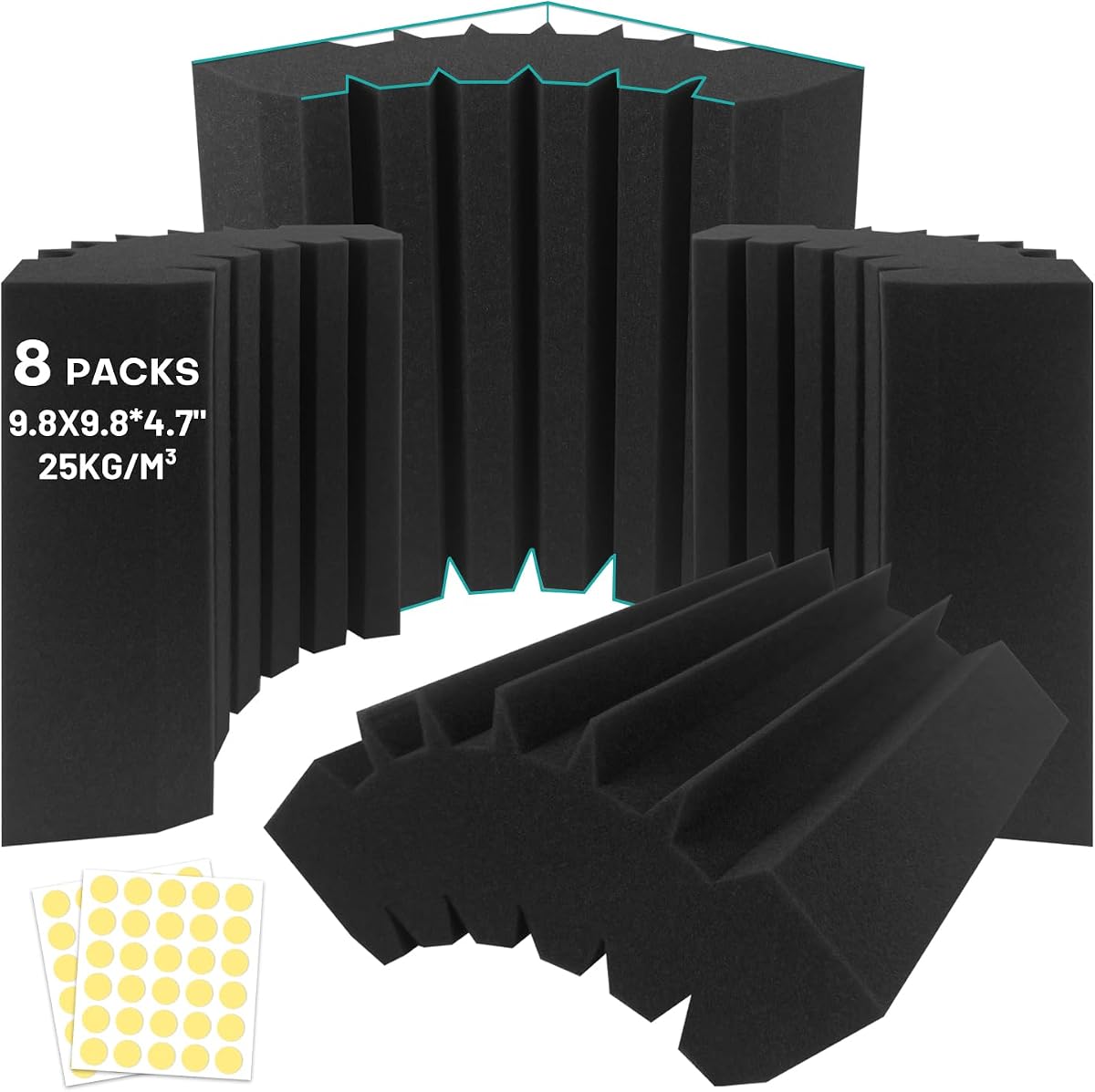
This eight pack features a wider face of nearly ten inches but a shallower depth of point seven inches. The design is ideal for corners where full depth might not fit or where a flatter profile is preferred. The high density acoustic foam complies with CA117 testing standards for fire retardant performance ensuring safety in various settings.
We may earn a commission when you buy through this link, at no additional cost to you.
These traps are effective at improving low-frequency response and eliminating standing waves in home studios and offices. Users find them suitable for a wide range of applications including KTV and vocal booths. The compressed shipping method ensures they arrive safely but requires aeration before use to expand fully.
The reduced depth might limit absorption compared to thicker options, which could explain the slightly lower rating. However, for shallow corners or secondary treatment zones, they offer good value. The fire retardant properties make them a safe choice for public spaces or shared environments where safety codes are strict.
We suggest this for users with specific depth constraints in their room corners. While not the deepest option available, the wide face provides solid coverage for targeted treatment. It is a practical choice for smaller spaces where space-saving profiles are necessary.
The thinner depth allows these traps to fit in corners where space is limited, providing absorption without protruding too much.
With a nearly ten inch wide face, these traps cover more horizontal space, helping to treat the immediate corner area effectively.
We may earn a commission when you buy through this link, at no additional cost to you.
This two pack features exceptionally large dimensions of nineteen point five by sixteen point five by twelve inches. The high-quality acoustic foam is designed to absorb low-frequency sounds and eliminate reverberations effectively. Users report significant improvement in audio recording clarity and depth when these large traps are placed in room corners.
We may earn a commission when you buy through this link, at no additional cost to you.
The super chunk design provides massive surface area and volume for sound absorption. While the size is substantial, the foam remains lightweight and compact enough to move around easily. This makes it an excellent addition to a full acoustic setup alongside other panels to create an optimized listening environment.
Because these are large units, they take up more visual space than standard traps. They are best suited for larger rooms where their size does not interfere with movement. However, the acoustic benefit of such large density is hard to match in budget options, making them a premium choice for serious studios.
We recommend this for professionals who need maximum low-end control in their critical listening spaces. The ease of use and movement allow you to experiment with placement for best results. Pairing with reflection point panels creates a truly professional sound treatment setup.
The large dimensions provide a massive volume of foam to absorb deep bass frequencies that smaller traps miss completely.
Designed to remove unwanted reverberations, these traps significantly improve recording clarity for professional production work.
We may earn a commission when you buy through this link, at no additional cost to you.
Selecting the right bass traps involves considering several key factors to ensure they effectively treat your specific room issues. This guide breaks down the essential elements to look for before making your purchase.
The physical dimensions of the trap determine how well it can absorb low frequencies. Generally, thicker traps are more effective at absorbing lower frequencies because they offer more porous depth for sound waves to travel into and dissipate. For deep bass control, look for traps that are at least four inches thick, ideally closer to twelve inches or more for professional results. Consider the available corner space before buying oversized units that might obstruct movement.
Choose a thickness that matches your specific low-frequency needs and the physical space you have available in your corners.
The density of the foam plays a critical role in sound absorption efficiency. High density polyurethane foam is typically preferred for bass traps as it provides better resistance and absorption of sound energy compared to low density alternatives. This ensures the traps last longer and maintain their shape over time without sagging or degrading. Check for material specifications to ensure you are getting a quality product that will not compress permanently under its own weight.
Opt for high density materials to ensure durable and effective sound absorption that lasts for years of use.
Safety is a major concern when installing foam products in enclosed spaces like studios or home theaters. Look for traps that meet fire retardant standards such as CA117. This certification ensures that the foam has been tested and will not contribute to fire hazards unexpectedly. It provides peace of mind especially if you are using these traps in residential areas or spaces with electrical equipment.
Always verify that the product meets CA117 or equivalent fire safety standards for a safe installation environment.
Bass traps come in various shapes including flat blocks, pyramids, and triangular prisms. The shape dictates where they can be installed effectively. Triangular prisms are designed to fit into corner junctions where sound waves accumulate. Flat blocks might be used for walls where corners are not accessible. Choose a shape that aligns with the specific geometry of your room corners for maximum acoustic benefit.
Select a shape like triangular or block that fits snugly into the corners of your room for optimal placement.
The number of traps included in a pack affects how many corners you can treat at once. Rooms typically have four corners, so a four pack is a minimum for full vertical corner treatment. However, larger rooms might require more coverage or ceiling treatment as well. Buying in larger bulk packs can often save money per unit but ensure you have enough to cover all necessary areas effectively.
Ensure the pack size covers all room corners and any additional areas you plan to treat for complete acoustic improvement.
Consider how the traps are mounted to avoid unnecessary hassle. Some products come with adhesive dots or strips while others require you to buy spray adhesive or tape separately. This affects the total cost and preparation time. Lightweight traps are easier to install but might need more secure bonding to stay on walls. Review installation instructions to ensure they match your technical skills and tools available.
Choose a product with installation requirements that match your tools and skill level to ensure secure mounting.
The size of your room determines the scale of treatment needed. Small podcast booths might only need thin traps while large home studios benefit from deep super chunk designs. Also consider if the room is a home theater, a recording studio, or a multi-purpose office. Different uses demand different acoustic qualities so select traps that suit the primary activity in that space.
Match the trap size and density to your room size and primary usage for the best acoustic outcome.
Bass traps vary widely in price from budget options to premium deep foam solutions. While budget traps can improve sound, premium options often offer better absorption and longevity. Balance your budget with your acoustic needs. Sometimes buying a larger pack of moderate traps is more cost-effective than buying fewer premium ones. Always calculate the cost per unit to get the best value for your money.
Balance your budget with performance needs to find a product that offers the best long-term value for your setup.
Before installation, unpack the bass traps and allow them to expand to their normal shape if they arrive compressed. Place them in a ventilated area for at least twenty-four to forty-eight hours to ensure full expansion. This step is crucial for maintaining the intended dimensions and performance of the foam.
Mount the traps securely in the corners where walls meet either vertically or at ceiling intersections. Use appropriate adhesive or mounting hardware to ensure they stay in place. Avoid placing them near direct heat sources or humid areas as this can degrade the foam over time.
Regularly inspect your traps for any signs of wear or dust accumulation. Gently vacuum the surface if needed to maintain hygiene and acoustic performance. Proper care ensures that your acoustic treatment remains effective and visually pleasing for years.
Yes, bass traps are essential for reducing low-frequency standing waves that cause muddy sound. They improve clarity and ensure accurate monitoring which is vital for recording and mixing. Proper corner treatment helps achieve a flatter frequency response in your room.
The best places are where two walls meet vertically and where walls meet the ceiling. These points accumulate low-frequency energy. Ensure you cover all four corners for the most effective treatment. Additional placement might be needed based on room size.
Typically a minimum of four is needed to cover the four vertical corners. For larger rooms or better control, you may need more packs to include ceiling corners. Buying bulk packs often provides better value for comprehensive coverage.
Many premium traps are fire retardant and meet CA117 safety standards. Always check the product specifications for fire ratings before installation. This ensures safety for your equipment and home environment.
Yes, most foam traps can be cut with a utility knife or serrated knife. This allows you to adjust height or width for irregular spaces. Be careful to maintain the density and structure when cutting for best results.
Corner traps are thicker and designed to absorb low frequencies which accumulate in corners. Wall panels are usually thinner and target mid to high frequencies. Using both together creates a balanced acoustic environment.
Choosing the right bass traps depends on your room size budget and acoustic goals. Our top picks offer a range of options from the cost-effective TroyStudio twelve pack to the premium super chunk designs for deep absorption. Each option brings unique benefits suitable for different studio configurations.
Prioritize thickness and material density to ensure effective low-frequency absorption. Safety certifications and ease of installation also play key roles in your decision. Whether you choose a budget pack or a premium system, proper placement is key to realizing the acoustic benefits.
Remember that product availability and prices may change over time. Always check the current details on the product pages before purchasing to ensure you get the best value. Investing in quality acoustic treatment is a step toward professional sound quality and better recording results.