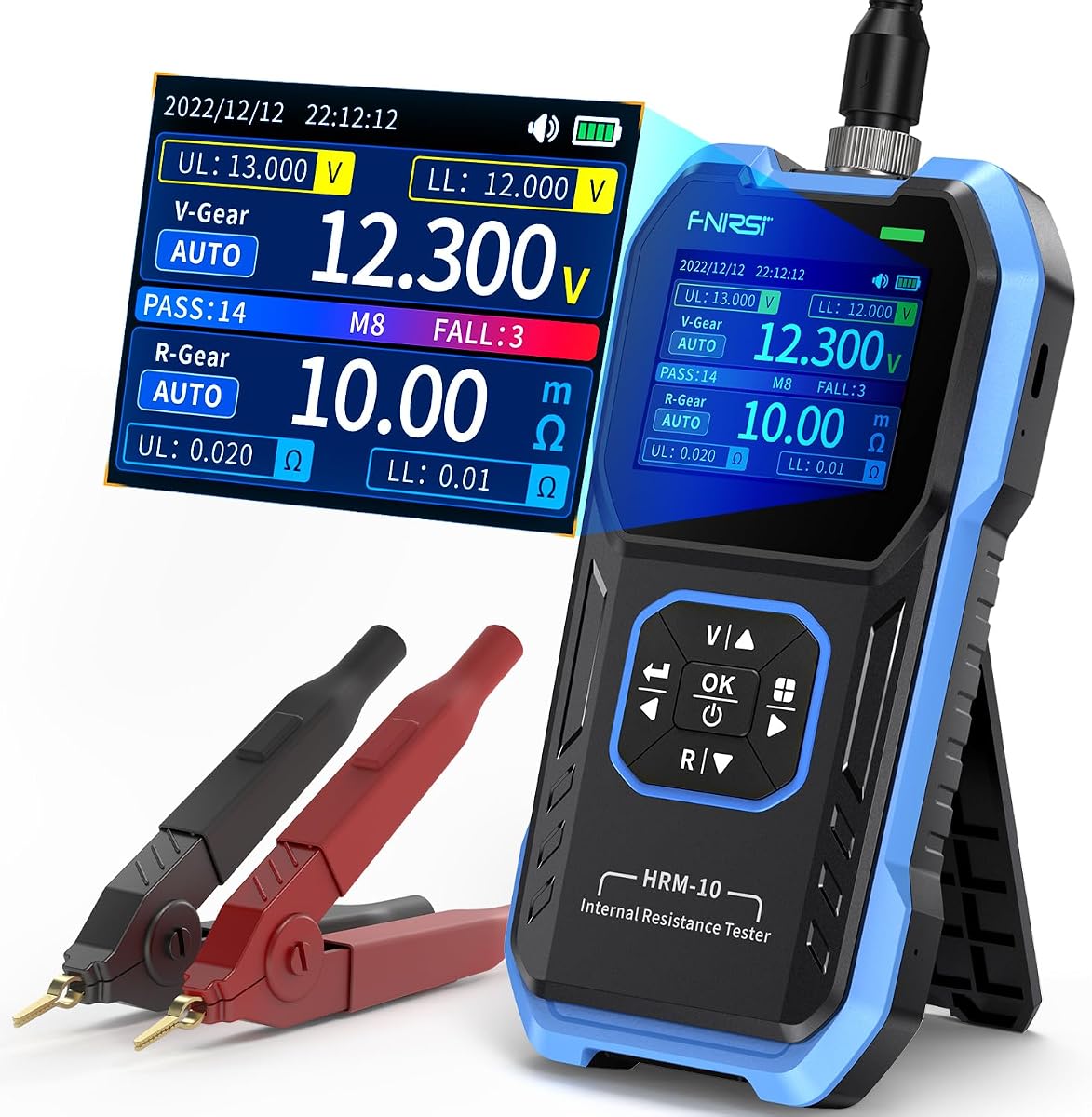
FNIRSI HRM-10 Precision Voltage Internal Resistance Battery Tester
4.4Editor score
TFT HD Color Display
Kelvin Four-Wire Connection
Up to 100V Range
This guide compares the best Battery Internal Resistance Tester models for accurate voltage and health diagnostics across automotive, lithium, and household
Finding a reliable Battery Internal Resistance Tester is essential for anyone who needs to assess battery health accurately. These devices measure internal resistance to predict failure before it happens, saving time and money on replacements.
We compared ten top-rated models based on accuracy, features, ease of use, and price. Our selection includes tools for automotive professionals, DIY hobbyists, and researchers who need precise measurements for various battery chemistries.
Each pick highlights key strengths and weaknesses to help you choose the right tool. Prices and availability change frequently, so check the current listings before purchasing to ensure you get the best value for your needs.
4.4Editor score

4.5Editor score

2.2Editor score
The following table provides a side-by-side comparison of all ten products to help you quickly identify the model that best fits your specific testing requirements and budget constraints.




The ZOYI ZT-XR1 stands out as a versatile tool combining a professional multimeter with dedicated battery internal resistance testing capabilities. With a high 25000 count display and True RMS accuracy, it offers precision that rivals much more expensive benchtop equipment.
We may earn a commission when you buy through this link, at no additional cost to you.
Its 4-wire Kelvin sensing ensures highly accurate resistance measurements by eliminating lead wire interference. The device supports a wide range of battery types, from lithium cells to lead-acid car batteries, making it suitable for both automotive and electronics repair work.
While the feature set is extensive, it remains user-friendly with intuitive menu navigation and bilingual support. The built-in rechargeable battery provides up to ten hours of continuous use, reducing dependency on disposable cells during long testing sessions.
This unit is ideal for technicians and serious hobbyists who need a single device for multiple measurement tasks. The ability to record data and analyze trends adds significant value for those monitoring battery health over time.
Beyond resistance testing, the ZT-XR1 measures voltage, capacitance, frequency, and temperature, replacing the need for separate tools in your toolkit.
The dedicated aviation plug test port ensures stable contact and eliminates external resistance, providing reliable readings even for low resistance values.
We may earn a commission when you buy through this link, at no additional cost to you.
The FNIRSI HRM-10 delivers professional-grade testing at an accessible price point. It automatically measures internal resistance and voltage simultaneously, providing immediate insights into battery quality and potential degradation without complex setup steps.
We may earn a commission when you buy through this link, at no additional cost to you.
Its TFT HD color display presents results clearly, making it easy to read in various lighting conditions. The device uses a customized Kelvin four-wire connection to ensure accurate readings by minimizing the impact of test lead resistance.
Users can manually adjust voltage and resistance ranges or rely on automatic settings for quick checks. The ability to view eight sets of historical data helps in comparing battery performance batch by batch for efficient sorting.
This tester is perfect for those needing reliable diagnostics without breaking the bank. Whether for household batteries or automotive applications, it provides the core features necessary for effective health assessment.
Measuring resistance and voltage at the same time speeds up diagnostics and ensures both metrics are captured under identical test conditions.
The device supports saving historical records, allowing users to track changes over time and export data for further analysis on a PC.
We may earn a commission when you buy through this link, at no additional cost to you.
This tester offers a robust solution for universal battery analysis with upgraded Kelvin four-terminal sensing. This technology allows for accurate measurement of low resistance values by eliminating lead wire resistance, ensuring reliable results for critical applications.
We may earn a commission when you buy through this link, at no additional cost to you.
The device supports a wide range of battery types including lead-acid, lithium, and button cells. It features a data preset function that helps users quickly identify batteries that do not meet specific quality standards during batch testing.
Results can be saved automatically and transferred to a computer for detailed analysis using EXCEL. This connectivity is valuable for workshops or labs that need to maintain records of battery performance over time.
Ideal for automotive technicians and hobbyists, this meter combines versatility with precision. Its design prioritizes user experience with a colorful display and straightforward operation for efficient battery diagnostics.
This method separates current and voltage measurement leads to eliminate voltage drop errors caused by test leads themselves.
You can preset specific voltage and resistance thresholds to instantly flag batteries that fall outside acceptable ranges.
We may earn a commission when you buy through this link, at no additional cost to you.
This versatile tester covers a broad spectrum of common household batteries, making it a go-to tool for home maintenance. It fully supports AA, AAA, C, D, 9V, and many button cells, ensuring you can check almost any device in your home.
We may earn a commission when you buy through this link, at no additional cost to you.
Using a rotary dial to select the voltage and test leads to connect, it provides clear readings on a large LCD screen. The capability to detect battery capacity percentage helps you decide if a rechargeable battery still holds enough charge for use.
The design is portable and easy to use without the need to insert batteries into fixed bays. This flexibility allows for testing odd-shaped or hard-to-reach batteries that might not fit in traditional testers.
For families or general DIYers, this tester offers convenience and reliability. It helps prevent unexpected device failures by alerting you when batteries need replacement before they completely die.
Beyond simple voltage, this tester estimates the remaining capacity percentage to give a truer picture of battery life.
Supporting 11 different types ensures you won't need multiple devices for your various flashlights, toys, and cameras.
We may earn a commission when you buy through this link, at no additional cost to you.
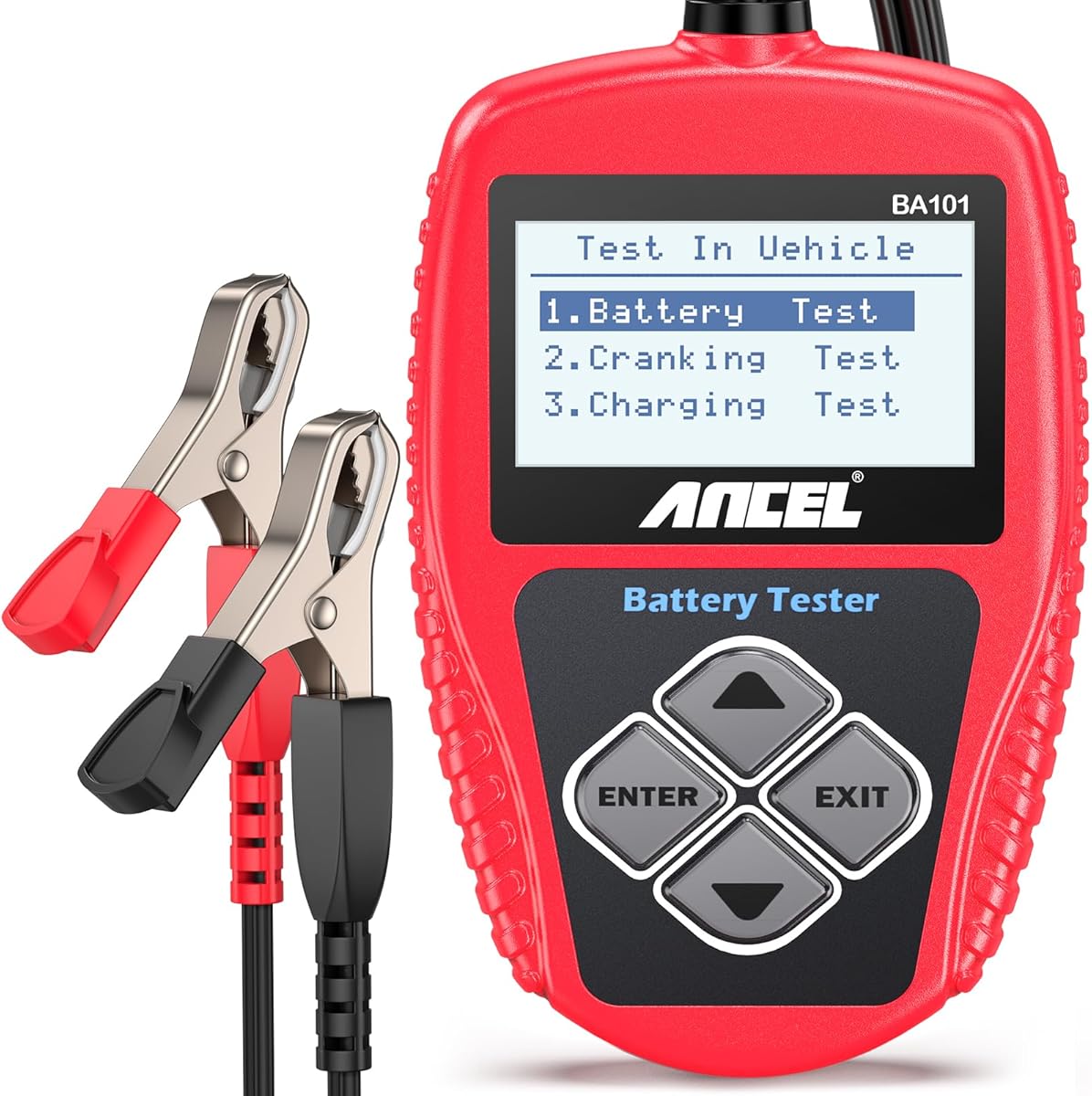
Designed specifically for 12V automotive batteries, this tester offers detailed diagnostics for vehicles, trucks, and marine equipment. It supports major global standards like JIS, EN, DIN, and SAE, ensuring accurate testing across different battery brands.
We may earn a commission when you buy through this link, at no additional cost to you.
The device measures State of Health (SOH), State of Charge (SOC), voltage, current, and CCA load capacity. It also performs charging and cranking system tests to ensure the entire electrical system is functioning properly.
Its classic design features an adjustable contrast screen for readability in bright sunlight or dark garages. Direct power from the vehicle battery means no internal batteries are needed, simplifying the setup process.
Ideal for auto mechanics and vehicle owners, this tool helps avoid unexpected breakdowns. The built-in safety protections and durability make it a reliable addition to any automotive toolkit.
Testing both charging and cranking systems gives a complete picture of vehicle electrical health beyond just the battery.
Compatibility with various international standards ensures accurate readings regardless of where the battery was manufactured.
We may earn a commission when you buy through this link, at no additional cost to you.
This model integrates a 25,000-count digital multimeter with a battery internal resistance tester for a compact all-in-one solution. It handles AC and DC voltage measurements alongside resistance tests for comprehensive electronic diagnostics.
We may earn a commission when you buy through this link, at no additional cost to you.
The device features a TFT color display with adjustable brightness and utilizes 4-wire Kelvin clips for accurate resistance readings. Users can manually adjust voltage and resistance ranges to suit specific testing needs.
Charging is convenient via a Type-C interface, aligning with modern power standards. The auto-shutdown timer and adjustable buzzer volume allow for customizable operation during extended testing sessions.
Suitable for field work or bench testing, this tool provides essential features in a portable unit. It is a practical choice for users who need both general multimeter functions and specific battery health checks.
The built-in DMM handles standard voltage and continuity checks, reducing the need to carry separate tools.
Type-C charging ensures compatibility with existing chargers and cables, simplifying power management in the field.
We may earn a commission when you buy through this link, at no additional cost to you.
The RC3563 is designed for laboratory and scientific research applications where precision is paramount. It uses a Kelvin four-wire test clamp to minimize contact resistance errors and ensure highly accurate measurement results.
We may earn a commission when you buy through this link, at no additional cost to you.
Intelligent control and a Kalman filter mathematical algorithm provide high efficiency and precision. It is suitable for testing lead, lithium, NiCd, and other battery types in production or maintenance environments.
Built with a 1000mAh lithium battery and 5V charging, it is convenient for field and bench work. It can also measure AC resistance of capacitors and resistors, adding versatility to its testing capabilities.
Ideal for research labs and battery manufacturers, this analyzer combines high precision with portability. Its lightweight design makes it easy to carry between workstations for efficient testing workflows.
This advanced algorithm helps filter out noise and improve the stability of the resistance readings.
Capable of measuring low resistance values accurately, which is critical for analyzing internal battery health.
We may earn a commission when you buy through this link, at no additional cost to you.
This tester features a true four-wire testing system that measures internal resistance and voltage simultaneously for precise diagnostics. Its large LCD screen displays real-time measurement results clearly, making it easy to read voltage and resistance values instantly.
We may earn a commission when you buy through this link, at no additional cost to you.
It is versatile for battery performance testing, screening, and configuration across multiple types. The portable design allows it to be used effectively in both field work and laboratory bench testing applications.
Comes with probes and clips to handle various connection types and battery configurations. Its reliability is reflected in its high user ratings, confirming its accuracy and ease of use.
For technicians and researchers needing a dependable tool for quick and accurate checks, this model is a strong choice. Its balance of portability and precision makes it suitable for diverse testing scenarios.
Seeing voltage and resistance instantly helps in quickly identifying defective batteries during high-volume screening.
Compact size allows you to use it at a workbench or transport it to remote sites without losing accuracy.
We may earn a commission when you buy through this link, at no additional cost to you.
This advanced analyzer offers high precision measurement with a resistance range starting from 1uΩ up to 200Ω and voltage up to ±100VDC. It measures both AC and DC resistance with automatic range switching for comprehensive analysis.
We may earn a commission when you buy through this link, at no additional cost to you.
Suitable for testing various battery chemistries including lithium, nickel, and lead-acid types. It features a fast test pace of 5 times per second which is efficient for batch analysis and quality control.
Equipped with LCR Kelvin 4-wire clamp probes for accurate measurements and USB connectivity for computer integration. The bilingual interface and portable design make it accessible for professional laboratory and field testing.
Ideal for engineers and professionals who require ultra-precise readings for critical applications. Its high accuracy and broad measurement capabilities justify the investment for serious users.
Starting at micro-ohms allows detection of minute internal resistance changes that indicate early battery aging.
Five measurements per second speed up screening processes for large batches of battery packs.
We may earn a commission when you buy through this link, at no additional cost to you.
This accessory kit includes a Kelvin clamp suitable for measuring lead ends and electrode lugs securely. It supports a wide voltage range up to 99.999V and resistance up to 200 Ohm for versatile testing.
We may earn a commission when you buy through this link, at no additional cost to you.
The measuring range allows for accurate checks on lithium, lead-acid, and button batteries. The clamp design frees your hands to hold the battery steady during testing, improving safety and ease of use.
Type-C charging provides convenient and universal power options for the device. It is perfect for screening and configuration across multiple battery types in both professional and hobbyist settings.
For those needing a reliable tool with a clamp accessory for easy handling, this kit is an excellent choice. It combines performance with user-friendly features for efficient battery maintenance.
The clamp ensures stable contact on lead ends or lugs, reducing human error during measurement.
Type-C port allows you to charge using standard smartphone chargers, keeping you powered in any location.
We may earn a commission when you buy through this link, at no additional cost to you.
Selecting the right tester requires understanding your specific testing needs, battery types, and required accuracy levels.
Ensure the device supports the voltage and resistance range needed for your batteries. Most automotive units cover 0 to 100V and 0 to 200Ω, while specialized lab units may go lower.
Check the maximum voltage and resistance limits to avoid damaging the device or getting inaccurate readings on your specific battery types.
This method uses separate current and voltage leads to eliminate lead resistance errors. It is critical for accurate low resistance measurements often found in batteries.
Look for testers that explicitly mention Kelvin four-wire sensing to ensure high precision in your results.
Modern testers feature TFT color displays or large LCD screens with backlighting. These make it easier to read results in different lighting conditions.
Choose a display size and type that offers clear visibility during your testing environment.
Some testers can save historical data and export to a computer. This helps in tracking battery health trends over time.
If you need to document results for reporting or analysis, prioritize models with data logging features.
Consider if you will use the tester in a workshop or on-site. Compact and lightweight units are better for field work.
Check dimensions and weight to ensure the device fits easily in your toolkit or bag.
Most units run on internal rechargeable batteries or vehicle power. Rechargeable units offer flexibility for locations without a vehicle power source.
Verify the battery life and charging method to ensure you can work uninterrupted.
Different testers support different chemistries like lead-acid, lithium, NiCd, or household cells. Ensure the device covers the types you need to test.
Review the supported battery types list to avoid purchasing a device that cannot test your specific batteries.
Look for protection against reverse polarity, short circuits, and overvoltage. These features protect both the tester and the battery.
Choose models with built-in safety mechanisms to ensure safe testing practices.
To start, connect the test leads to the device according to the manual, ensuring correct polarity. Use the Kelvin clips if available to minimize contact resistance for accurate results.
Turn on the device and select the appropriate mode for your battery type. Place the leads firmly on the battery terminals and wait for the reading to stabilize before recording the value.
After testing, turn off the device and store it in a dry, clean place. Regularly check the leads for wear and calibrate the device if recommended to maintain long-term accuracy.
Battery internal resistance is the opposition to current flow within a battery. It increases as batteries age or degrade, reducing their ability to deliver power efficiently. Measuring it helps determine the true health of a battery beyond simple voltage readings.
If you only need voltage checks, a multimeter suffices. However, to detect aging batteries that show normal voltage but fail under load, a resistance tester is necessary. Many modern units combine both for convenience.
It uses two wires to pass current and two separate wires to measure voltage across the battery. This eliminates the voltage drop caused by test leads, ensuring the measured resistance is accurate to the battery only.
Yes, many testers support lithium chemistries like 18650 or LiFePO4. Always check the voltage limits and supported battery types before testing to avoid damaging the device or the battery.
For critical systems like cars or UPS, test every six months or during routine maintenance. For household batteries, test them when performance drops. Regular testing helps detect issues before they lead to failure.
Higher-end models often include better accuracy, data logging, rugged construction, and support for more battery types. If you need professional precision or advanced features, investing more may be worthwhile for long-term use.
Keep the display clean and store the device in a protective case. Check test leads for damage and replace them if needed to maintain accuracy. Avoid exposing the device to extreme temperatures or moisture.
Yes, using a proper tester is safe. Always ensure the tester is rated for your battery voltage and follow safety guidelines like avoiding short circuits. Proper protection features on the tester add an extra layer of safety.
The ZOYI ZT-XR1 and FNIRSI HRM-10 offer excellent balance of features and value for most users. The high precision T-685 suits professionals needing extreme accuracy.
Prioritize Kelvin four-wire sensing and sufficient voltage range to match your needs. Consider data logging if you need to track battery health over time.
Prices and availability change frequently, so always verify current specs and deals before purchasing to ensure you select the right tool for your testing requirements.