
NetumScan USB 1D Barcode Scanner
4.4Editor score
Affordable Wired USB Connection
Durable Anti Shock Design
Wide Barcode Type Support
This guide compares the top barcode scanner for library management systems based on wireless range, battery life, and compatibility with popular catalog
Libraries require reliable tools to manage vast collections efficiently. A high-quality barcode scanner streamlines the checkout and return process, reducing human error and saving valuable staff time during peak hours.
We evaluated ten leading models based on connectivity options, scanning speed, and durability. Our analysis focuses on features that matter most to librarians, such as silent operation modes and long battery life.
Each selection below highlights specific strengths and potential limitations to help you choose wisely. Please note that prices and availability change frequently, so verify details before making your final purchase decision today.
4.4Editor score

4.4Editor score
4.3Editor score
The following table provides a side-by-side comparison of all ten selected models to help you quickly identify the right features for your specific library environment needs.




The NETUM Bluetooth Barcode Scanner stands out as a versatile choice for library environments due to its robust connectivity options. With a rating of 4.4 stars, it balances performance and price effectively for most public and academic institutions.
We may earn a commission when you buy through this link, at no additional cost to you.
Its strongest asset is the ability to switch between Bluetooth, 2.4G wireless, and wired modes. This ensures staff can scan items throughout the building without worrying about signal dropouts. The 2600mAh battery supports extended use, which is crucial during busy circulation hours.
A notable trade-off is the initial setup process which requires scanning specific setting barcodes from the manual. Additionally, compatibility with certain POS systems is limited so verify your software requirements before purchase to avoid integration issues later.
Librarians who need a reliable device that works across multiple operating systems will find this scanner highly satisfying. Its ability to operate silently makes it perfect for quiet reading rooms where noise disruption must be minimized.
The scanner allows users to mute the buzzer sound which is essential for maintaining a peaceful atmosphere in library reading areas during circulation tasks.
If the wireless signal is lost the device can store up to 100000 barcodes locally ensuring no data is lost during network outages in large facilities.
We may earn a commission when you buy through this link, at no additional cost to you.
For libraries operating on a tight budget the NetumScan USB 1D Barcode Scanner offers exceptional value without sacrificing core functionality. Its solid 4.4 star rating reflects user satisfaction with its durability and ease of use in daily tasks.
We may earn a commission when you buy through this link, at no additional cost to you.
This model excels in reading damaged or smudged barcodes thanks to its advanced CCD sensor technology. The plug and play USB connection means IT staff can set up multiple stations quickly without installing drivers on every computer.
The main limitation is the wired connection which restricts movement around the library unless extension cords are used. However for fixed stations like the front desk or reference desk this reliability is often more valuable than wireless convenience.
Small libraries or specific desk stations benefit most from this cost-effective solution. It provides the essential scanning capabilities needed for check-in and check-out processes without the ongoing costs associated with wireless maintenance.
Because the price is so low institutions can afford to buy one for every workstation ensuring every staff member has access to a dedicated scanner tool.
The ABS plastic construction supports withstand repeated drops from two meters making it suitable for busy circulation desks where equipment may be handled roughly.
We may earn a commission when you buy through this link, at no additional cost to you.
The Eyoyo Mini 1D Bluetooth Barcode Scanner is designed for staff who need to move around the shelves constantly. Its pocket size and lightweight build make it comfortable to hold during long inventory counts or collection management tasks.
We may earn a commission when you buy through this link, at no additional cost to you.
One of its standout features is the vibration mode which alerts users silently when a code is successfully scanned. This is incredibly useful for maintaining noise levels while conducting audits in quiet study zones or children's sections.
Users should be aware that this device does not support scanning barcodes from phone or computer screens. This limitation means it is strictly for physical labels on books or media rather than digital inventory lists on tablets.
Patrol librarians or those managing extensive shelf collections will appreciate the freedom of movement this unit provides. It offers a reliable wireless experience that fits easily into a pocket or small bag.
The vibration motor allows staff to confirm scans without audible beeps preserving the quiet atmosphere essential for study spaces within the library.
With auto-off technology the 650mAh battery can last up to ten days with moderate daily use reducing the frequency of charging interruptions.
We may earn a commission when you buy through this link, at no additional cost to you.
The Tera Barcode Scanner with Battery Indicator addresses a common pain point in wireless scanning by showing the remaining power level on the device itself. This prevents mid-shift surprises when a scanner unexpectedly powers down during critical circulation tasks.
We may earn a commission when you buy through this link, at no additional cost to you.
With a 4.5 star rating it is one of the highest-rated options available. The extended wireless range allows staff to scan items throughout large reading rooms without needing to return to a docking station constantly.
The physical design includes a protective silicone cover that guards against drops and scratches which is vital for equipment used by multiple staff members. However the specific color option may not match every institution aesthetic preference.
Teams working in large spaces will find the range and battery visibility particularly helpful. It reduces downtime and keeps the circulation desk running smoothly even during peak hours without constant charging interruptions.
The indicator light ensures staff know exactly when to charge the device avoiding interruptions during busy periods when a low battery could stop workflow.
The IP54 protection and silicone cover shield the scanner from dust and accidental drops ensuring longevity in busy public environments.
We may earn a commission when you buy through this link, at no additional cost to you.
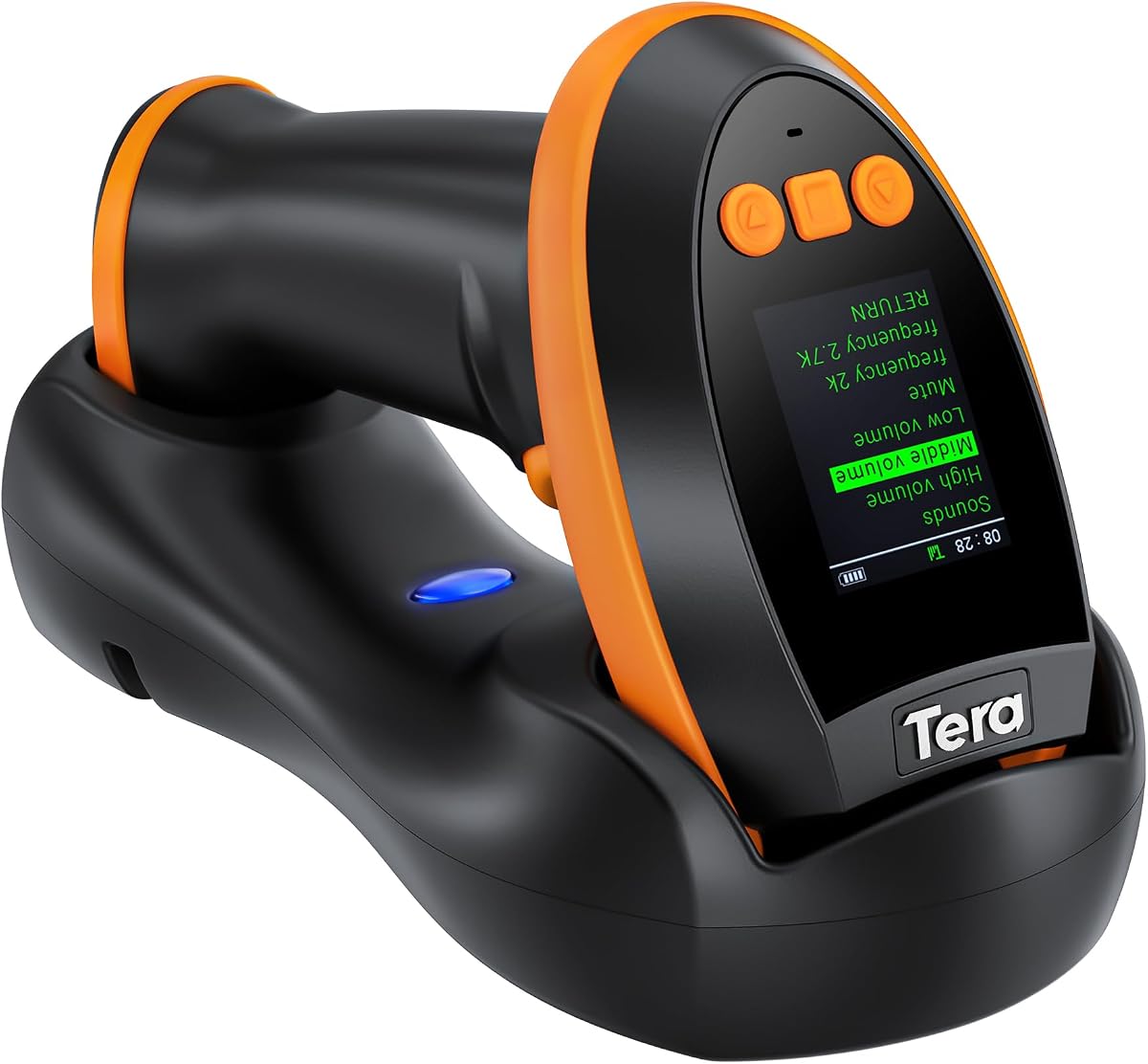
This premium model offers a built-in screen that allows users to configure settings directly on the scanner without needing a computer. This feature alone makes it stand out for libraries that need to change configurations frequently for different software.
We may earn a commission when you buy through this link, at no additional cost to you.
It supports both 1D and 2D codes including QR and PDF417 which is essential for modern libraries that might use QR codes for digital resources or staff IDs. The included charging cradle keeps the workspace tidy and ensures the device is always ready.
The complexity of the device might be overwhelming for simple tasks where a basic scanner suffices. However for libraries needing advanced scanning capabilities and on-the-fly adjustments this premium tool delivers significant functional value.
Institutions looking for a comprehensive solution that handles various barcode types and simplifies setup will find this the best long-term investment. The screen interface removes the need for complex manual barcode programming procedures.
Users can change language and connection settings directly on the LCD screen making it easy to adapt the scanner for different workflows without PC access.
The ability to read PDF417 and QR codes ensures compatibility with modern identification badges and digital book tracking systems increasingly used in libraries.
We may earn a commission when you buy through this link, at no additional cost to you.
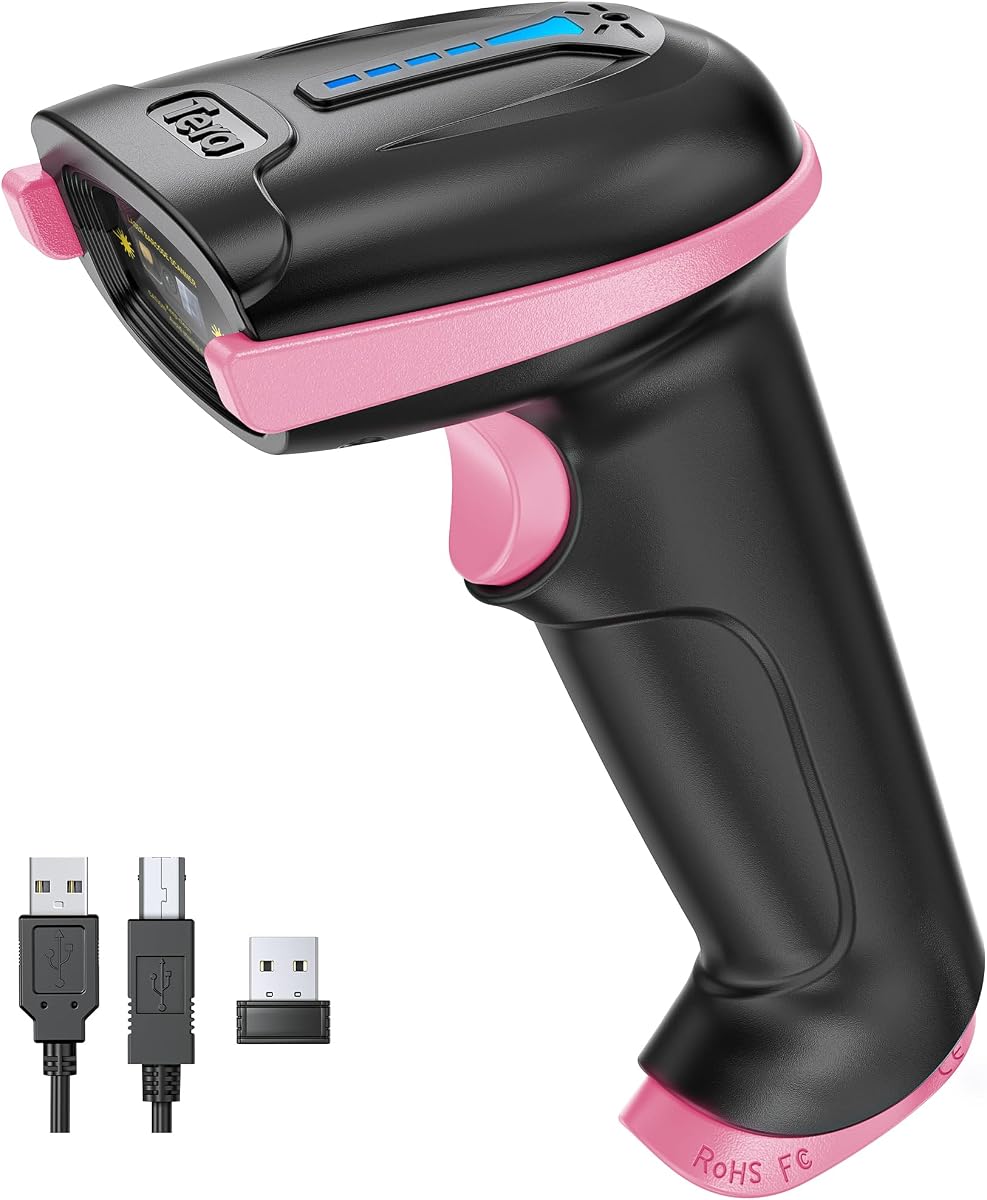
Functionally identical to its purple counterpart this pink variant offers the same robust performance in a more distinct visual package. It is ideal for libraries that prefer equipment that matches specific branding or simply want to differentiate tools for different shifts.
We may earn a commission when you buy through this link, at no additional cost to you.
The 4.5 star rating indicates high reliability and user satisfaction. The battery indicator and long wireless range remain key selling points ensuring that staff are not interrupted by power issues or signal limits during use.
While the aesthetic is the main differentiator it does not compromise on the core utility required for daily library operations. It serves as a standard high-performance scanner that happens to look more vibrant than traditional gray models.
Teams that value variety or need to visually distinguish between equipment zones will find this version useful. It offers no trade-offs in performance compared to the standard model while adding a touch of personality.
The unique color makes it easy to identify this specific scanner model on a cluttered desk or to distinguish it from other equipment in the facility.
The wireless range ensures staff can move freely throughout the building without signal loss maintaining efficient service at all locations.
We may earn a commission when you buy through this link, at no additional cost to you.
Speed is the primary selling point for the WoneNice USB Laser Barcode Scanner which can perform up to 200 scans per second. This rapid throughput is ideal for libraries with high traffic circulation desks where time per transaction matters.
We may earn a commission when you buy through this link, at no additional cost to you.
Its laser technology provides a distinct line that helps in aiming for barcodes on larger surfaces or distant items. The wide scanning angle allows for flexible positioning reducing the need for precise alignment during each scan.
While the speed is excellent it is still a wired device limiting its mobility to the length of the cable. Libraries looking for maximum speed at a fixed desk will find this offers great value compared to wireless alternatives.
High volume libraries such as university stacks or main circulation desks benefit most from this throughput. It keeps lines moving efficiently and reduces the physical effort needed for repetitive scanning tasks.
The rapid scan rate helps clear backlogs during peak hours ensuring that patrons do not wait long periods during checkout and return processes.
Plug and play functionality ensures that new staff can start using the device immediately without requiring complex software configuration or IT support.
We may earn a commission when you buy through this link, at no additional cost to you.
The Symcode Wireless Barcode Scanner is engineered for large facilities where staff need to roam far from the receiving unit. Its 328 feet transmission range ensures connectivity even in expansive library buildings with multiple wings or floors.
We may earn a commission when you buy through this link, at no additional cost to you.
One unique feature is the network mode which allows multiple scanners to transmit to a single receiver. This is useful for teams working together to catalog new acquisitions or conduct full inventory audits simultaneously.
While it excels in distance the battery life is substantial enough for weeks of standby time. However users are restricted to 1D barcodes meaning it cannot read modern QR codes found on newer library materials.
Large public libraries with dispersed collections will benefit most from the extended range and multi-scanner capability. It ensures that circulation staff can manage inventory without constantly returning to a central desk to connect devices.
Multiple devices can connect to one receiver allowing teams to work together efficiently during large scale inventory projects without interference.
The rechargeable battery supports over half a year of standby time ensuring the device is ready for use even after periods of low activity.
We may earn a commission when you buy through this link, at no additional cost to you.
This scanner combines utility with a specific aesthetic appeal making it a great choice for staff who appreciate a bit of color in their workspace. It functions just as well as standard models but offers a more cheerful design option.
We may earn a commission when you buy through this link, at no additional cost to you.
It supports switching between wireless and wired modes easily giving flexibility for different tasks throughout the day. The compact size ensures it can be carried around comfortably without adding weight to a staff member's pocket.
The battery life is sufficient for a full shift and allows for power saving when not in use. However the focus on aesthetics and portability means it may not be as rugged as other industrial options.
Individual staff members or libraries with a focus on user comfort will find this a pleasant tool. It maintains high functionality while adding a unique visual element that breaks the monotony of standard office equipment.
The lightweight build ensures that staff can carry it around the library for long periods without experiencing hand fatigue or discomfort.
Users can adjust volume settings or switch to vibration to suit their specific working environment without disrupting the quiet library atmosphere.
We may earn a commission when you buy through this link, at no additional cost to you.
The inclusion of a stand makes this model unique for libraries that prefer a stationary setup where items are scanned on a desk surface. This hands-free capability is excellent for processing items that might be too large or awkward to hold.
We may earn a commission when you buy through this link, at no additional cost to you.
It supports 2D codes which expands its utility beyond simple book tracking to include digital media or complex ID cards. The auto-sensing mode triggers a scan automatically when an item is placed in front of the sensor.
While the rating is slightly lower than other options it reflects the specific use case limitations. It requires a dedicated desk space and cannot be used for mobile patrols like wireless handheld models can.
Libraries with high volume returns or dedicated processing desks will appreciate the hands-free convenience. It allows staff to focus on sorting items rather than holding a scanner during repetitive processing tasks.
The adjustable stand and auto-sensing feature allow staff to process items without gripping the scanner freeing their hands to sort or bag materials.
Support for both 1D and 2D codes ensures compatibility with a wide range of materials from traditional books to modern digital media IDs.
We may earn a commission when you buy through this link, at no additional cost to you.
Selecting the right scanner involves understanding your library layout and workflow requirements. This section breaks down the essential factors you should consider before purchasing any device.
Libraries must decide between wired and wireless options based on their infrastructure. Wired scanners are more stable and cheaper but limit movement to the cable length. Wireless models offer freedom to roam but depend on battery life and signal strength.
For wireless units battery capacity is critical during long shifts. Look for devices with at least 2000mAh capacity to ensure they last through peak circulation hours without needing a recharge.
The transmission range matters if you have a large facility. Ensure the device can transmit data from the furthest shelves to the computer without signal loss to maintain efficiency.
Library equipment often sees heavy use by multiple staff. Check the drop rating and IP protection level to ensure the device can withstand accidental drops or dust exposure in busy environments.
Most books use 1D barcodes but some libraries now use QR codes for digital links. Ensure the scanner supports the specific code types your library currently uses or plans to adopt.
Quiet zones require silent scanning tools. Look for models that offer vibration feedback or mute options to avoid disturbing patrons while scanning items.
Ensure the scanner works with your existing library management system. Some models require specific drivers or HID modes that may not be compatible with all legacy software.
Comfort is key for staff scanning thousands of items daily. A well designed grip and lightweight body will reduce strain on the hands and wrists during extended periods of use.
Always start by pairing the device according to the manual. For wireless models scan the pairing barcode provided in the user guide to establish the connection with your computer system.
Keep the scanning window clean with a soft dry cloth. Dust and dirt on the sensor can obstruct the laser beam and cause frequent read errors which slows down your workflow.
Store wireless devices in a protected location when not in use. Avoid dropping the unit and place it in a charging cradle if available to maintain battery health and prevent damage.
Most modern USB and Bluetooth scanners are compatible with Mac OS without needing additional drivers. However you should check the specific model specifications to ensure it supports macOS versions you are currently running.
Wireless Bluetooth scanners generally work well with Android and iOS tablets. Ensure your tablet supports the required Bluetooth profile and that the scanner is compatible with mobile operating systems.
This often happens if the barcode is damaged or the contrast is too low. Adjust the scanning angle or check if your device supports that specific barcode type by reviewing the manual settings.
Battery life varies but many high-end models offer all-day use on a single charge. Look for models with 2000mAh or higher capacity to ensure they last through busy circulation shifts without interruption.
Most wired scanners are plug and play devices that function as standard keyboard inputs. They do not require special software installation but you must ensure your system supports USB HID functionality.
Laser scanners typically work at a longer distance while CCD sensors are better for scanning damaged or flat barcodes on screens. Choose based on whether you need range or screen scanning capability.
Choosing the right scanner depends on your specific library size and workflow. Wireless models offer mobility for shelf patrols while wired options provide stability for fixed circulation desks.
Prioritize battery life and silent operation if you need to move around quiet zones. These features ensure that your staff can work efficiently without disturbing patrons or dealing with constant recharging.
Remember to check current prices and compatibility with your existing software before making a final decision. A well chosen scanner will significantly improve the efficiency of your daily operations for years to come.