
Handheld Fish Finder Portable
4.2Editor score
Portable and lightweight design
LCD display with backlight
4 to 5 hour battery life
Finding the right tool to locate fish and measure water depth is essential for any angler. A good depth finder provides clear readings, easy installation, and reliable performance in various conditions.
We compared ten top-rated models based on accuracy, display quality, battery life, and ease of use. Our analysis covers handheld units, kayak specific devices, and traditional boat mount sounders to help you choose.
Each pick below highlights key features and potential trade-offs to match your fishing style. Please note that product availability and pricing can change frequently on retail platforms, so verify details before purchasing.
4.2Editor score
4.5Editor score

4.5Editor score
As an Amazon Associate we earn from qualifying purchases.
The following comparison table lists all ten selected products with their core specifications to help you quickly identify the model that fits your needs and budget.


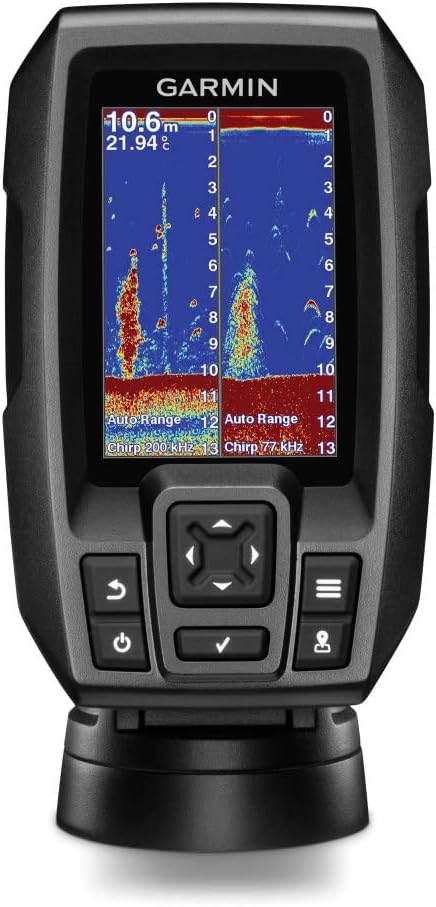
The Garmin Striker 4 offers a robust combination of sonar performance and GPS navigation at a competitive price point. Its ClearVu scanning sonar delivers near photographic images of underwater structures and fish. The device is designed for simplicity with dedicated buttons and an intuitive interface that minimizes learning time.
We may earn a commission when you buy through this link, at no additional cost to you.
Key strengths include the CHIRP sonar technology which provides wider information ranges and crisper fish arches compared to traditional sonar. The integrated way point map allows anglers to mark and navigate to specific locations like brush piles or docks. The maximum depth rating of 1,600 feet in freshwater ensures utility across diverse fishing environments.
One trade-off is the requirement for proper transducer installation which may be complex for first time users. The display size is fixed at 3.5 inches which might be small for some users compared to larger models. Despite this, the water rating of IPX7 protects the unit from splashes and temporary immersion effectively.
This model is ideal for anglers who want reliable GPS navigation and high quality sonar without paying premium prices. It is a strong recommendation for those seeking a complete solution for boat fishing. The inclusion of a flasher view also makes it suitable for vertical jigging or ice fishing scenarios.
ClearVu provides near photographic images that show detailed representations of objects and fish structure in the water.
Users can mark locations such as docks or stumps and navigate back to them easily using the built-in map.
We may earn a commission when you buy through this link, at no additional cost to you.
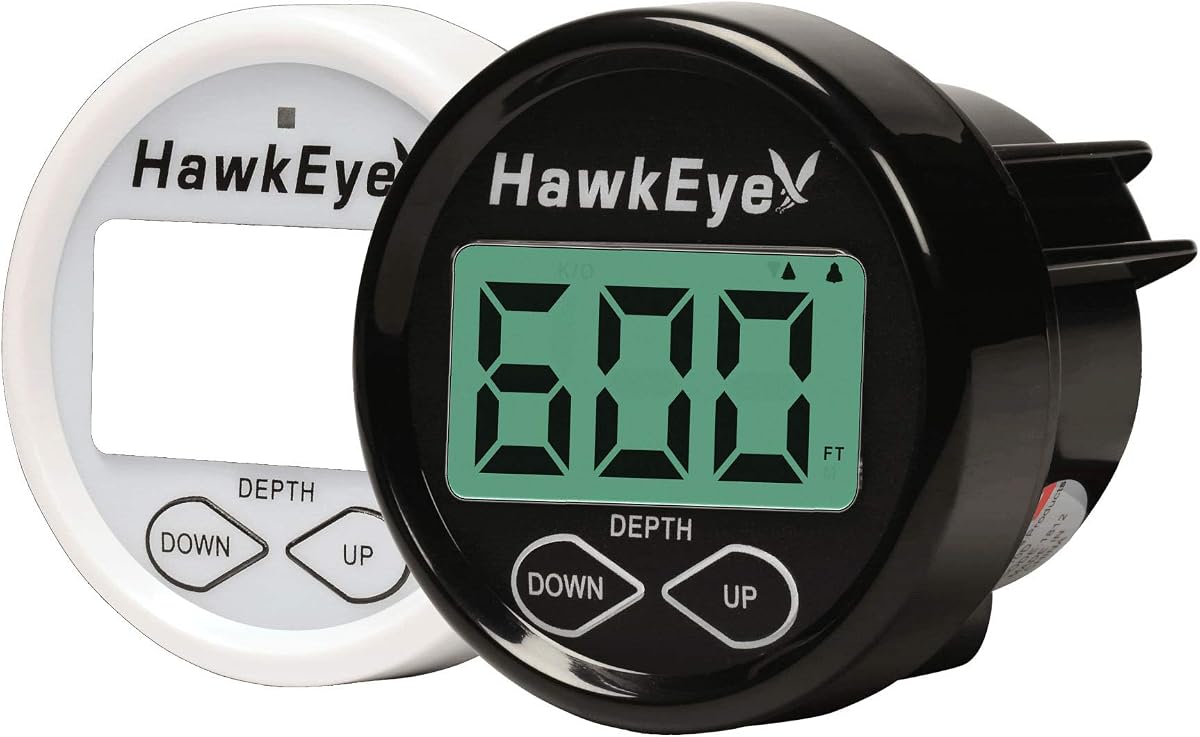
The DepthTrax 2B is a dedicated in-dash depth sounder designed for boats with fiberglass or aluminum hulls. It delivers consistent depth readings up to 600 feet which covers most recreational fishing waters. The unit features a large display that ensures visibility even at higher boat speeds up to 60 mph.
We may earn a commission when you buy through this link, at no additional cost to you.
Its standout feature is the 3-stage advanced warning system that uses audible alarms, LED lights, and LCD indicators to signal shallow water conditions. This safety feature is critical for preventing hull damage in unfamiliar waters. The polarized LCD display allows for spot free viewing with or without sunglasses which enhances usability in bright sunlight.
Installation constraints include the glue-in transducer which is only suitable for non-cored fiberglass hulls or aluminum hulls thinner than 1/8 inch. This limits its use for certain vessel types requiring transom mounting. Additionally the algorithmic programming while effective may require initial calibration for optimal performance in varying water conditions.
This depth finder is best suited for boat owners looking for a permanent dashboard solution with safety alarms. It provides unmatched precision and reduces false readings effectively making it reliable for serious anglers. The inclusion of a sun cover helps maintain display clarity in direct sun exposure.
The 3-stage alarm uses sound and light to alert you instantly to shallow depths to prevent hull damage.
The polarized LCD and storage sun cover ensure you can read depth data clearly even when wearing sunglasses.
We may earn a commission when you buy through this link, at no additional cost to you.
The Hawkeye DT1H is a classic handheld depth finder that excels in portability and simplicity. It displays water temperature which is a valuable metric for understanding fish behavior patterns. The unit is powered by batteries making it easy to carry and deploy without needing complex wiring setups.
We may earn a commission when you buy through this link, at no additional cost to you.
Its primary strength is the ability to provide depth readings up to 300 feet which is sufficient for many lakes and rivers. The device is designed to be used directly by hand which makes it ideal for ice fishing or shore casting scenarios. The interface is straightforward requiring minimal setup time before fishing.
One limitation is the maximum depth range of 300 feet which may not reach deep offshore waters or canyons. The lack of GPS functionality means you cannot mark waypoints or navigate using this device alone. However for casual anglers or those targeting specific shallow structures this is not a significant drawback.
This model is perfect for anglers who need a lightweight backup device or a primary tool for ice fishing. Its simplicity ensures it works well when other electronics might fail. The temperature feature adds extra value for understanding seasonal fish movements.
The unit displays water temperature allowing you to track thermal layers where fish may be holding.
Its handheld design makes it easy to carry in a tackle box or pocket for impromptu fishing trips.
We may earn a commission when you buy through this link, at no additional cost to you.
This portable fish finder is designed to be the most accessible entry point into sonar technology. It costs significantly less than many competitors while still providing essential depth and fish location data. The device is powered by 4 AAA batteries which are easy to replace and widely available.
We may earn a commission when you buy through this link, at no additional cost to you.
Its key strengths include a 328 feet depth range that covers most recreational fishing spots. The included neck strap allows you to wear the unit around your neck keeping hands free while casting or handling gear. The backlight mode ensures visibility in low light conditions such as dawn or dusk.
The device has a speed limitation requiring slow movement below 5 mph for accurate readings. This restricts its use on faster boats but is acceptable for kayaks or shore fishing. Battery life is 4 to 5 hours which is decent but requires carrying spares for longer trips.
This is the best choice for budget conscious anglers or those fishing from kayaks and docks. It offers the core functionality of sonar without complex installation or high costs. The versatility to work in fresh and salt water adds to its value proposition.
The included strap lets you wear the unit comfortably so your hands stay free for fishing tasks.
At a very low price point this device makes sonar technology accessible to beginners.
We may earn a commission when you buy through this link, at no additional cost to you.
The LUCKY FFC1108 is designed specifically for portable fishing from kayaks and boats. It offers depth detection up to 328 feet and displays fish location and size estimates on its LCD screen. The device includes a neck strap which is useful for kayakers who need hands free operation.
We may earn a commission when you buy through this link, at no additional cost to you.
Its strengths include fish alarm functionality that alerts you when fish schools pass by saving you from constantly watching the screen. The 5 levels sensitivity adjustment allows you to adapt to clear or turbid water conditions effectively. The backlight ensures the display remains visible in darkness.
One limitation is the small display size which can be hard to read at a distance compared to larger models. The lack of GPS means you cannot track your path or mark waypoints. However for a kayak specific finder this is a minor compromise given the price point.
This device is perfect for kayakers and shore anglers who need a reliable sonar without permanent mounting. It is easy to use and offers good value for its cost. The ability to switch measurement units between feet and meters adds flexibility for international users.
Audible alerts notify you when fish are detected allowing you to focus on casting instead of the screen.
Five adjustable levels help you filter noise in clear water or detect fish in murky conditions.
We may earn a commission when you buy through this link, at no additional cost to you.
The Humminbird PiranhaMAX 4 delivers dual beam sonar capability which lets you choose between narrow detail or wide coverage. This flexibility is useful for identifying fish and structure across various depths. The unit comes with a transom mount transducer making installation straightforward for most boats.
We may earn a commission when you buy through this link, at no additional cost to you.
Its key strength is the tilt and swivel mount allowing you to adjust the viewing angle quickly. The display remains clear in bright sunlight which is essential for daytime fishing. The brand reputation ensures reliability and support for the electronics over time.
A limitation is the relatively small screen size compared to modern GPS fishfinders. The warranty is limited to one year which is standard but shorter than some competitors. However the price point is competitive for the dual beam technology provided.
This model is ideal for anglers who want proven dual beam technology without the cost of a high end unit. It is well suited for bass fishing and general freshwater applications. The simplicity of the interface makes it accessible for beginners.
Choose between narrow beams for detail or wide beams for coverage to adapt to your fishing needs.
The tilt and swivel mount allows easy adjustment of the display angle for comfortable viewing.
We may earn a commission when you buy through this link, at no additional cost to you.
The Lowrance Eagle features an IPS portrait screen that stays clear in bright sunlight from wide angles. It includes Auto-Tuning sonar which automatically optimizes settings so you can focus on finding fish. The display shows fish icons with depth numbers making identification straightforward.
We may earn a commission when you buy through this link, at no additional cost to you.
Its key strengths include the included 200 kHz Bullet Skimmer transducer which provides a broad 44-degree beam for kayaks and small boats. The twist-lock connector simplifies installation and removal for storage or transport. The screen is visible even with polarized sunglasses.
One limitation is that C-MAP mapping options may cost extra beyond the base unit price. The device focuses on sonar rather than deep mapping so it is best for simple navigation. Despite this the screen clarity is excellent for the price range.
This is a great choice for small boat owners who prioritize screen visibility and ease of use. It is suitable for anglers who want a reliable sonar without complex menus. The compact design fits well in tight boat spaces.
The device automatically adjusts settings to match water conditions reducing the need for manual tweaking.
The 44-degree beam provides broad coverage below the boat helping you scan larger areas efficiently.
We may earn a commission when you buy through this link, at no additional cost to you.
This portable ice fish finder provides detailed contour readouts including depth and temperature data. It updates depth data four times per second providing a smooth view of underwater contours. The unit is water resistant and can withstand splashing making it suitable for various environments.
We may earn a commission when you buy through this link, at no additional cost to you.
Its strengths include a two-color lure fish lamp that may attract light sensitive fish. The depth range goes up to 300 feet which covers most inland waters. The unit is suitable for shore fishing and river fishing which increases its versatility.
The lure lamp only works on light sensitive fish so its effectiveness varies by species. The interface is basic and lacks advanced features found in GPS units. However for the price it delivers essential data reliably.
This model is best for anglers who need temperature data and a simple portable unit. The water resistance ensures durability in rough conditions. It is a practical choice for beginners or as a secondary device.
Data updates four times per second allowing you to see underwater contours and fish movement clearly.
The two-color lamp can attract some fish species helping to draw them to your line.
We may earn a commission when you buy through this link, at no additional cost to you.
The LUCKY MT-202 offers a massive 853ft wireless operation range which is one of the longest on the market. It features a floating sensor that you can cast like a bobber allowing you to fish areas inaccessible from the boat. The display shows fish icons with exact depth marked next to them.
We may earn a commission when you buy through this link, at no additional cost to you.
Its key strengths include the scrolling history display which shows a continuous record of what passed under the sensor. This helps track fish movement and locate structure you have already floated over. The sensor is lighter than a water bottle which makes casting effortless.
The unit is rechargeable but requires battery management for long trips. The higher price may be a barrier for casual users but the wireless freedom justifies the cost. It is versatile for all seasons and water types.
This is an ideal choice for anglers who want to fish shore or kayak without drilling holes. The wireless design eliminates wires entirely simplifying setup. It is a top pick for those seeking maximum convenience.
Cast the sensor like a bobber to fish deep channels or structure without any wires connected to your boat.
The screen scrolls from right to left showing you a continuous history of what passed under the sensor.
We may earn a commission when you buy through this link, at no additional cost to you.
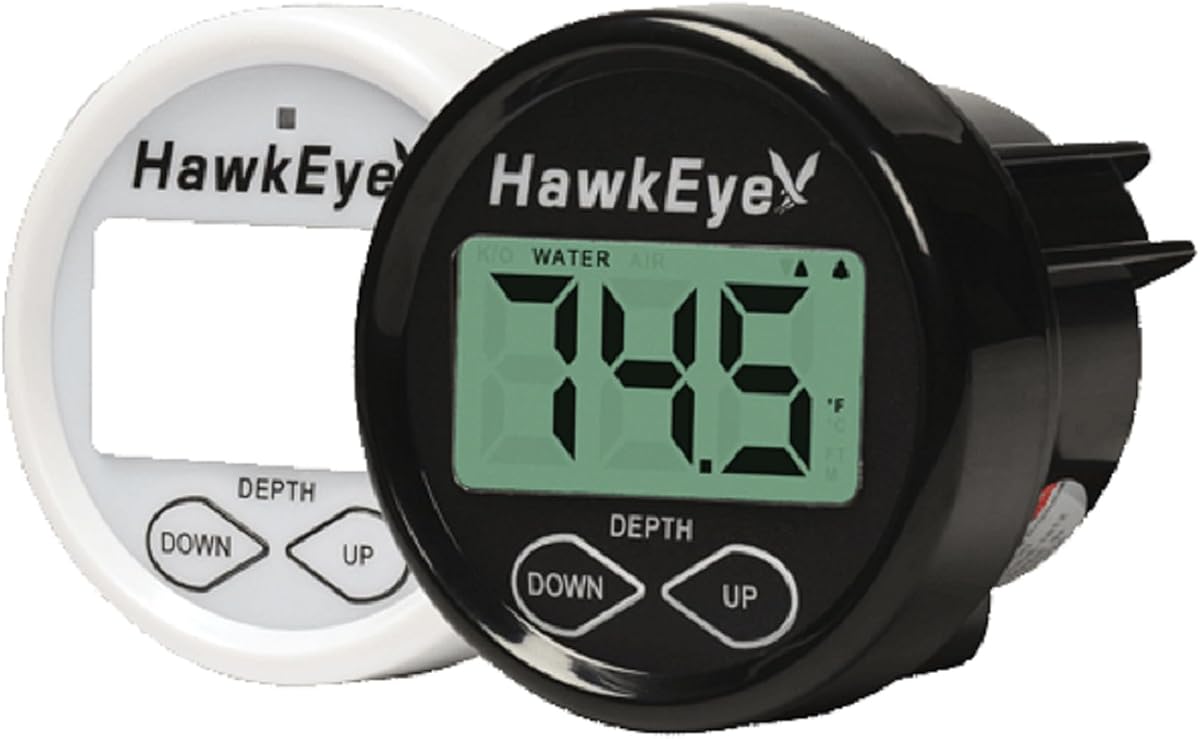
The HawkEye DT2BX-TM delivers uninterrupted depth readings up to 600 feet with a large in-dash display. It shows air and water temperature readings in Fahrenheit or Celsius on a soft glow backlit LCD. The unit includes a transom mount transducer with 30 feet of cable for easy setup.
We may earn a commission when you buy through this link, at no additional cost to you.
Its strengths include a 3-stage advanced warning system that signals alarms with sound and light. The polarized LCD icon display allows spot free viewing with sunglasses. The transducer is designed to shoot through hulls providing accurate readings for boats.
Installation requires a 2 inch hole for flush mounting which may not be feasible for all boats. The interface is basic with no GPS capabilities so navigation must be done elsewhere. Despite this the temperature and depth data are reliable.
This is the best choice for boat owners wanting a permanent in-dash solution with dual temperature display. The warning system adds safety value for coastal or offshore navigation. The soft glow display is easy on the eyes at night.
Display both air and water temperature to track environmental conditions that affect fish activity.
The warning system provides audible and visual alerts for shallow depths to prevent accidents.
We may earn a commission when you buy through this link, at no additional cost to you.
Selecting the right depth finder depends on your fishing style boat type and budget. Here are key factors to consider.
The display size determines how easy it is to read data. Larger screens like 4 inches offer better visibility in bright sun while smaller handheld screens are portable.
Choose an IPS or polarized LCD screen to ensure readability without sunglasses during the day.
Sonar frequency impacts detail and coverage. Higher frequencies provide better resolution for fish identification while lower frequencies offer greater depth penetration.
For most shallow to medium depth fishing a 200 kHz frequency offers the best balance of detail and range.
Ensure the maximum depth rating matches your fishing waters. Most budget units offer 300 to 600 feet which covers most lakes and rivers.
If you fish deep offshore waters look for models with at least 1000 feet range to avoid limitations.
Decide between portable handheld units and permanent in-dash mounts. Handhelds are flexible while in-dash models offer safety features.
In-dash units require cutting holes in the dashboard which may not be desirable for rental boats or kayaks.
Battery life determines how long you can fish without recharging. Look for units with at least 4 hours of continuous use.
If possible choose rechargeable models to save money on disposable batteries over time.
Waterproof ratings protect your device from splashes and rain. An IPX7 rating ensures the unit can withstand temporary immersion.
Always check the specific rating to avoid water damage in rough weather conditions.
Fish alarms notify you when fish are detected allowing you to focus on casting. This is crucial for beginners who may miss subtle display changes.
Look for units with audible and visual alarms for clear feedback even in noisy environments.
Water temperature readings help identify layers where fish are holding. This feature is common in handheld units and some in-dash models.
Prioritize units that show temperature if you fish in seasonal waters where thermal layers vary.
Install the transducer securely according to the manual to ensure accurate readings. Avoid air bubbles or debris around the transducer which can cause signal interference.
Turn on the unit and set the sensitivity level based on water conditions. Increase sensitivity in clear water and decrease in turbid water to reduce false signals.
Rinse the device with fresh water after use to remove salt or dirt. Store the unit in a dry place to protect the electronics and screen.
Yes most portable and handheld depth finders work in saltwater. Ensure the model is rated for salt water to avoid corrosion.
Yes handheld units allow you to use sonar from shore by casting the transducer. This is useful for small boats or kayak fishing.
Most units have a minimum depth of 2 to 3 feet due to the sonar pulse timing. This means very shallow water may not register on the screen.
Handheld models usually run on disposable batteries. In-dash models often connect to your boat's 12 volt system for continuous power.
Follow the manual to mount the transducer flush with the hull or use the provided bracket. Proper angle ensures accurate depth readings.
Inaccuracies can result from air bubbles or incorrect sensitivity settings. Ensure the transducer is clean and positioned correctly to fix this.
Portable handheld or wireless models are best for kayaks as they avoid drilling holes. Units like the LUCKY MT-202 or Garmin Striker 4 are popular choices.
Yes most units display fish arches when fish are detected. CHIRP sonar provides crisper arches for better identification.
We reviewed ten options ranging from basic handhelds to advanced GPS units. The Garmin Striker 4 leads for its GPS and ClearVu technology while the Handheld Fish Finder offers the best budget value.
Prioritize features like depth range and battery life based on your fishing locations. Wireless and portable models provide flexibility while in-dash units offer safety alarms.
Always check current prices before purchasing as deals change frequently. Choose the unit that best fits your specific fishing needs and budget.