
Construction Adhesive Fast Curing
4.2Editor score
Includes extra mixing nozzle
Fast curing polyester resin
No expansion pressure needed
This guide compares the top chemical anchors for concrete to help you choose the right epoxy or adhesive for secure and durable fastening projects.
Finding the right chemical anchor for concrete is essential for any structural or heavy-duty fastening project. Whether you are securing rebar, threaded rods, or machinery, the bond strength and curing time matter significantly.
We evaluated ten leading products based on their bonding strength, ease of use, curing speed, and versatility across different concrete conditions. Our analysis focuses on real-world performance data and user feedback.
Each pick highlights specific strengths and ideal use cases to help you match the product to your needs. Please note that product availability and terms may change over time without notice.
4.2Editor score
4.5Editor score

5.0Editor score
The following table provides a side-by-side comparison of the ten selected chemical anchoring systems. Use this overview to quickly assess specifications and features before diving into detailed reviews.





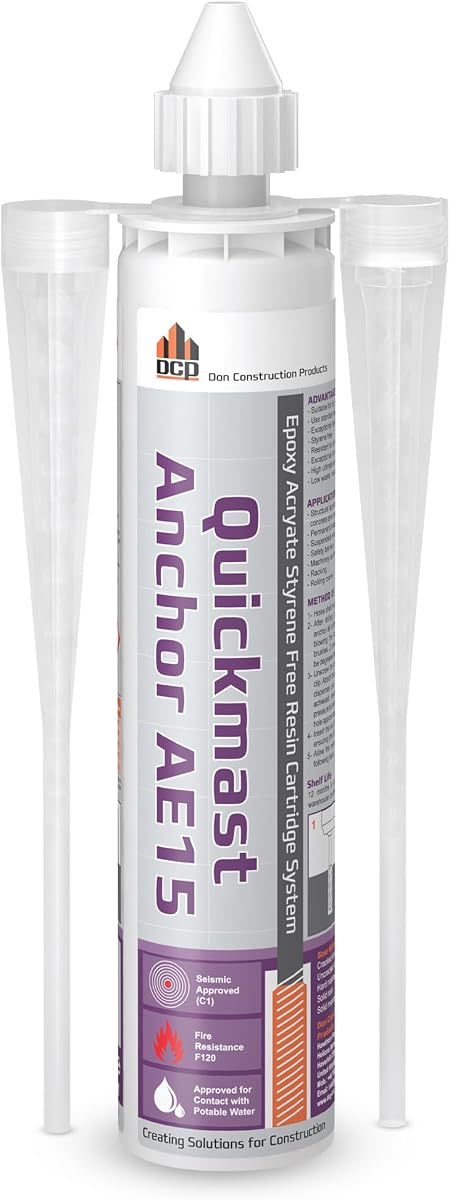
The DCP Quickmast AE15 Concrete Epoxy stands out as a top choice for securing rebar and rods in concrete. With a high-strength acrylate formulation, it delivers reliable anchoring for everything from handrails to heavy machinery.
We may earn a commission when you buy through this link, at no additional cost to you.
Its versatility is a key strength, working effectively in dry, wet, or even flooded concrete holes. The rapid curing time means you can achieve full load-bearing capacity in as little as forty minutes depending on temperature.
The cartridge system is user-friendly, ensuring a uniform mix when used with standard caulking guns. While it comes in a ten point one fluid ounce size, the efficient application reduces waste and mess.
This product is ideal for contractors and DIYers who need a dependable solution for diverse anchoring tasks. We recommend it for projects where speed and bond strength are critical.
Unlike many epoxies, this system bonds strongly even in wet or flooded holes, expanding its utility in challenging environments.
The quick cure time allows you to move on to the next job sooner without waiting for extended curing periods.
We may earn a commission when you buy through this link, at no additional cost to you.
This Construction Adhesive offers a budget-friendly option for anchoring fasteners in solid base materials like concrete and brick. The fast-curing polyester resin ensures that your installation is efficient and reliable.
We may earn a commission when you buy through this link, at no additional cost to you.
A notable feature is the inclusion of an extra nozzle, which adds value and reduces downtime between jobs. It also works well with mesh sleeves for hollow materials, expanding its application range.
The application process is straightforward: drill, clean, inject the resin, and insert the fastener. Since it does not require expansion pressure, it is less likely to crack sensitive masonry.
We suggest this adhesive for light to medium duty tasks where cost and speed are priorities. It is a solid choice for home improvement projects that need a durable hold.
Having an additional nozzle included helps prevent delays if a clogged nozzle occurs during installation.
By using a mesh sleeve, this resin provides reliable anchoring even in hollow blocks or cavity walls.
We may earn a commission when you buy through this link, at no additional cost to you.
The Akona Fast-Setting Anchoring Epoxy is designed for high-strength anchoring in concrete and masonry. Its gray color is a unique advantage as it blends in with existing surfaces to reduce visibility.
We may earn a commission when you buy through this link, at no additional cost to you.
This product sets in twelve minutes and fully dries in sixteen hours, making it suitable for projects where time is a factor. It also resists moisture and solvents, which is helpful in various environments.
The application tube is designed to be mess-free, simplifying the process of injecting epoxy into drilled holes. It is versatile enough for concrete floors, walls, and driveways.
We recommend this epoxy for projects where aesthetics matter alongside strength. It is a strong contender for indoor installations or visible areas where a standard epoxy color would be distracting.
The gray tint ensures that any exposed epoxy is less noticeable after the anchor is installed.
A twelve minute set time allows you to secure fasteners quickly without prolonged waiting periods.
We may earn a commission when you buy through this link, at no additional cost to you.
While this item is a rod rather than a chemical adhesive, it is often used in conjunction with chemical anchors for secure fastening. The Fischer FIS A Rod M8 x 130 is a high-quality component for anchoring systems.
We may earn a commission when you buy through this link, at no additional cost to you.
With a ten point zero rating, it is clear that users trust the durability and precision of this product. The pack of ten rods makes it convenient for multiple installations without needing to reorder.
The M8 thread and 130mm length are standard specifications for many light to medium duty anchoring tasks. This rod is designed to work effectively with epoxy or resin-based anchor systems.
We recommend this rod for users who need a precise and reliable threaded component for their chemical anchor projects. It pairs well with epoxy systems for a complete anchoring solution.
This rod is designed to be embedded in chemical adhesives for a secure and non-expanding hold.
Fischer is a well-known brand in the anchoring industry, ensuring consistent performance and durability.
We may earn a commission when you buy through this link, at no additional cost to you.
SIKA AnchorFix-2 is a high-performance epoxy anchoring adhesive suitable for threaded bars in uncracked concrete and masonry. A standout feature is its certification as safe for use in drinking water systems.
We may earn a commission when you buy through this link, at no additional cost to you.
This product is free of styrene and solvents, making it a healthier choice for installers and the environment. The fast curing formula helps you finish jobs sooner by avoiding long curing times.
The cartridge is designed to fit most applicator guns, ensuring ease of use on various job sites. However, achieving the best bond requires cleaning the hole thoroughly before application.
We recommend this adhesive for projects where health and environmental standards are important. It is an excellent choice for water tanks or sensitive indoor environments.
This adhesive meets strict standards for use in potable water systems, adding to its versatility.
Quick curing ensures that your bars stay in position without slipping and speeds up job completion.
We may earn a commission when you buy through this link, at no additional cost to you.
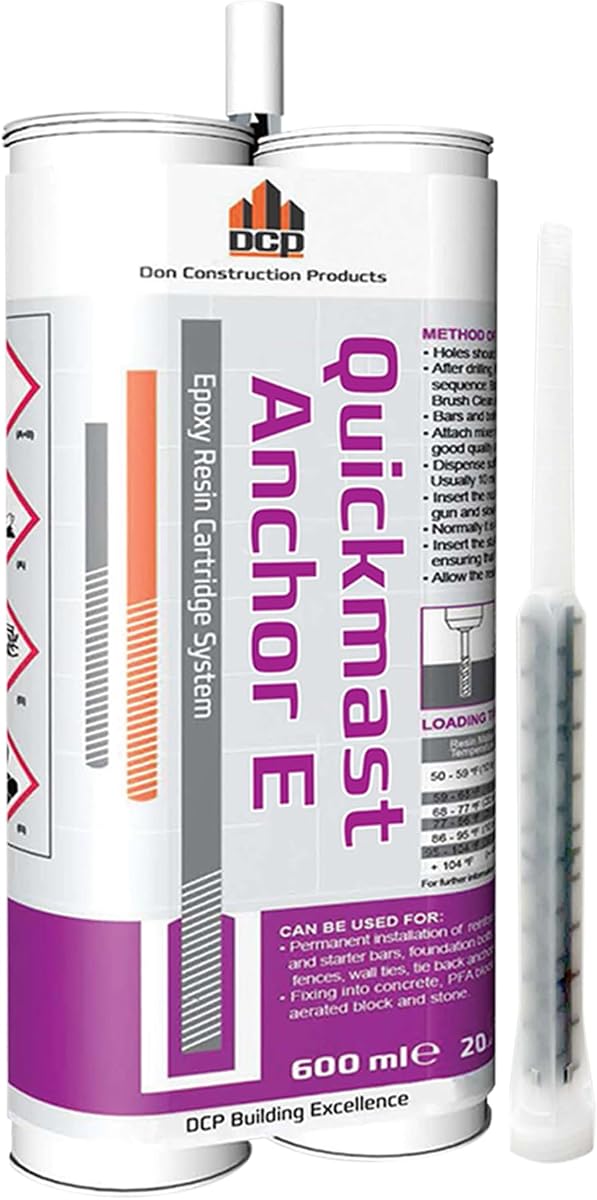
The DCP Quickmast Anchor E Epoxy offers a larger volume of adhesive, making it suitable for more demanding projects. Its dual cartridge system ensures a precise mix for consistent performance.
We may earn a commission when you buy through this link, at no additional cost to you.
With a working time of up to twenty minutes, you have ample time to install rebar or threaded rods correctly. This flexibility reduces the risk of errors due to the epoxy setting too quickly.
This product is versatile enough to handle light to heavy loads, including railway tracks and ground anchors. It also bonds well in both dry and damp conditions.
We suggest this epoxy for contractors or projects requiring larger quantities of adhesive. The longer working time provides peace of mind during installation.
Having up to twenty minutes to install helps ensure precision when placing heavy or long rods.
This system handles everything from handrails to heavy ground anchors, covering a wide range of needs.
We may earn a commission when you buy through this link, at no additional cost to you.
This premium kit from Quickmast includes the epoxy and a high-quality applicator gun, making it a complete solution for professional use. The 25:1 thrust ratio ensures smooth and accurate dispensing every time.
We may earn a commission when you buy through this link, at no additional cost to you.
The two-pack of cartridges provides more adhesive for extensive projects, reducing the need to reorder mid-job. With a five point zero rating, users are highly satisfied with its performance.
The gun is designed to minimize mess and maximize accuracy during application. It fits dual cartridges perfectly, ensuring a consistent mix ratio for strong bonds.
We recommend this kit for professionals who value precision and ease of use. The included tool alone justifies the investment for frequent users of chemical anchors.
The epoxy gun delivers a smooth flow, allowing for careful placement without drips or mess.
Having both the epoxy and the gun in one package streamlines procurement for contractors and DIYers.
We may earn a commission when you buy through this link, at no additional cost to you.
This internal threaded anchor is designed for environments where vibration is a concern, such as machinery or conveyor belts. The zinc plated steel construction ensures durability and resistance to corrosion.
We may earn a commission when you buy through this link, at no additional cost to you.
It is particularly effective for close edge installations where mechanical anchors might fail. The design allows for a threaded rod to be securely embedded in the anchor.
The ultimate tension strength is suitable for concrete, providing a reliable hold for theater seating or ductwork. It is a specialized component that addresses specific mounting challenges.
We recommend this anchor for industrial applications where vibration resistance is critical. It pairs well with chemical adhesives for a secure, long-lasting installation.
The construction is optimized to withstand vibratory conditions that might loosen standard fasteners.
It performs well near edges, reducing the risk of cracking that can occur with expansion anchors.
We may earn a commission when you buy through this link, at no additional cost to you.
These reaction filters are designed to enhance the performance of chemical anchors, especially in filled drilled holes. They allow for overhead mounting, which is often difficult with standard adhesives.
We may earn a commission when you buy through this link, at no additional cost to you.
The use of two mortar cartridges creates a higher load level and saves attachment points. The system also offers temperature resistance down to negative thirty degrees Celsius.
Economical to set up with a proportional lamination process, this system ensures reliable attachment even in challenging conditions. It is a specialized component for professional anchoring.
We recommend these filters for overhead tasks where reliability is paramount. They ensure that your anchor holds securely even against gravity.
The filter system allows adhesive to stay in place during overhead installation without dripping out.
Using two cartridges increases the load level, ensuring a stronger hold for critical structures.
We may earn a commission when you buy through this link, at no additional cost to you.
PC-Concrete PRO is a professional-grade epoxy system that meets various building and engineering codes. This compliance makes it ideal for commercial projects where adherence to regulations is required.
We may earn a commission when you buy through this link, at no additional cost to you.
Unlike many other epoxies, this product can be used in smooth bore holes without roughing the interior. It also performs well in dry, water saturated, and water filled conditions.
The two component system is designed for high strength anchoring in cracked and uncracked concrete. It is a reliable choice for threaded rods and reinforcing bars.
We recommend this epoxy for projects that must meet specific code requirements. Its ability to work in rough conditions makes it a versatile and compliant option.
Meeting IBC and IRC codes ensures this epoxy is accepted for professional and commercial applications.
It can be applied in water filled holes, which is rare for standard epoxy anchoring systems.
We may earn a commission when you buy through this link, at no additional cost to you.
Choosing the right chemical anchor involves considering several technical factors to ensure safety and performance.
Curing time refers to how long it takes for the epoxy to reach full strength, while working time is how long you have to insert the fastener. For large projects, a longer working time is essential to avoid re-drilling.
Look for products with a working time that matches your project scale. If you need to move quickly, prioritize fast-curing options.
Different anchors work best on different materials such as cracked concrete, uncracked concrete, masonry, or stone. Ensure the product you choose lists your specific substrate on its packaging.
Select an anchor that is explicitly rated for your base material to ensure a safe bond.
Many anchors can be used in dry conditions, but some are rated for wet or water-filled holes. If you are working in damp environments or below grade, verify that the adhesive can handle moisture.
For harsh environments, choose anchors that are solvent-free and resistant to temperature extremes.
The load capacity determines how much weight or force the anchor can hold. Check the ultimate tension and shear values to ensure they meet your project demands.
Always select an anchor with a safety margin above your expected load to prevent failure.
Some products come with a cartridge that fits standard caulking guns, while others may require a dual cartridge gun for a precise mix. Consider what tools you have available before purchasing.
If you do not own a dual cartridge gun, you may need to budget for one separately for optimal application.
In industrial settings, the anchor may be exposed to chemicals or solvents. Selecting an epoxy that resists these substances ensures longevity and safety.
Look for products that specify chemical resistance if the application area involves exposure to harsh substances.
For commercial or structural projects, it is vital to choose anchors that meet building codes like IBC or ASTM standards. These certifications ensure the product has been rigorously tested.
Prioritize products with visible compliance marks on the packaging to avoid issues with inspections.
Anchors come in various volumes from small tubes to large cartridges. Estimate how many fasteners you need and buy accordingly to avoid running out mid-project.
Buying a kit with a gun and multiple cartridges can save money for larger jobs.
Drill a hole to the correct diameter and depth as specified by the manufacturer, then clean it thoroughly with a brush or air pump to remove dust and debris.
Insert the cartridge into the gun, cut the tip, and attach the static mixer. Inject the adhesive into the hole from the bottom up to avoid air pockets.
Insert the fastener immediately after injection, then allow the anchor to cure fully before applying any load. Store unused cartridges in a cool dry place to maintain shelf life.
Mechanical anchors rely on expansion to create a hold, while chemical anchors use epoxy to bond the rod directly to the concrete. Chemical anchors are generally better for cracked concrete and near edges.
Some specific chemical anchors are rated for wet or water-filled holes, but not all. Always check the product specifications to ensure it can handle moisture before you start drilling.
Use a wire brush and compressed air or a vacuum to remove all dust from the hole. Clean holes are essential for achieving a strong and safe bond with the epoxy.
Working times vary but typically range from a few minutes to twenty minutes. This is the window you have to insert the fastener after injecting the epoxy before it begins to set.
For two-part cartridges, a dual cartridge mixing gun is recommended to ensure a proper mix. However, some single-component adhesives can be applied with standard caulking guns.
Full cure times can range from a few hours to a day depending on the product and temperature. Check the packaging for specific load times before placing any weight on the anchor.
Chemical anchors are often safer near edges and in cracked concrete because they do not exert outward pressure. They provide a uniform bond that reduces the risk of cracking the base material.
Yes, high-strength chemical anchors are designed to support heavy loads like machinery and railings. Always calculate the required load capacity and choose a product that exceeds your needs.
We have covered the top ten chemical anchors for concrete, highlighting options for different budgets and applications. Whether you need a fast-curing solution or a code-compliant system, there is a product here to suit your needs.
Prioritize factors like curing time, substrate compatibility, and load capacity when making your final decision. The right anchor will ensure your project is secure and long-lasting.
Please check current product availability and terms before purchasing, as details may change over time. We hope this guide helps you find the perfect chemical anchor for your next concrete project.