
Nano V3.0 ATmega328P
4.6Editor score
ATmega328P CH340 chip
100% Arduino IDE compatible
Compact breadboard friendly design
This guide compares the top ten Arduino Nano Board options for 2026, analyzing performance, connectivity, and value to help you choose the right microcontroller
Choosing the right microcontroller is essential for any electronics project. The Arduino Nano Board offers a compact and powerful solution for makers and professionals alike who need reliable performance.
We evaluated ten leading options based on compatibility, features, and user feedback. This list covers official models and trusted third-party alternatives to meet diverse project needs effectively.
Each pick highlights specific strengths like connectivity or memory. Prices fluctuate frequently so check current listings before buying to ensure you get the best deal available now.
4.6Editor score
4.6Editor score

4.6Editor score
This side-by-side comparison highlights key specifications and features across the top ten Arduino Nano Board models available today to simplify your selection process.


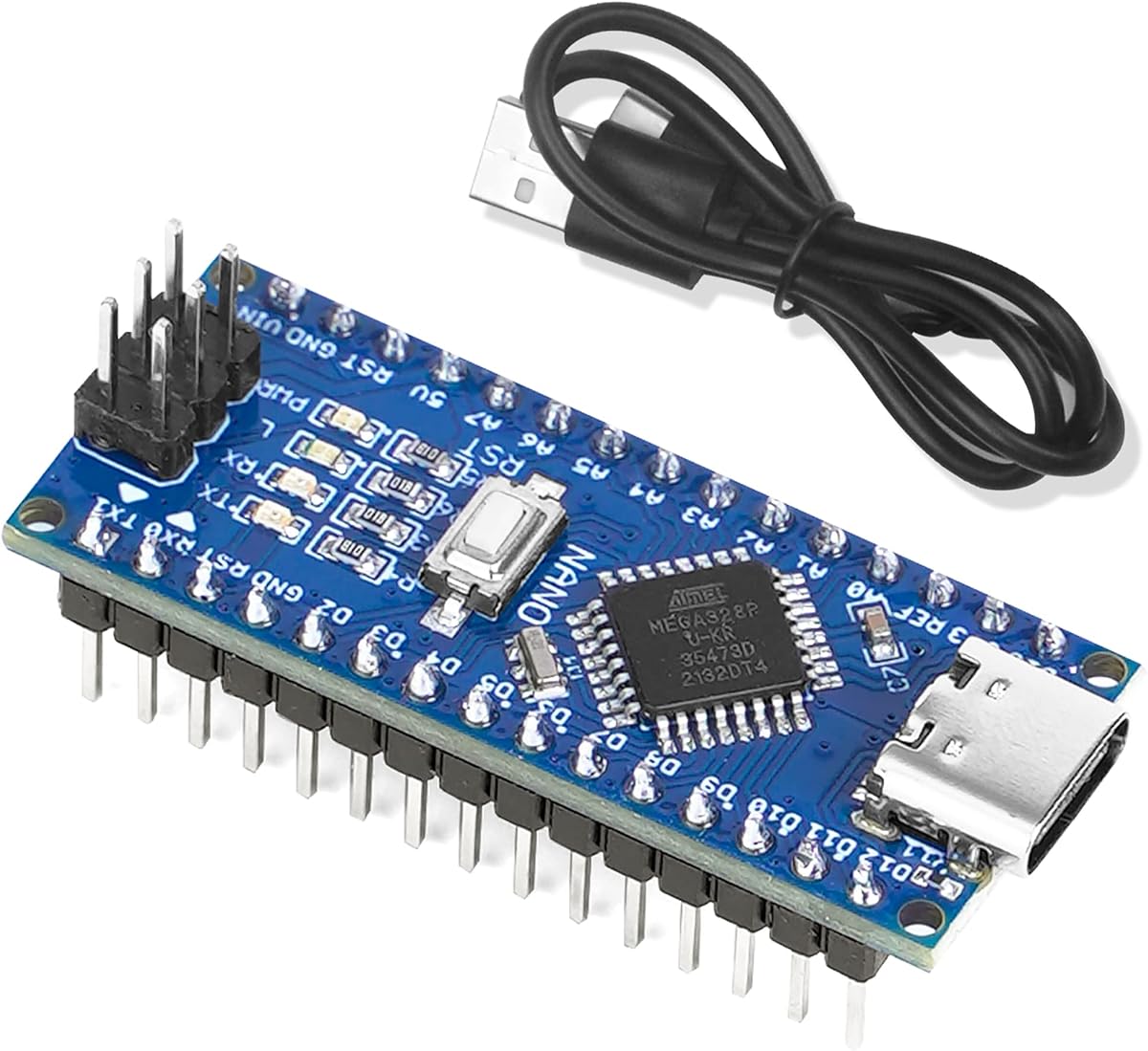
The LAFVIN Nano V3.0 board offers an affordable entry point into the Arduino ecosystem. Rated highly for compatibility and ease of use it delivers reliable performance for standard projects.
We may earn a commission when you buy through this link, at no additional cost to you.
Its use of the ATmega328P MCU ensures full compatibility with existing Arduino sketches and libraries. The CH340G chip simplifies USB connectivity and power supply without needing extra components.
While it is not the official board it works seamlessly with Windows Mac and Linux systems. The main trade-off is occasional driver installation but this is minimal compared to the cost savings.
This pick is ideal for hobbyists needing multiple boards for testing or prototyping. It provides excellent value and functionality without sacrificing core capabilities for most DIY applications.
Buying three boards allows you to test circuits simultaneously without fear of burning out expensive hardware.
The board is compatible with Windows Mac and Linux ensuring accessibility for all types of users.
We may earn a commission when you buy through this link, at no additional cost to you.
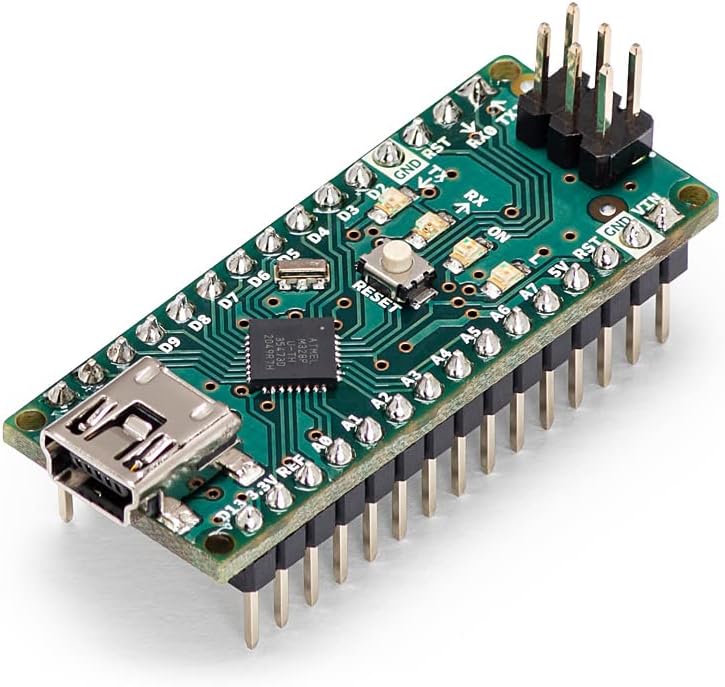
The official Arduino Nano [A000005] is the gold standard for reliable and compatible microcontrollers. It combines a compact design with powerful features suitable for wearables and embedded systems.
We may earn a commission when you buy through this link, at no additional cost to you.
Its versatility shines through the 14 digital I/O pins and 8 analog inputs that enable precise control of various components. The built-in mini-USB port allows for hassle-free programming and power supply.
Users may find the price higher than third-party alternatives but the quality assurance is unmatched. While the mini-USB is less modern than USB-C it remains sufficient for development needs.
We recommend this board for projects requiring guaranteed compatibility and long-term reliability. It is perfect for professionals and students who need a proven platform for critical applications.
As an official product it guarantees consistent performance and strict quality control standards for all builds.
Full IDE compatibility means access to vast pre-written code and community examples for any task.
We may earn a commission when you buy through this link, at no additional cost to you.
The Arduino Nano ESP32 brings advanced wireless capabilities to the nano form factor. Powered by the ESP32-S3 it offers dual-core performance and connectivity ideal for modern IoT applications.
We may earn a commission when you buy through this link, at no additional cost to you.
Its comprehensive wireless support allows seamless communication with other devices and cloud platforms. The USB-C port ensures faster programming and stable power delivery compared to older mini-USB models.
While it lacks the simplicity of the classic ATmega boards it provides necessary features for complex projects. The complexity is justified by the powerful processing and connectivity options available today.
Choose this board for smart home systems wearables or remote sensors. It is the best choice when wireless communication and high performance are required in a compact package.
Wi-Fi and Bluetooth enable quick setup of smart devices and internet-connected projects effortlessly.
MicroPython compatibility simplifies development for those preferring Python over C or C++.
We may earn a commission when you buy through this link, at no additional cost to you.
The Arduino Nano Every upgrades the classic design with a powerful ATmega4809 microcontroller. It offers increased memory and speed while maintaining full IDE compatibility for easier adoption.
We may earn a commission when you buy through this link, at no additional cost to you.
Features like 48KB Flash and 6KB SRAM allow execution of complex programs and better data handling. The modern USB-C port aligns with current standards for power and programming convenience.
The main trade-off is adapting to the new microcontroller architecture which may differ slightly from legacy ATmega328P boards. This change is acceptable given the performance boost it provides.
This model suits projects needing more speed or memory without a full system redesign. It is an excellent upgrade path for those already familiar with the Arduino ecosystem and environment.
Larger flash and SRAM handle more complex code and data logging requirements efficiently.
Higher processing power ensures quicker response times for real-time control applications.
We may earn a commission when you buy through this link, at no additional cost to you.
The ELEGOO Presoldered Nano offers a practical solution for rapid prototyping with three boards included. It features USB-C connectivity and pre-soldered headers to reduce assembly time significantly.
We may earn a commission when you buy through this link, at no additional cost to you.
Users benefit from the convenience of ready-to-use headers that fit standard breadboards instantly. The included USB-C cable ensures immediate testing without hunting for compatible cables.
The trade-off involves using the CH340 chip which requires driver installation on some computers. However this is a minor inconvenience compared to the value of the multi-pack bundle.
We recommend this kit for workshops or classrooms needing multiple units quickly. It balances cost functionality and ease of use for both beginners and experienced makers effectively.
Presoldered headers allow immediate insertion into breadboards without manual soldering tools.
The included USB cable ensures you can start programming right out of the box.
We may earn a commission when you buy through this link, at no additional cost to you.
This affordable two-board pack provides reliable microcontroller units for testing and small production runs. It features USB-C connectivity and automatic power switching for flexible deployment options.
We may earn a commission when you buy through this link, at no additional cost to you.
The ATmega328P and CH340G combination ensures compatibility with standard Arduino libraries. Its compact design makes it easy to integrate into tight spaces without performance loss.
Users may need to install drivers for the CH340G chip initially. This setup step is standard for non-official boards but generally straightforward for most users.
Choose this option for budget-conscious projects needing modern USB-C connectivity. It offers excellent value and reliability for a wide range of electronics and automation tasks.
Support for multiple power sources allows versatile deployment in various environments.
Small form factor enables embedding into portable and wearable devices easily.
We may earn a commission when you buy through this link, at no additional cost to you.
This three-board set offers a cost-effective solution for multiple projects or prototyping phases. It features USB-C connectivity and automatic power source detection for ease of use.
We may earn a commission when you buy through this link, at no additional cost to you.
The boards fit standard breadboards perfectly allowing quick testing without soldering. Their compact footprint ensures minimal space usage while maintaining full functionality for various tasks.
While driver installation may be required it ensures compatibility across major operating systems. The slight limitation on analog inputs does not hinder most standard IoT projects.
We recommend this set for education or hobbyists needing volume. It provides a balanced mix of features and price for versatile development and learning experiences.
Designed to fit standard breadboards it speeds up prototyping and reduces assembly time.
Automatic power source selection simplifies setup and reduces the need for jumpers.
We may earn a commission when you buy through this link, at no additional cost to you.
The Arduino Nano R4 introduces a powerful Renesas RA4M1 microcontroller with substantial memory improvements. It features a programmable RGB LED and Qwiic connector for advanced system feedback and expansion.
We may earn a commission when you buy through this link, at no additional cost to you.
With 256KB flash and 32KB RAM it handles complex applications far beyond classic Nano limits. The programmable LED aids debugging and user interaction without extra components.
Transitioning from ATmega to Renesas may require code adjustments but the performance gains are significant. The Qwiic connector simplifies sensor integration for advanced users.
This model is ideal for education and production needing high memory capacity. It represents the future of Arduino Nano technology with robust features and modern expansion options.
Expanded flash and RAM enable complex applications and detailed data logging effortlessly.
The Qwiic connector simplifies sensor integration and reduces wiring complexity.
We may earn a commission when you buy through this link, at no additional cost to you.
The loose pin version of the Nano R4 offers flexible integration options for custom PCBs. It includes castellated edges for direct mounting and comes with loose male header pins.
We may earn a commission when you buy through this link, at no additional cost to you.
This board provides the same powerful Renesas RA4M1 performance but with less assembly convenience. The programmable RGB LED and Qwiic connector remain available for system feedback.
Users must solder headers if breadboard use is intended which adds assembly time. The trade-off is the ability to mount directly onto custom designs for production.
Choose this board for custom hardware projects needing direct PCB integration. It suits production and advanced prototyping where board integration and compact mounting are critical.
Castellated edges allow direct mounting onto custom PCBs for streamlined production assembly.
Loose pins give you full control over header placement for specialized setups.
We may earn a commission when you buy through this link, at no additional cost to you.
This single unit Nano module offers a budget-friendly entry into Arduino development. It features USB-C power and ATmega328P-AU performance suitable for small scale prototyping and testing.
We may earn a commission when you buy through this link, at no additional cost to you.
The automatic power detection simplifies setup when switching between USB and external supplies. Its small footprint allows it to fit comfortably on standard breadboards for testing.
Users will need to install CH340 drivers which is standard for these chips. The single unit price may be higher than multi-packs but allows immediate testing.
We recommend this for students or testers needing one reliable board quickly. It provides essential features and modern USB-C connectivity without unnecessary extra costs.
USB-C power ensures compatibility with modern cables and devices for convenient testing.
Small footprint allows easy insertion into breadboards for fast circuit prototyping.
We may earn a commission when you buy through this link, at no additional cost to you.
Selecting the right Nano board involves balancing performance, connectivity, and price based on your project needs.
The core of your Nano is its microcontroller. Classic boards use the ATmega328P while newer models like the Nano Every use the ATmega4809 and the R4 uses Renesas RA4M1. The ESP32-S3 in the ESP32 model offers dual-core power and wireless features.
Choose the chip based on memory and processing needs. Classic chips suit simple tasks while newer ones handle complex code and data efficiently.
Modern boards increasingly use USB-C instead of mini-USB. This change offers better durability and faster data transfer. Some models like the ESP32 also include built-in Wi-Fi and Bluetooth.
Opt for USB-C to future-proof your setup. Wireless features are essential if your project requires internet or device communication.
Different boards accept power via USB or external sources like 7-12V. Automatic power detection ensures smooth switching between sources without manual jumpers.
Check if your project needs external power or runs solely on USB. Ensure the board supports the voltage range of your power supply.
Flash and SRAM sizes vary significantly. Classic boards have around 32KB flash while the R4 offers 256KB. Larger memory supports more complex applications and logging.
Evaluate your code size requirements. More memory is necessary for data-intensive projects or complex logic.
Some boards come with pre-soldered headers while others require manual soldering. Presoldered headers save time but limit custom placement. Castellated edges are useful for PCB integration.
Choose based on whether you need plug-and-play convenience or custom mounting. Soldered headers simplify breadboarding significantly.
Ensure the board is compatible with the Arduino IDE and libraries you plan to use. Most clones work seamlessly but advanced chips may require specific board definitions.
Verify IDE support before buying to avoid compatibility headaches during development and testing.
Official boards often cost more than third-party alternatives. Multi-packs can offer better value if you need multiple units. Consider the cost against performance gains.
Compare prices relative to features. Sometimes paying slightly more for a better chip saves money in the long run.
Most Nano boards work with Windows Mac and Linux. However driver requirements may vary depending on the USB chip used like CH340.
Check driver availability for your operating system. Most users find these drivers easy to install but it is best to verify first.
Start by connecting the board to your computer via USB. Install necessary drivers if your system does not recognize the serial port automatically.
Upload your first sketch to test the connection. Use the IDE to select the correct port and board type to ensure successful programming.
Store boards in anti-static bags when not in use. Avoid applying excessive force to pins or connectors to maintain durability over time.
Yes most reputable clones like LAFVIN or ELEGOO are reliable for hobby projects. They use similar chips and are fully compatible with the IDE. Official boards offer better quality control but clones are sufficient for general use.
No classic Nano boards use mini-USB ports and will not accept USB-C cables. You must use a mini-USB cable for programming and power. Newer models like the Nano Every support USB-C directly.
The ATmega4809 offers higher clock speeds and more memory than the ATmega328P. It runs on a newer architecture with better power efficiency. While not identical it allows for more complex projects.
It depends on the product. Some boards come with pre-soldered headers while others include loose pins. Check the product details to see if headers are included or if you need to solder them.
Download the driver from a trusted source like GitHub or the manufacturer site. Follow installation instructions for your operating system. Once installed the board should appear as a serial port.
It is compatible with most shields due to standard pinout. However power requirements may differ since it uses 3.3V logic. Check specific shield voltage levels before connecting to avoid damage.
The LAFVIN Nano V3.0 and official Arduino Nano offer solid choices for general needs. For advanced connectivity the ESP32 model stands out as the top premium option.
Prioritize features like memory or USB-C if your project requires high performance. For simple tasks the classic clones provide excellent value without sacrificing reliability.
Always check current prices and availability as they fluctuate frequently. Select the board that best aligns with your specific technical and budget requirements.