
Entina Tina2C
4.4Editor score
Easy setup
STEM focused
WiFi control
This guide compares the top 3D printer for educational use options for classrooms and homes, evaluating speed, safety, ease of use, and learning features.
Choosing the right 3D printer for educational use requires balancing speed, safety, and ease of use. Students and teachers need reliable machines that encourage creativity without overwhelming complexity or posing safety risks in busy environments.
We evaluated ten leading models based on automation, build quality, and educational tools. Our analysis focuses on how each printer supports learning outcomes, minimizes downtime, and integrates into modern STEM curricula for diverse age groups.
Each pick highlights unique strengths like multi-color printing or AI-assisted design. Prices and availability change frequently, so verify current details before purchasing to ensure you select the best fit for your specific educational needs and budget constraints.
4.4Editor score

4.7Editor score

4.5Editor score
Below is a detailed side-by-side comparison of all ten models. We highlight key specifications, strengths, and ideal use cases to help you quickly identify the machine that aligns best with your educational goals and technical requirements.




The Bambu Lab A1 stands out as the top choice for educational environments due to its exceptional blend of speed, precision, and user-friendliness. With a high rating and robust features, it minimizes downtime and allows students to focus on design rather than machine tweaking.
We may earn a commission when you buy through this link, at no additional cost to you.
Its full-auto calibration system eliminates manual bed leveling, ensuring every print starts correctly. Active flow rate compensation maintains smooth extrusion, while the quiet motor design prevents classroom distraction. The 1-Clip nozzle swap simplifies maintenance tasks for learners.
While the base model requires an add-on for multi-color printing, its core performance justifies the investment. The trade-off is minimal compared to the time saved on setup and troubleshooting. It is a powerful tool for inspiring creativity and engineering skills.
Educators and hobbyists alike will appreciate the reliable performance and intuitive interface. This printer is ideal for schools seeking a hassle-free solution that supports rapid prototyping and complex projects with consistent results across multiple users.
Full-auto calibration ensures every print starts perfectly, saving valuable classroom time and reducing frustration for students learning the basics of 3D printing technology.
Active motor noise canceling keeps the environment calm, allowing the printer to run during lectures or study sessions without causing disruption to learning activities.
We may earn a commission when you buy through this link, at no additional cost to you.
The Entina Tina2C is a fantastic budget-friendly option specifically designed for kids and beginners. Its fully assembled nature and guided setup via app ensure students can start printing within eight minutes, making it ideal for quick classroom projects.
We may earn a commission when you buy through this link, at no additional cost to you.
This printer comes with over 3000 models and 20+ creative DIY modules that enhance STEM learning. WiFi control allows easy management, while the self-cleaning nozzle reduces maintenance. The compact size fits perfectly on desks without cluttering workspace.
While the build volume is small, it is sufficient for most educational models and toys. The limitation encourages modular design thinking. The affordable price point makes it accessible for schools with tight budgets needing multiple units.
For introductory classes or home schools, the Tina2C offers an engaging entry point. It balances simplicity with functionality, ensuring young learners can focus on creativity and problem-solving without technical barriers or complicated configurations.
Poloprint Cloud app offers guided setup and model library access, simplifying the learning curve for first-time users and ensuring a smooth start to 3D printing.
Integrated STEM courses and interactive tools transform printing into an educational experience, fostering skills in engineering, design, and creative problem-solving for children.
We may earn a commission when you buy through this link, at no additional cost to you.
The Snapmaker U1 represents the pinnacle of educational 3D printing for advanced students. Its unique 4-toolhead system enables true multi-color and multi-material printing in a single file, opening doors to complex functional parts and assemblies.
We may earn a commission when you buy through this link, at no additional cost to you.
With a 5-second tool changer, it eliminates purge waste and speeds up production. This efficiency saves materials and time, crucial for school budgets. Auto calibration ensures precision, allowing high-quality prints even with varied material types like TPU and ABS.
While the price is higher, the capability to print with rigid and flexible materials simultaneously offers unparalleled design freedom. It is best suited for tech labs or engineering courses needing industrial-grade features without industrial costs or complexity.
For programs aiming to teach advanced manufacturing concepts, the U1 is a top choice. It empowers students to create sophisticated prototypes and finished models, fostering deep understanding of material properties and multi-component design processes.
SnapSwap system allows independent toolheads to swap in seconds, enabling multi-color and multi-material prints without purging waste, saving costs and materials.
Compatible with PLA, TPU, ABS, and more, the U1 supports complex designs requiring mixed hardness, giving students flexibility for advanced engineering and functional prototypes.
We may earn a commission when you buy through this link, at no additional cost to you.
The FLASHFORGE Adventurer 5M is designed for speed without sacrificing quality. With a CoreXY all-metal structure, it supports high acceleration and rapid printing. This makes it suitable for labs needing quick turnaround on large batches of educational projects.
We may earn a commission when you buy through this link, at no additional cost to you.
Its auto leveling and smart app monitoring allow remote adjustments. The 280C extruder handles various filaments, and the 3-second nozzle change simplifies maintenance. These features ensure students can experiment with different materials without long downtimes.
While the rating is slightly lower than competitors, the speed and versatility offer strong value. The lack of enclosure means it works best for materials like PLA. Proper ventilation is required to ensure safety during extended printing sessions.
For classrooms focused on rapid prototyping and high-volume output, this model is compelling. It balances technical features with ease of use, allowing students to focus on design iteration rather than waiting hours for a single print.
With speeds up to 600mm/s and high acceleration, the printer significantly reduces wait times, enabling faster project completion in busy classroom schedules.
Flash Studio app lets users track progress and receive alerts remotely, providing convenience and peace of mind for educators supervising multiple devices.
We may earn a commission when you buy through this link, at no additional cost to you.
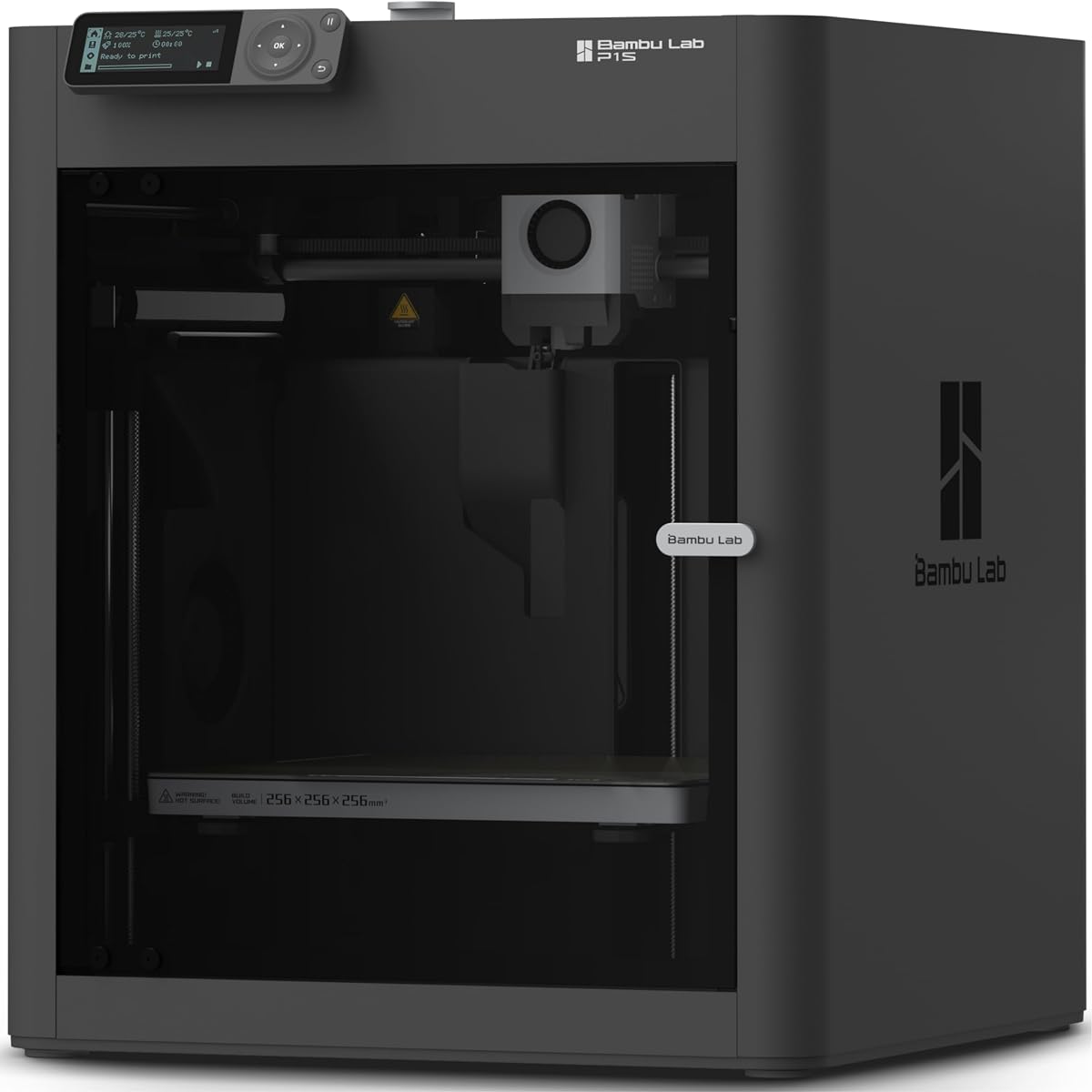
The Bambu Lab P1S offers a fully enclosed design ideal for advanced filaments like ABS and ASA. Its speed and auto bed leveling ensure consistent results. This reliability makes it a solid choice for high school engineering labs dealing with stronger materials.
We may earn a commission when you buy through this link, at no additional cost to you.
Setup takes just 15 minutes, saving instructor time. The enclosed body protects parts from drafts, ensuring structural integrity. While multi-color printing requires extra accessories, the base unit delivers high-performance FDM printing for demanding educational requirements.
The ability to print engineering-grade materials expands project possibilities. Students can create functional parts rather than just models. The trade-off is a higher initial cost, but the durability and material range justify the investment for specialized programs.
Ideal for schools needing versatile, robust machines, the P1S balances performance with ease of use. It supports both simple and complex prints, fostering an environment where students can explore advanced manufacturing concepts safely and efficiently.
Fully enclosed body improves print quality for advanced materials by maintaining consistent temperatures and protecting against drafts and ambient air fluctuations.
User-friendly assembly allows setup in 15 minutes, ensuring printers are ready for immediate use and reducing downtime for students and teachers.
We may earn a commission when you buy through this link, at no additional cost to you.
The FLASHFORGE AD5M combines speed with ease of use. Its auto one-click leveling and all-metal CoreXY structure ensure precision and durability. This makes it a reliable tool for classrooms where stability and simplicity are paramount for consistent student output.
We may earn a commission when you buy through this link, at no additional cost to you.
Quick-swap nozzles simplify maintenance, reducing downtime for repairs. Resume functionality after power outages prevents wasted prints and frustration. The flexible PEI plate allows easy model removal, supporting a smoother workflow from print to final assembly.
While it lacks an enclosure, the speed and automation features compensate for educational needs focused on PLA and PETG. The user-friendly design ensures both beginners and experts can operate it with minimal training or setup complexity.
For general education labs needing reliable, fast machines, the AD5M is an excellent choice. It supports creative projects efficiently, ensuring students stay engaged by minimizing technical interruptions and maximizing hands-on making time.
One-click auto leveling measures nozzle-to-plate distance precisely, ensuring perfect first layers without manual tools and reducing setup time significantly.
Automatic resume saves the layer after power loss, preventing material waste and ensuring prints complete successfully even with unexpected electrical interruptions.
We may earn a commission when you buy through this link, at no additional cost to you.
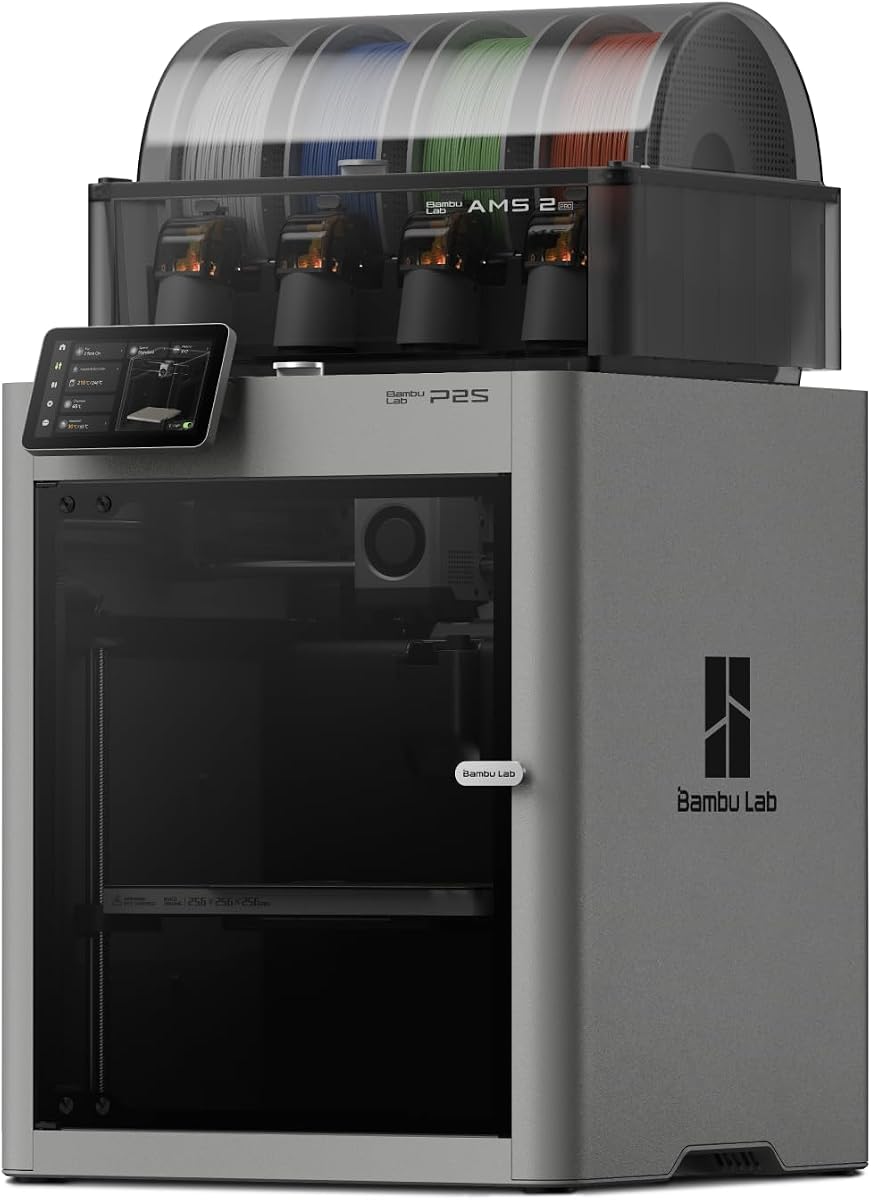
The Bambu Lab P2S Combo brings multi-color printing to education effortlessly. With the AMS 2 Pro included, students can create vibrant models that teach color theory and multi-material design. The adaptive airflow ensures quality across different materials in one print.
We may earn a commission when you buy through this link, at no additional cost to you.
Filament drying keeps spools ready, reducing failures caused by moisture. The 600mm/s speed supports rapid prototyping. This high-end combo streamlines workflow, allowing educators to focus on design rather than troubleshooting extrusion or quality issues in prints.
While the cost is higher, the included accessories provide immediate value. The large footprint requires dedicated space. However, for schools prioritizing visual impact and advanced capabilities, the versatility makes it a strong investment for STEM enrichment programs.
This printer is ideal for creative classes needing full-color output. It teaches students about material management and multi-step design processes. The reliability and ease of use make it a powerful tool for inspiring future designers and engineers.
AMS 2 Pro enables seamless multi-color prints, allowing students to create vibrant models that enhance visual communication and design learning.
Built-in drying and airflow systems ensure consistent extrusion and quality, reducing print failures and teaching students about material properties.
We may earn a commission when you buy through this link, at no additional cost to you.
The Ugee Funbox prioritizes safety and ease of use with UL GREENGUARD certification and anti-pinch features. It is designed for young learners, ensuring physical safety while printing. This makes it an excellent choice for elementary schools or home environments with children.
We may earn a commission when you buy through this link, at no additional cost to you.
AI tools allow text-to-print creation, removing design barriers. The built-in camera tracks progress for sharing. Setup is instant with no calibration needed. These features foster creativity without technical frustration, encouraging consistent use by younger students.
While it supports single-color printing only, its ease of use offsets this. The safe design minimizes supervision requirements, allowing teachers to manage multiple groups. It turns screen time into hands-on making effectively and safely for all ages.
For educators prioritizing safety and simplicity, the Funbox is a top option. It transforms 3D printing into an accessible hobby, nurturing spatial reasoning and design thinking in students who might otherwise find traditional printers too complex.
UL GREENGUARD Gold and toy safety compliance ensure safe air and physical design, giving parents and educators total peace of mind for classroom use.
AI engines turn text or drawings into 3D models instantly, helping students focus on creativity and engineering rather than complex modeling software.
We may earn a commission when you buy through this link, at no additional cost to you.
The Flashforge Adventurer 5M offers excellent performance for its price point. Its auto leveling and vibration compensation ensure high-quality layers. This makes it suitable for classrooms needing reliable output without complex setup or extensive training for students.
We may earn a commission when you buy through this link, at no additional cost to you.
The 600mm/s speed reduces wait time significantly. Dual-sided PEI plate supports various materials. Filament run-out sensor and power loss recovery add peace of mind. These features ensure consistent results even with less experienced operators handling daily printing tasks.
While it lacks an enclosed chamber, the open design ensures proper ventilation for standard filaments. The price balance makes it affordable for multiple units. Schools can equip larger groups effectively without sacrificing core performance or reliability standards.
Ideal for schools seeking reliable and fast machines, this model supports rapid prototyping and educational projects. It encourages student participation by minimizing technical hurdles and maximizing time spent on creative design and engineering challenges.
Vibration compensation eliminates ghosting, ensuring smooth and clear prints that meet high quality standards for educational and professional presentations.
Run-out sensor and power recovery ensure prints complete safely, preventing wasted materials and frustration from unexpected power failures during long jobs.
We may earn a commission when you buy through this link, at no additional cost to you.
The Bambu Lab A1 Mini Combo brings multi-color capabilities to a compact form. Ideal for smaller desks or limited spaces, it offers full calibration and noise canceling. This ensures it fits into busy classrooms without consuming excessive space or noise.
We may earn a commission when you buy through this link, at no additional cost to you.
Setup takes just 20 minutes, allowing quick deployment. The AMS lite allows vibrant prints right out of the box. It balances performance with space efficiency, making it perfect for home schools or individual student stations needing advanced features without bulk.
While the build volume is smaller, it suits most educational toys and parts. The trade-off is worth the versatility of multi-color printing in a small frame. It teaches advanced printing concepts in an accessible package for students.
For educators needing a space-efficient solution that still supports multi-color printing, the A1 Mini is a strong contender. It ensures students can experiment with complex designs while maintaining a clean and quiet learning environment.
Smaller footprint fits easily on desks, making it ideal for crowded classrooms or home setups where space is limited but performance is needed.
Included AMS lite enables multi-color prints out of the box, allowing students to explore color theory without buying expensive additional hardware.
We may earn a commission when you buy through this link, at no additional cost to you.
Selecting the right 3D printer for educational use involves balancing technical capabilities with learning goals. This guide outlines the essential factors to consider for ensuring your investment supports effective and engaging educational outcomes.
Educational printers should prioritize auto-calibration and user-friendly interfaces. These features reduce downtime and technical barriers, allowing students to focus on design rather than machine setup. Look for models that minimize manual adjustments like bed leveling or nozzle alignment.
Choose a printer with automation features that allow students to start printing quickly without extensive training or adult supervision.
Safety is paramount in educational settings. Fully enclosed designs with anti-pinch doors and certified low-emission materials protect users from hot surfaces and fumes. Ensure the machine meets safety standards suitable for classrooms.
Prioritize printers with certified safety features and enclosures to protect students from heat and chemicals during operation.
Print speed affects productivity and project scope. Faster printers allow more iterations within class periods. Build volume determines what can be printed; small units suffice for toys, while larger ones support complex structures.
Consider print speed and build volume to match project size and class time constraints.
Multi-color printing enhances visual learning and design complexity. Some models require additional hardware like AMS systems for this feature. Evaluate if your curriculum requires multi-color outputs or if monochrome suffices.
Check if the printer supports multi-color printing out of the box or requires add-ons for enhanced visual projects.
Educational projects often start with PLA but may require PETG or ABS for strength. Ensure the printer can handle the materials you plan to use. Higher temperature extruders and chambers support engineering-grade materials.
Select a printer compatible with the materials needed for your educational projects.
Consider the total cost of ownership, including filament and maintenance. If you need multiple units, bulk pricing or reliability should guide your choice. Look for durable machines that can withstand frequent use.
Balance initial cost with durability and long-term maintenance requirements for scalable classroom setups.
Access to community support and open-source software helps troubleshoot issues. Look for printers with active user communities and robust apps. This ensures you can find tutorials and help when needed.
Choose a printer with strong community support and accessible software for easier troubleshooting.
Quiet operation is essential in shared environments. High-noise printers can disrupt lessons. Look for models with noise-canceling fans and motors to maintain a calm learning atmosphere.
Select printers with low noise levels to avoid disturbing classroom activities.
Begin by reading the manufacturer's manual and completing setup steps like auto-calibration. Ensure the bed is clean and level. Load filament according to instructions, then start with a test print to verify settings are correct for your material.
Regularly clean the nozzle and check belts for tension. Use a soft brush to remove dust from the build plate. Monitor for wear on parts like nozzles and replace them promptly to maintain print quality and prevent jams.
After each session, allow the printer to cool completely before covering or moving. Store filament in dry conditions to avoid moisture issues. Keep software updated to ensure optimal performance and security for your device.
The Ugee Funbox and Entina Tina2C are ideal for elementary schools due to their safety certifications, ease of use, and educational modules. They feature enclosed designs and simplified controls that make them safe and accessible for younger students.
Yes, enclosed models are safer for educational settings as they protect against hot surfaces and contain fumes. They also maintain stable temperatures for consistent prints, which is beneficial for learning environments with varying conditions.
Choose enclosed printers for safety and handling of advanced materials like ABS. Open printers are cheaper and easier to maintain but require supervision. Decide based on safety requirements and the types of materials you plan to use.
Look for auto-calibration, reliable bed adhesion, and quick setup. Safety certifications and remote monitoring capabilities are also important. These features ensure smooth operation and minimize downtime during lessons.
Modern educational printers often include safety features like auto-shutoff and enclosures. However, adult supervision is recommended. Always check safety certifications and teach students safe handling practices when operating the machine.
Space requirements vary by model. Compact units like the A1 Mini need minimal desk space, while larger ones require dedicated areas. Consider ventilation space and the size of the build volume when planning placement.
Regular maintenance includes cleaning the nozzle, checking belts, and ensuring the build plate is level. Replace worn parts like nozzles periodically. Keeping the machine clean and well-lubricated extends its lifespan and ensures consistent print quality.
Yes, some models like the Bambu Lab P2S Combo or Snapmaker U1 support multi-color printing. However, this may require additional modules like AMS systems, which add to the cost but offer significant creative possibilities.
Choosing the right 3D printer for educational use depends on your specific goals and environment. Whether you prioritize speed, safety, or multi-color capabilities, each model in this guide offers unique benefits tailored to different learning needs and classroom setups.
We recommend focusing on ease of use and safety features for younger students. For advanced labs, multi-material capabilities and robust build volumes are key. Evaluate your curriculum requirements carefully to ensure the printer supports the learning outcomes you aim to achieve.
Prices and availability can fluctuate, so verify current details before purchasing. We hope this guide helps you make an informed decision that inspires creativity and technical skills in your students. Happy printing and teaching!