
2Pcs ADS1115 Module
5.0Editor score
Affordable Two Pack Option
Programmable Gain Amplifier
Wide Voltage Supply Range
This comprehensive guide compares the top ten Arduino ADC board options available in October 2026 to help makers and engineers select the right analog
Analog to digital converters are essential components for any maker looking to read sensor data with microcontrollers that lack native analog inputs. These boards bridge the gap between real world signals and digital processing units.
We analyzed ten leading ADC modules based on resolution, channel count, interface type, and user feedback. Our goal is to highlight the most reliable options for hobbyists and professionals alike.
Each pick includes detailed specifications and real-world application notes. Prices fluctuate frequently so verify current listings before purchasing to ensure you get the best value for your specific needs.
5.0Editor score

4.7Editor score

4.6Editor score
The following table provides a side-by-side comparison of all ten selected ADC modules. Review the key specifications to find the board that matches your project requirements.




This ADC module stands out for its high precision and versatile interface options. With a rating of 4.7 stars it is a top choice for makers needing reliable analog conversion.
We may earn a commission when you buy through this link, at no additional cost to you.
The 16-bit resolution ensures accurate readings for low voltage signals. The onboard PGA allows you to adjust gain for different sensor types effectively.
While it lacks the speed of 24-bit modules it balances performance and cost well. It is ideal for environmental monitoring or simple data logging tasks.
Buyers seeking a dependable board for Arduino or Pi projects will find this pack valuable. It simplifies connecting analog sensors without complex wiring.
The 16-bit conversion provides detailed data for sensitive measurements like temperature or humidity changes.
I2C communication requires only two wires making it simple to add to existing circuits without clutter.
We may earn a commission when you buy through this link, at no additional cost to you.
This board delivers exceptional accuracy with its 24-bit conversion capability. It is designed for projects requiring precise measurement of small voltage variations.
We may earn a commission when you buy through this link, at no additional cost to you.
The inclusion of an onboard reference voltage source ensures stable readings without external components. This makes it reliable for critical applications.
However the SPI interface and higher channel count may be overkill for simple hobby projects. It is best suited for advanced data acquisition tasks.
Select this if you need the highest precision available for your microcontroller. It excels in professional or research environments where data integrity is key.
The built-in voltage reference eliminates the need for extra components and reduces noise in your readings.
Supporting eight channels allows you to monitor multiple sensors simultaneously without switching multiplexers.
We may earn a commission when you buy through this link, at no additional cost to you.
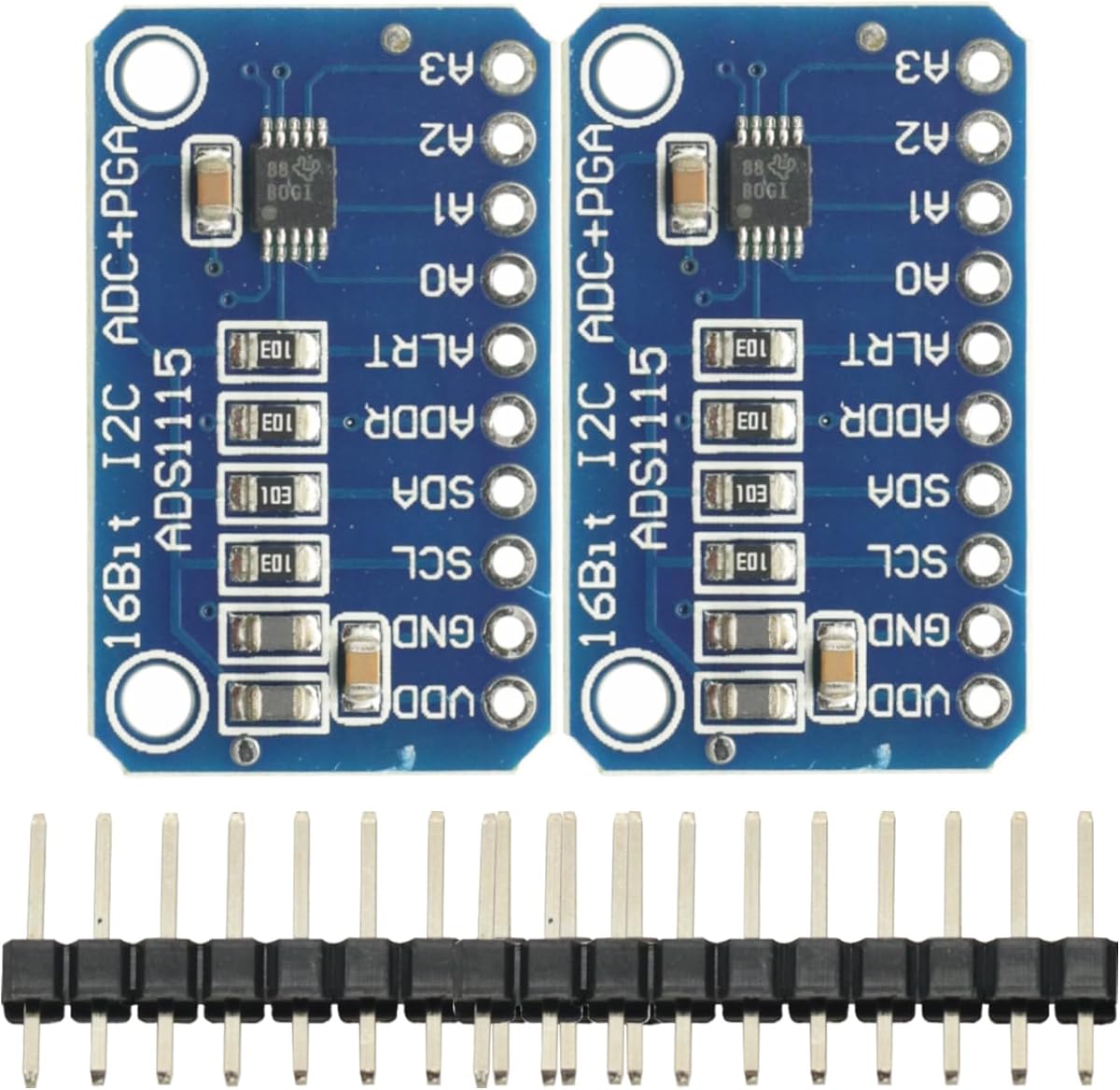
This two-pack offers incredible value for users needing multiple boards. With a perfect rating of 5.0 it satisfies buyers looking for reliability at a low cost.
We may earn a commission when you buy through this link, at no additional cost to you.
The programmable data rate allows you to balance speed and power consumption. This flexibility is useful for battery-operated devices.
While the package is simple the board itself performs well compared to pricier alternatives. It meets standard needs for most hobbyist applications.
Ideal for classrooms or workshops where many students need individual boards. You get quality performance without breaking your budget.
You can adjust sampling speed to optimize for battery life or faster data needs.
Seven input ranges let you measure different voltage levels accurately across diverse sensors.
We may earn a commission when you buy through this link, at no additional cost to you.
This bundle provides three units which is excellent for multi-node projects. The comparator mode adds utility for triggering events based on voltage thresholds.
We may earn a commission when you buy through this link, at no additional cost to you.
The I2C interface makes it straightforward to connect to a Raspberry Pi which lacks native analog inputs. It fills a critical gap in Pi hardware.
Some users report inconsistency in build quality but most find it functional. Ensure you check pins upon arrival.
Use this for distributed sensing projects where you need multiple boards. It is a practical choice for Pi-based automation systems.
This feature allows the board to alert you when a signal crosses a specific threshold automatically.
Designed to work seamlessly with Raspberry Pi GPIO pins without level shifters.
We may earn a commission when you buy through this link, at no additional cost to you.
This set offers four boards for extensive testing or large scale deployments. It is perfect for scenarios where you need to monitor many points independently.
We may earn a commission when you buy through this link, at no additional cost to you.
The auto shut down feature helps conserve power when data is not needed. This is beneficial for solar or battery-powered stations.
The rating is slightly lower suggesting some units might have issues. However for the price it remains a strong contender for bulk needs.
Choose this if you need to equip a large network of sensors. It saves time and money compared to buying single units.
Automatic shut down reduces energy usage when the system is idle.
Having four units allows you to scale your project without multiple orders.
We may earn a commission when you buy through this link, at no additional cost to you.
A perfect rating of 5.0 indicates high satisfaction among buyers. This two-pack is great for students learning about analog to digital conversion.
We may earn a commission when you buy through this link, at no additional cost to you.
The programmable gain amplifier ensures you can read both high and low voltage signals. This versatility is key for varied experiments.
While the manual is basic online resources make up for it. You will find plenty of tutorials for this common module.
Recommend for labs where reliability and cost are both factors. It provides a smooth learning curve for new engineers.
Adjust the gain to amplify small signals for better resolution in sensitive tests.
Works with 3.3V and 5V logic so it fits most common development boards easily.
We may earn a commission when you buy through this link, at no additional cost to you.
This brand offers a distinct gold plated finish for better conductivity and durability. It is designed with ESP32 projects in mind.
We may earn a commission when you buy through this link, at no additional cost to you.
The pre-soldered headers save you time on assembly and reduce the risk of damage. Quality is generally higher than generic options.
While it costs more it justifies the expense with better build quality. Reliability is crucial for long-term or commercial prototypes.
Best for makers who prioritize component quality over saving a few dollars. It ensures your projects run smoothly without hardware issues.
The gold plating resists oxidation which helps maintain good electrical contact over time.
Optimized for use with ESP32 microcontrollers for IoT and wireless sensor applications.
We may earn a commission when you buy through this link, at no additional cost to you.
This module is built for high speed data acquisition tasks. It can sample at 200KHz allowing you to capture fast changing signals accurately.
We may earn a commission when you buy through this link, at no additional cost to you.
The eight synchronous channels ensure all inputs are sampled at the exact same time. This is critical for phase analysis or power monitoring.
However the complexity and rating suggest it is hard to use. You need specific SPI knowledge and careful power management.
Use only if you need high bandwidth or precise timing. It is a specialist tool rather than a general purpose board.
Capture rapid signal changes that standard ADCs would miss or distort.
All channels sample simultaneously ensuring no timing skew between different sensor readings.
We may earn a commission when you buy through this link, at no additional cost to you.
This bulk pack provides four boards for extensive use across multiple devices. It maintains a high rating of 4.6 indicating consistent quality.
We may earn a commission when you buy through this link, at no additional cost to you.
The modules are optimized for sensor readings ensuring stable and accurate data. They work well with popular platforms like Arduino and ESP32.
While they are standard boards they perform reliably for most tasks. You get plenty of units for prototyping or production batches.
Select this for large scale sensor network setups. It offers a practical balance of quantity and performance.
Calibrated to work well with common sensors like thermistors and pressure transducers.
Works with almost any microcontroller supporting I2C making it versatile for various projects.
We may earn a commission when you buy through this link, at no additional cost to you.
This is the classic single unit option for those who just need one board. It is cost effective for small projects.
We may earn a commission when you buy through this link, at no additional cost to you.
The built-in PGA allows you to amplify small signals for better resolution. It is a simple and effective design.
While it lacks advanced features it covers the basics well. Many users rely on it for standard temperature and voltage monitoring.
Choose this if you only need one board and want to save money. It is a workhorse for basic analog tasks.
Adjust amplification to match your sensor range for maximum precision.
Ideal for small scale projects where a full pack is unnecessary.
We may earn a commission when you buy through this link, at no additional cost to you.
Selecting the right ADC board depends on several technical and practical factors. Here is what you need to consider before making a purchase.
Resolution refers to the number of bits the converter uses to represent analog voltage. Higher resolution like 24-bit provides more precise data than 16-bit which is suitable for general use.
Choose 16-bit for most sensor projects and 24-bit for critical measurements where small changes matter.
Count how many sensors you need to connect simultaneously. Some boards support four inputs while others offer eight or more.
Ensure the board has enough channels to avoid needing a multiplexer which adds complexity.
I2C boards are easier to wire but slower than SPI boards. SPI offers faster data rates but requires more pins.
Pick I2C for simple setups and SPI for high-speed or multi-sensor data capture.
Sampling rate determines how fast the board can take measurements. Fast changing signals like audio or vibration require higher rates.
Most sensors need low rates so standard boards are sufficient for most tasks.
A Programmable Gain Amplifier helps read very small voltages accurately. It multiplies the signal before conversion.
Look for boards with PGA if you work with sensors that output microvolt signals.
Ensure the board works with your microcontroller logic voltage. Some boards support both 3.3V and 5V directly.
Avoid boards that need level shifters unless you already have them in your project.
Reputable brands often provide better quality control and documentation. Generic modules can vary in build quality.
Check user reviews to gauge reliability before committing to a specific brand.
Buying in bulk packs often reduces the cost per unit significantly. This is beneficial for workshops or large scale deployments.
Balance your project needs with cost by comparing single units versus multi-packs.
Start by connecting the SDA and SCL pins to the corresponding I2C pins on your microcontroller. Power the board using the correct voltage range specified in the data sheet.
Install the necessary library in your Arduino IDE or development environment. Most boards work with standard libraries like Adafruit ADS1x15 which simplify code.
Protect your board from moisture and dust if used outdoors. Store spare modules in a dry place to prevent oxidation on pins.
Yes most manufacturers provide libraries that handle the low level communication. These libraries simplify reading values and configuring settings without writing complex code.
You can connect multiple boards if they support different I2C addresses. This allows you to expand the number of analog inputs available on your microcontroller.
Most boards accept input up to the supply voltage which is often 5V. Exceeding this limit can damage the chip so always check the datasheet.
Noise often comes from unstable power or long wires. Use decoupling capacitors and keep wires short to improve signal quality.
I2C is generally slower than SPI but is easier to wire. For most sensor applications the speed difference is not noticeable.
Yes these boards are compatible with Raspberry Pi GPIO pins. Since Pi lacks native analog inputs these boards are essential for reading sensors on Pi.
This guide covered ten diverse ADC options ranging from high precision 24-bit modules to affordable multi-packs. Each serves different project needs effectively.
Prioritize resolution and channel count based on your specific sensors. A balance of features and cost will serve most hobbyists best.
Always check current prices and stock before buying as availability changes. With the right board your projects will gain better analog capabilities.