
HiLetgo W5500 SPI to LAN Ethernet Network Module TCP IP STM32 Interface 3.3V 5V for Arduino WIZ820io RC5
4.3Editor score
W5500 Ethernet LAN Network Module
3.3V external power supply mode
TTL level 3.3V SPI interface
This guide compares the top Arduino Lan Ethernet Module options for reliable wired connectivity, covering W5500, W5100, and ENC28J60 chips for your projects.
Choosing the right Arduino Lan Ethernet Module ensures your projects stay connected reliably. Whether you need stable TCP/IP stacks or low-power options, the hardware matters immensely for success.
We evaluated ten popular modules based on chip performance, socket support, and compatibility. This list covers everything from budget-friendly SPI boards to robust industrial-grade Ethernet solutions.
Each pick shows key specs and real-world strengths to help you decide. Prices change frequently, so check current listings before purchasing to ensure you get the best value today.
4.3Editor score

4.2Editor score

4.7Editor score
This table provides a side-by-side comparison of all ten modules. Compare chip types, interface speeds, voltage requirements, and package sizes to find the perfect fit for your Arduino setup.



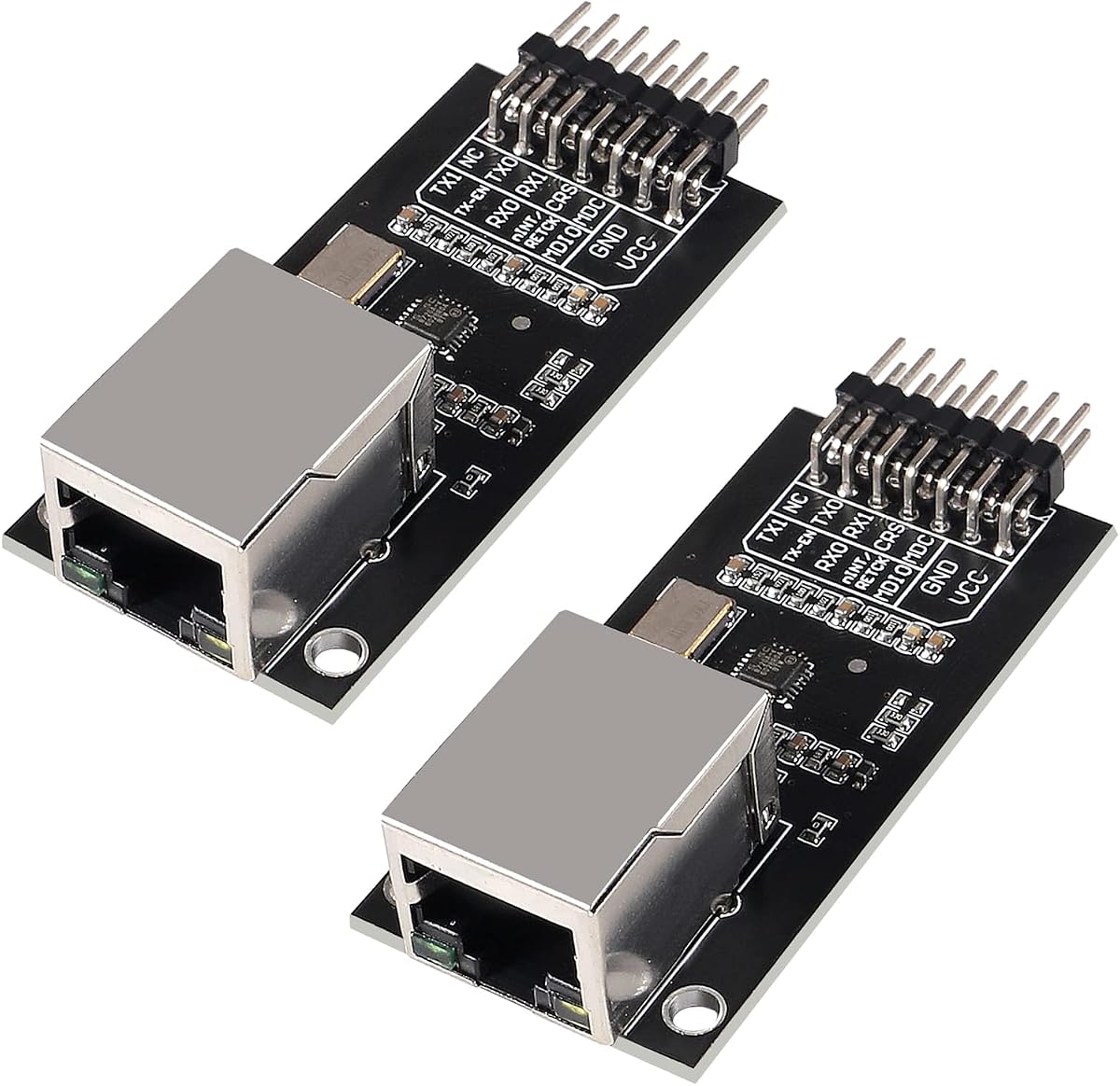

This module stands out as a robust choice for networking needs with its W5500 chip. It offers reliable TCP/IP support and comes in a two-pack for versatile applications.
We may earn a commission when you buy through this link, at no additional cost to you.
The internal 32K bytes memory for TX/RX buffers ensures efficient data handling. This is critical for applications requiring high throughput or simultaneous socket usage like web servers.
While powerful, it requires careful voltage regulation to avoid instability. Users should ensure their power source meets the current demands of the module during operation.
Ideal for advanced makers building IoT hubs or robotics projects. Its ability to handle multiple connections makes it a top-tier option for complex system architectures.
The W5500 chip handles full TCP/IP stacks hardware, offloading tasks from the main microcontroller for faster processing.
With eight independent sockets, you can maintain multiple network connections simultaneously without complex software workarounds.
We may earn a commission when you buy through this link, at no additional cost to you.
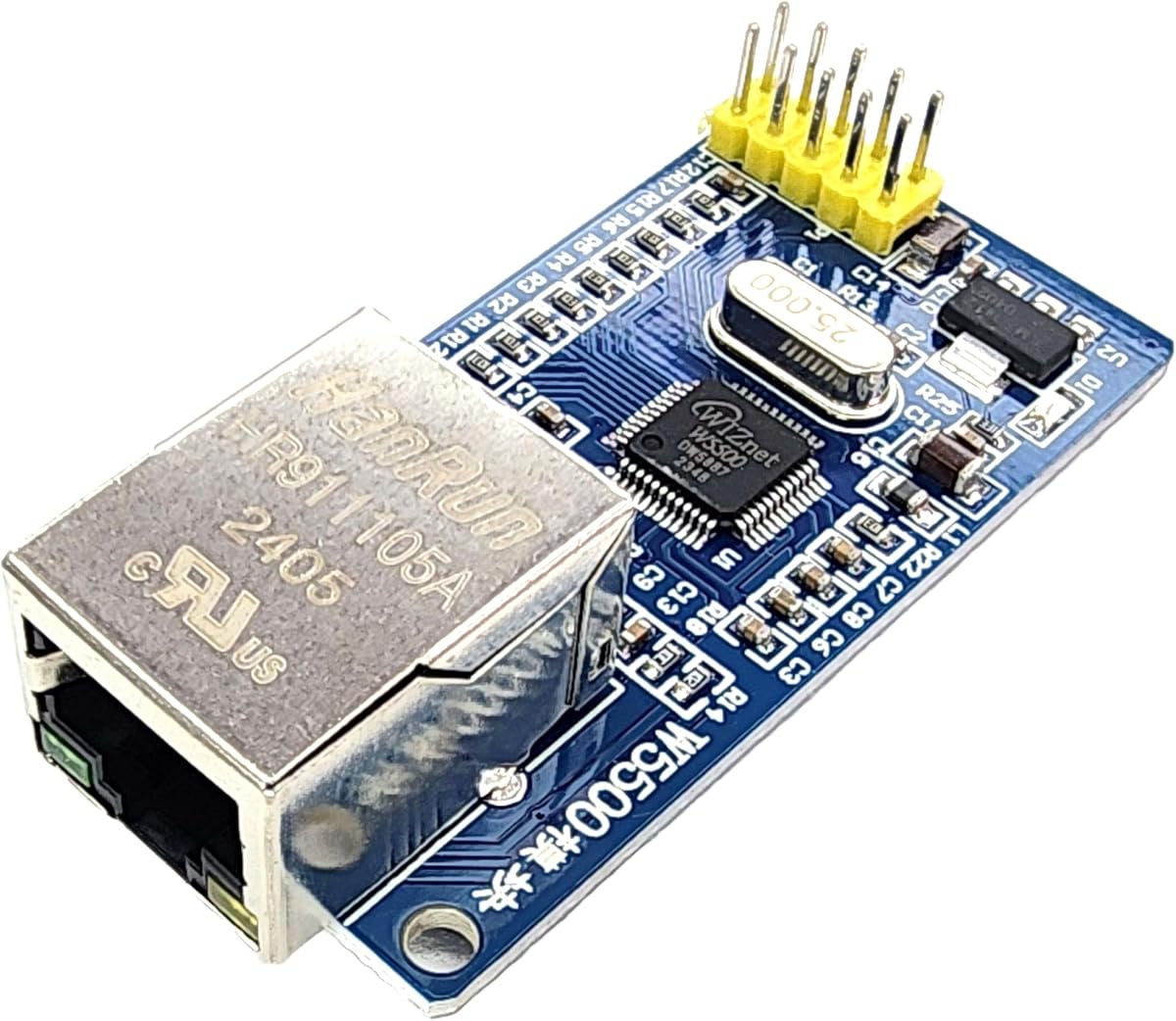
Affordability meets performance with this W5500 module. It delivers excellent connectivity for its price, making it ideal for hobbyists starting out with Ethernet.
We may earn a commission when you buy through this link, at no additional cost to you.
The interface is straightforward, using standard TTL level SPI. This simplifies wiring for Arduino boards and ensures broad compatibility with various microcontrollers.
Users must provide a stable 3.3V power supply with enough current. This extra step ensures reliability but adds slight complexity to the power design.
Perfect for students or small projects needing reliable internet access. It balances cost and functionality better than most alternatives in this category.
This module offers high-end W5500 features at a fraction of the cost of shield variants.
Pin layouts are optimized for quick breadboarding and permanent soldering on custom PCBs.
We may earn a commission when you buy through this link, at no additional cost to you.
This 5-pack offers exceptional value for bulk projects or classrooms needing multiple units. The high rating reflects consistent quality and performance across the batch.
We may earn a commission when you buy through this link, at no additional cost to you.
The ENC28J60 is known for low power consumption. This makes it suitable for battery-powered devices where energy efficiency is a priority over speed.
It lacks the advanced features of newer chips like W5500. However, for basic web client tasks or sensor data logging, it performs reliably and effectively.
Great for educational sets or large IoT deployments. Buying in bulk reduces the cost per unit significantly compared to individual purchases.
The five-pack format ensures you have spares ready for prototyping and production runs.
Low power design extends battery life significantly in portable wireless gateway applications.
We may earn a commission when you buy through this link, at no additional cost to you.
This module integrates a full TCP/UDP stack for robust communication. Its industrial-grade PHY offers auto-negotiation for flexible network connections.
We may earn a commission when you buy through this link, at no additional cost to you.
Despite solid specs, user feedback indicates potential inconsistencies. This suggests quality control might vary between batches, so testing is advised before bulk adoption.
The dual voltage operation helps match various board logic levels. This flexibility is useful when interfacing with older 5V systems alongside newer 3.3V designs.
Recommended for users comfortable with troubleshooting hardware quirks. If you prioritize specific physical features over brand reputation, this module is worth considering.
Supports both 10Mbps and 100Mbps speeds with automatic detection on most networks.
The industrial PHY ensures signal integrity even in electrically noisy environments.
We may earn a commission when you buy through this link, at no additional cost to you.
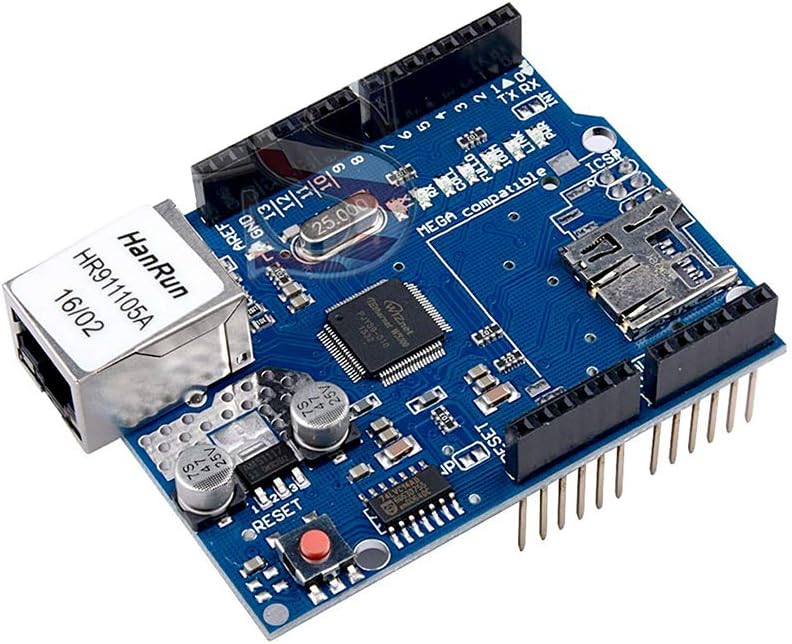
This shield provides a classic plug-and-play Ethernet solution. It stacks directly onto your Arduino, offering immediate network access without soldering wires.
We may earn a commission when you buy through this link, at no additional cost to you.
The integrated SD card slot allows for local data storage. This is handy for logging sensor data directly to a file server connection.
It uses the older W5100 chip which is robust but older. Users might notice it is less power efficient than modern SPI modules.
Ideal for quick prototyping or students learning networking basics. The shield form factor simplifies setup significantly for beginners.
Combines Ethernet connectivity and SD storage in one stackable unit.
Direct RJ45 connection eliminates complex wiring and external breakout boards.
We may earn a commission when you buy through this link, at no additional cost to you.
This classic module remains a staple for many makers. Its ENC28J60 chip is well-supported by libraries and easy to interface with standard Arduino code.
We may earn a commission when you buy through this link, at no additional cost to you.
The 25MHZ crystal ensures stable clock timing. This consistency helps maintain reliable data transfer rates even in simple networks.
Performance is lower than newer chips, requiring more CPU attention. You may need to allocate more processing time to handle network packets.
Perfect for projects where cost and size matter more than speed. It is a reliable choice for basic web server tasks.
Countless existing code examples make integration effortless for developers.
Small PCB footprint saves space on crowded circuit boards and prototypes.
We may earn a commission when you buy through this link, at no additional cost to you.
Another strong bulk option from ACEIRMC offers consistent quality. The five-pack ensures availability for multiple projects or classroom sets.
We may earn a commission when you buy through this link, at no additional cost to you.
It complies with IEEE 802.3 standards for broad compatibility. This guarantees it works with most standard routers and switches without issues.
While not as fast as W5500 options, it is dependable. Users should expect steady performance for low-bandwidth applications.
Best for educational environments or large sensor networks. The multiple units allow parallel development across different teams.
Adheres to strict Ethernet standards for seamless network integration.
Multiple units enable simultaneous testing and development across teams.
We may earn a commission when you buy through this link, at no additional cost to you.
With a perfect rating, this module delivers consistent reliability. It is explicitly compatible with ESP32 boards which are popular for modern IoT.
We may earn a commission when you buy through this link, at no additional cost to you.
The full-size RJ45 port provides a sturdy connection. This ensures physical durability which is often lacking in smaller breakout modules.
Tutorials and sample codes are readily available online. This makes it accessible even for users new to networking protocols.
Recommended for hobbyists seeking plug-and-play simplicity. Its high rating suggests it works reliably out of the box.
Full-size RJ45 jacks resist loosening during heavy usage.
Works seamlessly with ESP8266 and ESP32 boards alongside Arduino.
We may earn a commission when you buy through this link, at no additional cost to you.
This module focuses on the physical layer with high-performance transceiver tech. It supports auto-MDIX which simplifies cable connections.
We may earn a commission when you buy through this link, at no additional cost to you.
The integrated regulator allows a single 3.3V supply. This simplifies power management for systems where voltage regulation is tight.
Setup can be more complex than standard SPI modules. Users need specific configuration for the LAN8720 chip to function optimally.
Suitable for embedded engineers needing specific PHY control. It is less ideal for general hobbyists seeking simple plug-and-play.
Automatically detects cable type to eliminate crossover requirements.
Internal regulator reduces external component count significantly.
We may earn a commission when you buy through this link, at no additional cost to you.
Hailege offers a reliable ENC28J60 module with strong ratings. The 25MHZ crystal ensures timing accuracy for data transfers.
We may earn a commission when you buy through this link, at no additional cost to you.
The DIP28 chip design is robust and easy to handle. It provides consistent connectivity for various microcontroller boards.
Performance is adequate for standard web tasks. Users seeking higher speeds might find it slower than W5500 alternatives.
Good for budget-conscious projects needing stable internet. Its high rating suggests it is a trustworthy choice for basic networking.
Precise crystal oscillators ensure data integrity over long sessions.
High user ratings indicate consistent reliability across batches.
We may earn a commission when you buy through this link, at no additional cost to you.
Selecting the right Ethernet module involves balancing speed, power, and compatibility. This guide explains the key factors to consider before buying.
The chipset determines the module's capabilities and performance. W5500 chips offer hardware TCP/IP stacks and multiple sockets, making them ideal for complex projects. ENC28J60 chips are older but simpler and cheaper, suitable for basic needs.
Choose newer chips like W5500 for robust performance or older ones like ENC28J60 for budget projects.
Arduino boards vary in logic levels. Some modules support 3.3V only while others handle 5V. Using incorrect voltage can damage your microcontroller or cause instability.
Ensure the module supports your board's voltage, typically 3.3V or dual voltage 3.3V/5V.
Most modules use SPI for communication which is fast and standard. Shields use direct pins which stack on top. Some older modules might use different interfaces requiring specific wiring.
Prioritize SPI modules for flexibility and shields for simplicity if using specific Arduino boards.
Modules like ENC28J60 are low power while others require more current. Battery powered projects need efficient designs to last longer.
Check power specs carefully if you need low current draw for portable devices.
Number of independent sockets affects how many connections you can manage. W5500 typically offers eight sockets versus fewer on older chips.
If you need simultaneous connections or web servers, choose a module with higher socket counts.
Buying single units is fine for testing but bulk packs offer better value for multiple projects. Many listings offer 2 or 5 piece sets.
Consider bulk purchases if you plan to deploy several devices or need spares for prototyping.
Size matters when fitting modules into tight enclosures. Shield formats are larger while breakout boards are compact. Check if the RJ45 port fits your needs.
Select a physical format that matches your project's size constraints and enclosure plans.
Ensure the module works with your specific microcontroller. Most support Arduino Uno and Mega but some need additional level shifters.
Read compatibility notes carefully to avoid wiring issues with your specific board.
Connect the module to your Arduino using SPI pins. Match MISO, MOSI, SCK and CS signals correctly. Ensure power supply is stable to avoid data errors.
Install the necessary Ethernet library in your IDE. Configure IP settings manually or use DHCP based on your network. Verify the connection by checking link status lights.
Keep the module dry and avoid physical stress on the RJ45 port. Regularly inspect the pins for oxidation if used in humid environments to maintain connectivity.
It depends on your setup. Many modules can draw power directly from the board if the board provides enough current. However, for stability, especially with W5500 models, an external 3.3V supply is often recommended to prevent brownouts.
The W5500 is newer with a hardware TCP/IP stack and multiple sockets allowing higher performance. The ENC28J60 is older, cheaper and uses more CPU power but is simpler to implement for basic projects.
Yes most modern modules like W5500 are compatible with ESP32. Ensure you check voltage levels since ESP32 operates at 3.3V logic which matches most Ethernet modules directly.
This could be due to incorrect wiring, power issues or wrong library configuration. Check that the CS pin is properly assigned in your code and that the network cable is functional and connected to a working router.
Most budget modules like ENC28J60 and W5100 support IPv4 only. Newer chips like W5500 may offer better support but implementation varies. Always verify protocol support before starting a project requiring IPv6.
The SPI clock speed typically ranges up to 50MHz depending on the module. Higher speeds allow faster data transfer but require stable wiring to prevent signal interference over long wires.
We reviewed ten reliable options ranging from the versatile W5500 to the budget friendly ENC28J60. Each offers unique strengths depending on your performance and cost requirements.
Prioritize chip capability and power needs based on your project. If you need multiple connections choose a W5500 model. For simple tasks older chips save money.
Prices and availability change frequently so check current listings before finalizing your order. Ensure you have the right power supply and cables ready to start building.