
JOYO MOMIX CAB
4.2Editor score
Direct monitoring
Pocket-sized portability
No charging needed
This guide compares the top audio interfaces for guitar to help you find the perfect recording solution for your home studio or mobile setup in 2026.
Finding the right audio interface for guitar is crucial for capturing your unique sound with clarity and precision. Whether you are a beginner recording demos or a professional tracking full albums, the interface serves as the bridge between your instrument and your digital audio workstation.
We have evaluated ten top-rated models based on sound quality, connectivity, ease of use, and value for money. Our comparison covers a wide range of options from budget-friendly mobile adapters to high-end studio units with advanced features like loopback and direct monitoring.
Each product review highlights key specifications, pros and cons, and ideal use cases to help you make an informed decision. Please note that product availability and pricing may change over time, so always check the latest details before purchasing your next piece of gear.
4.2Editor score
4.6Editor score

The following table provides a side-by-side overview of all ten products featured in this guide. Use this comparison to quickly assess key specifications and decide which model aligns best with your recording needs and budget constraints.



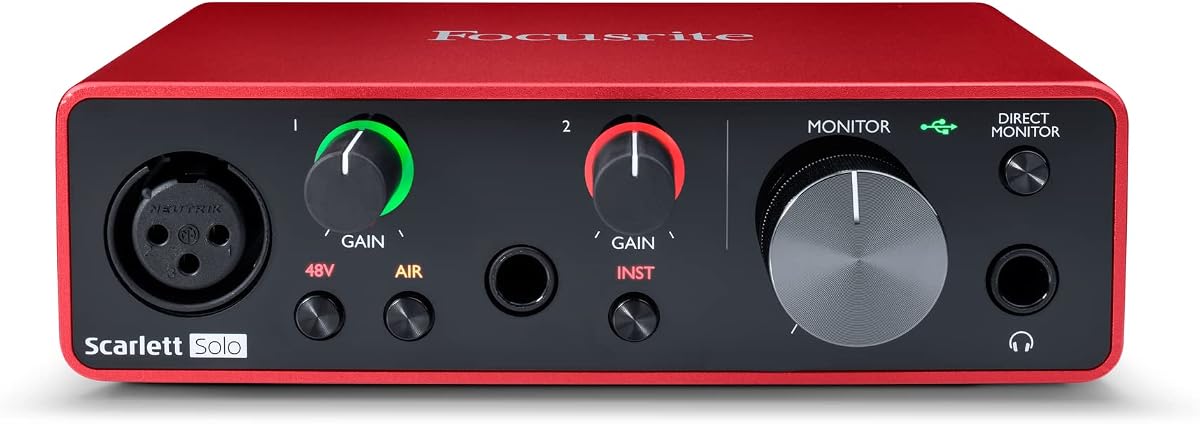
The Focusrite Scarlett Solo 3rd Gen stands out as the top choice for guitarists seeking professional recording quality. With a solid 4.6 rating, it delivers high-performance preamps that ensure your guitar tone is captured with exceptional clarity and depth.
We may earn a commission when you buy through this link, at no additional cost to you.
Its standout feature is the Air mode, which adds brightness and detail to acoustic instruments. The Gain Halos provide visual feedback to prevent clipping, ensuring you achieve the perfect level every time you record.
While it offers fewer inputs than larger units, the single instrument input is sufficient for most solo recording needs. The trade-off is the lack of loopback for streaming, but the audio fidelity makes up for this limitation.
This interface is ideal for home studio musicians who want reliable performance and great sound. Its reputation for quality and support makes it a smart investment for serious guitarists starting their recording journey.
The Air feature simulates the vintage preamp behavior to add openness to your recordings, making guitars cut through the mix naturally.
The Gain Halos ring around the input knobs change color to indicate optimal levels, making it easy to set levels without looking at meters.
We may earn a commission when you buy through this link, at no additional cost to you.
The JOYO MOMIX CAB is an excellent budget-friendly solution for guitarists who need to record directly on their phones. It offers direct monitoring with zero latency, allowing you to hear your instrument in real time without delay.
We may earn a commission when you buy through this link, at no additional cost to you.
Its pocket-sized design makes it incredibly convenient for capturing ideas on the go. You simply plug in your guitar and headphones, and start recording without needing batteries or software installations.
Keep in mind that it does not support real-time amp simulations in the signal path. However, this simplicity ensures a clean, dry signal that you can process later in your preferred software.
If you are a casual player or content creator looking for a simple and cheap interface, this is a perfect fit. It proves that you do not need to spend a fortune to record high-quality guitar tracks.
The direct monitoring feature ensures you hear your playing instantly through headphones, which is crucial for staying in time with backing tracks.
Clip it to your pocket or strap and take it anywhere, ensuring you never miss an inspired moment while traveling or practicing.
We may earn a commission when you buy through this link, at no additional cost to you.
The M-AUDIO M-Track Duo provides a versatile recording solution with two inputs, making it ideal for guitarists who also play bass or sing while performing. It ensures clear sound with its transparent Crystal Preamps that work well with various microphones.
We may earn a commission when you buy through this link, at no additional cost to you.
The combo inputs allow you to connect both your guitar and a vocal mic simultaneously. This flexibility is great for live streaming or recording demos where you want to capture multiple sources at once.
While it uses an older USB-A connector, the sound quality remains competitive. The included MPC Beats software adds value by giving you tools to arrange and mix your recordings immediately.
This unit is perfect for musicians who need more connectivity without paying premium prices. It strikes a great balance between features, performance, and ease of use for home studios.
Two XLR/Line/Instrument inputs allow you to mix guitar and vocals or two instruments simultaneously without needing extra gear.
These preamps are designed to provide a clean, transparent sound coloration, ensuring your recordings remain true to the original instrument.
We may earn a commission when you buy through this link, at no additional cost to you.
The IK Multimedia iRig USB is designed for musicians who want to move easily between digital recording and analog amplification. It features a dedicated Amp out that lets you connect to your pedalboard or rig while recording to your computer.
We may earn a commission when you buy through this link, at no additional cost to you.
With 24-bit 48kHz resolution, it captures every nuance of your playing. The included USB-C cable ensures compatibility with modern laptops and devices, making setup seamless for both Mac and PC users.
Its robust design withstands the rigors of travel, and the software suite helps you get started quickly. This makes it a strong contender for those who need a reliable mobile studio setup.
Ideal for gigging musicians and travelers, this interface bridges the gap between home and live recording. It offers enough power for professional tasks while remaining simple enough for quick demos.
The Amp out jack allows you to split your signal to an amp and the interface, keeping your tone intact while recording.
Supports iPad, Mac, and PC with a single cable, ensuring you can plug in and play anywhere without compatibility headaches.
We may earn a commission when you buy through this link, at no additional cost to you.
The MAONO PS22 Lite is tailored for streamers and content creators who need high-fidelity audio for their broadcasts. With 24-bit/192kHz resolution and a 106dB dynamic range, it ensures your guitar tracks are recorded with exceptional detail and clarity.
We may earn a commission when you buy through this link, at no additional cost to you.
A key feature for streamers is the loopback function, which allows you to play system audio and your guitar simultaneously to your audience. The included ProStudio routing software makes it easy to manage these channels without extra hardware.
Its compact form factor fits easily on any desk, and the light ring indicates input status clearly. The phantom power support means you can also use high-quality microphones for voiceovers or podcasts.
This interface is best suited for online personalities who prioritize audio quality and broadcasting flexibility. It delivers professional results for a price that fits the budget of most creators.
Loopback functionality lets you mix chat audio, game sounds, and your instrument into a single stream for a polished broadcast experience.
A 106dB dynamic range ensures that even the quietest nuances and loudest strums are captured without distortion or noise.
We may earn a commission when you buy through this link, at no additional cost to you.
The PIYONE Audio Interface combines modern design with high-fidelity performance for the home studio. Its class-compliant USB-C connection ensures a plug-and-play experience on both Mac and PC without needing extra software or power supplies.
We may earn a commission when you buy through this link, at no additional cost to you.
The illuminated control rings not only look stylish but help you see your settings in low-light conditions. With a 24-bit/192kHz conversion rate, it captures your guitar with the precision needed for professional mixes.
It includes a loopback function for monitoring and streaming, and the direct monitor switch allows for latency-free listening. This makes it versatile for recording sessions and live content creation alike.
This device is a great pick for creators who want a professional look and solid performance. It simplifies the recording process while delivering clear, reliable audio for any project.
The fixed LED light rings on gain knobs provide clear visual feedback, allowing you to adjust levels even in dark studios.
The direct monitor feature routes your input straight to headphones, ensuring you hear your guitar instantly during tracking.
We may earn a commission when you buy through this link, at no additional cost to you.
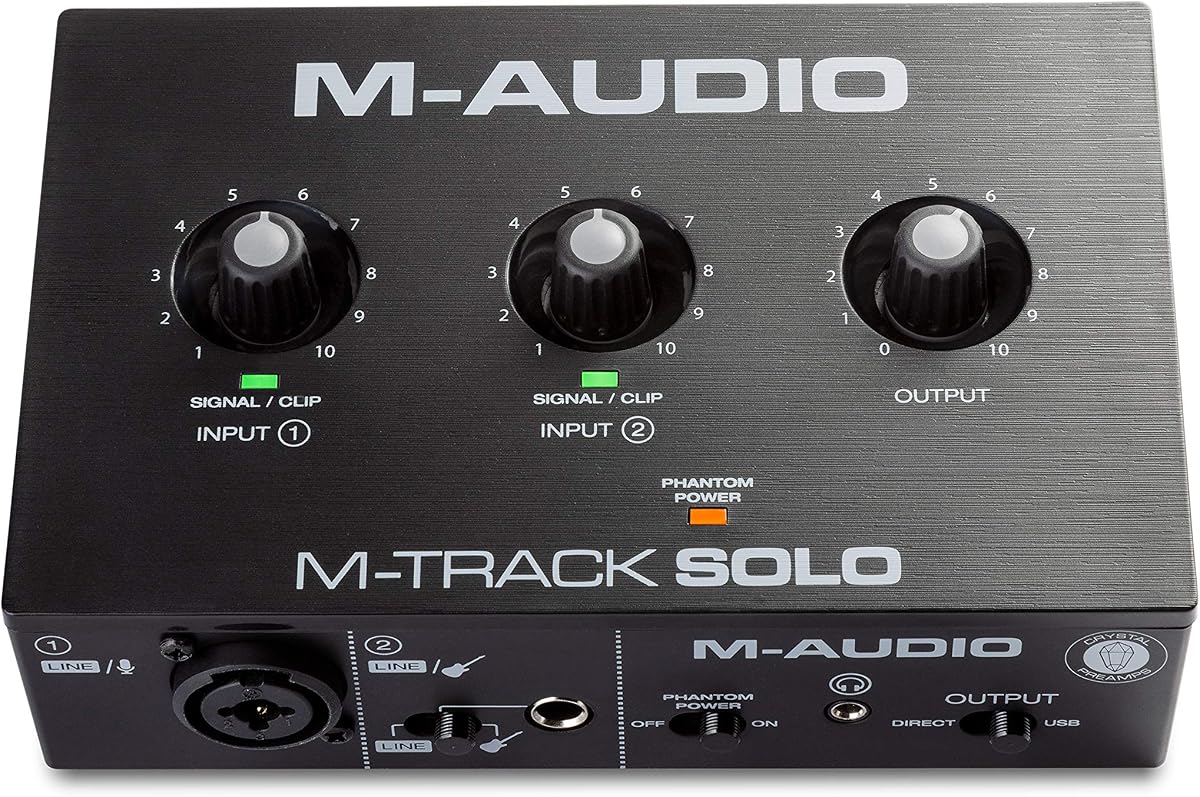
The M-AUDIO M-Track Solo offers a straightforward solution for guitarists who need a reliable single-channel interface. It delivers pristine recording quality with 48kHz resolution and transparent Crystal Preamps that work well with both guitars and microphones.
We may earn a commission when you buy through this link, at no additional cost to you.
Its USB/Direct switch makes monitoring simple, allowing you to toggle between computer audio and direct signal as needed. The RCA outputs connect easily to studio monitors, though a dongle might be required for balanced setups.
Despite its small size, it comes with MPC Beats software, giving you a full production suite to start creating right away. It is an excellent entry point for beginners looking to produce music.
Perfect for bedroom producers, this interface is simple to use and gets the job done. It provides the essentials for recording without overwhelming you with unnecessary controls or features.
Designed for quick setup, you can connect and start recording within seconds, ideal for capturing sudden moments of inspiration.
The bundled MPC Beats software provides all the basic tools needed for arranging, editing, and mixing your guitar tracks immediately.
We may earn a commission when you buy through this link, at no additional cost to you.
The Arturia MiniFuse 1 is a compact powerhouse that offers more than just audio, including dedicated MIDI ports for your controllers. This makes it perfect for guitarists who also use keyboards or drum machines in their setup.
We may earn a commission when you buy through this link, at no additional cost to you.
Its five-year warranty stands out as one of the longest in the industry, reflecting Arturia's commitment to durability. The sound quality is sharp and detailed, ensuring your recordings meet professional standards effortlessly.
You also get a wealth of creative software, including synth sounds and guitar rigs, to expand your sonic palette. The USB hub allows you to connect other peripherals without using extra laptop ports.
This interface is ideal for multi-instrumentalists who want a reliable tool for composition and recording. It balances performance, protection, and creative value better than many competitors.
MIDI input and output ports let you control virtual instruments or hardware gear directly through the interface without extra cables.
Included tools like Analog Lab Intro and Guitar Rig 6 LE offer a professional suite to enhance your productions instantly.
We may earn a commission when you buy through this link, at no additional cost to you.
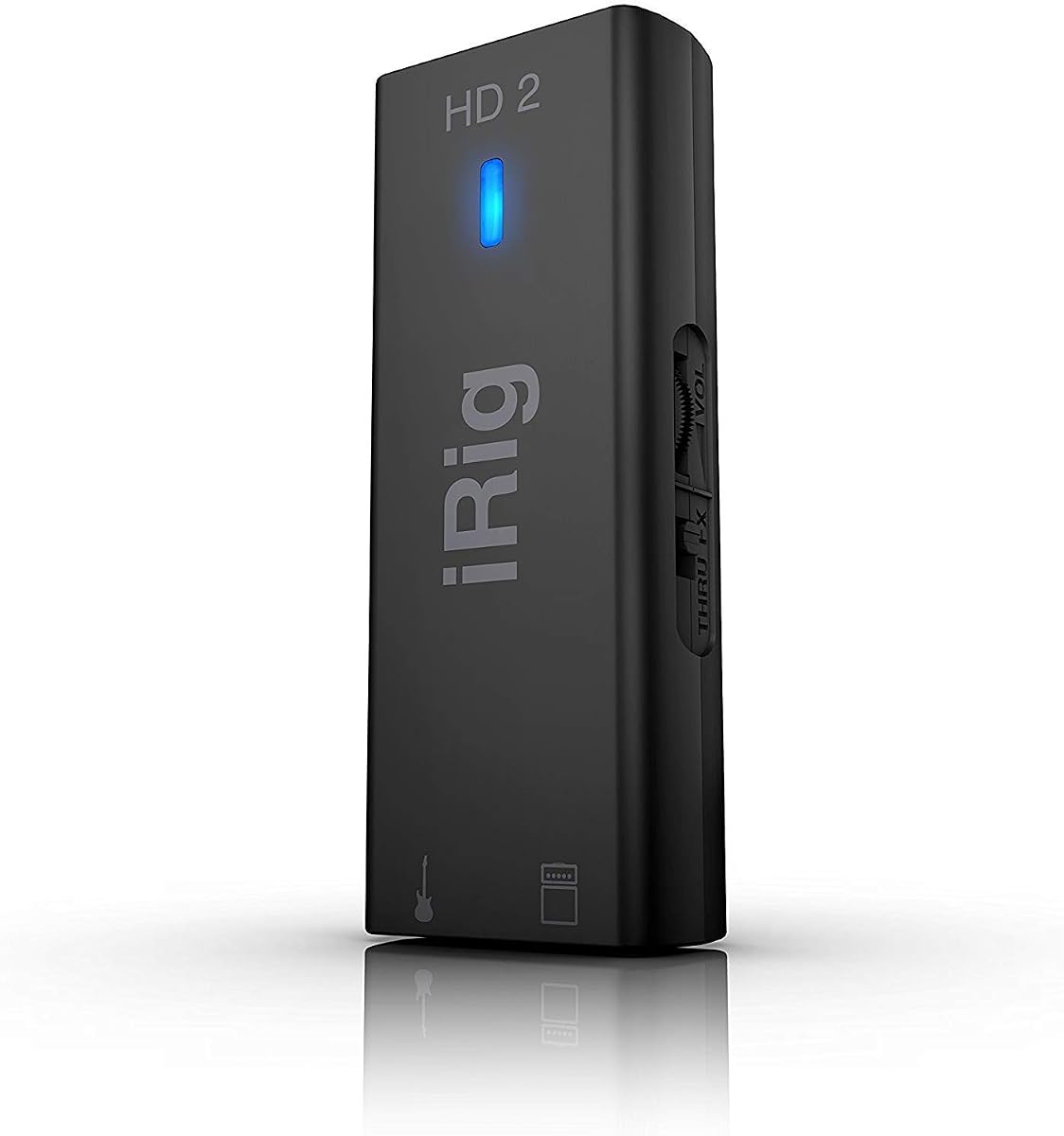
The IK Multimedia iRig HD 2 is renowned for its industry-leading 96kHz sampling rate, capturing every detail of your guitar performance. It works seamlessly with iPhone, iPad, and Mac, making it a top choice for mobile recording professionals.
We may earn a commission when you buy through this link, at no additional cost to you.
Its Amp Out jack lets you connect to external amplifiers without extra accessories, giving you flexibility for both recording and practicing. The FX/Thru switch allows you to integrate effects pedals smoothly into your signal chain.
Headphone monitoring includes level control for silent practice, which is perfect for late-night sessions. The included cables ensure compatibility with older Lightning devices and newer USB-C setups.
This interface is best for mobile musicians who want the highest sound fidelity on their devices. It ensures your recordings are studio-quality regardless of where you record them.
A 96kHz sampling rate provides exceptional audio resolution, ensuring your recordings are free of aliasing and distortion.
With both Lightning and USB-C cables, it supports a wide range of devices, ensuring you can plug in and record on any iPhone or iPad.
We may earn a commission when you buy through this link, at no additional cost to you.
The Fender Quantum HD 2 is a high-end interface designed for professional music production and serious guitarists. It features 32-bit/192kHz converters and MAX-HD preamps that deliver pristine sound quality for vocals and instruments.
We may earn a commission when you buy through this link, at no additional cost to you.
The Auto Gain button simplifies setup by instantly setting optimal recording levels. You also get re-amp outputs and loopback, which are essential for advanced mixing and streaming workflows.
Its ADAT and S/PDIF I/O allow for expansion with more inputs, making it future-proof for growing studios. The included Fender Studio app gives you access to authentic amp models and effects to craft your tone.
This unit is perfect for professionals and audiophiles who need top-tier performance and flexibility. It brings studio-grade features to the desktop for those serious about sound quality.
The Auto Gain button automatically sets input levels, saving time and preventing clipping during your recording sessions.
Re-amp outputs let you re-process dry recordings through amps and pedals, giving you ultimate control over your final tone.
We may earn a commission when you buy through this link, at no additional cost to you.
Selecting the right audio interface involves balancing technical specs with your specific recording needs. This guide breaks down the key factors to help you choose wisely.
Consider how many instruments or microphones you need to record simultaneously. Solo guitarists may only need one input, while those recording full bands require multiple channels.
Always check the number of available inputs before purchasing to ensure the interface meets your future expansion needs.
Modern interfaces use USB-C for faster data transfer and power efficiency. Older models may use USB-A or Lightning which could limit compatibility with new computers.
Ensure the interface has the right cable and port to connect directly to your device without needing adapters.
Higher sample rates like 192kHz capture more audio detail but require more storage and processing power. 48kHz is standard and sufficient for most music projects.
For most guitarists, a balance of quality and file size means 24-bit/48kHz or 24-bit/96kHz is ideal.
The preamp boosts your guitar signal to a usable level. High-quality preamps ensure clean sound without noise or distortion.
Look for interfaces with transparency and gain headroom to capture clean tone even during loud playing.
Direct monitoring allows you to hear your guitar in real-time without latency. This is essential for playing along with tracks comfortably.
Check if the interface has a dedicated hardware switch for zero-latency monitoring to avoid delay during recording.
Many interfaces come with bundled software to start producing immediately. Ensure it works with your operating system and preferred digital audio workstation.
Verify driver support for Mac or PC to avoid installation issues before you start recording.
Prices vary significantly from budget mobile units to premium studio gear. Determine how much you can spend and what features you truly need.
Sometimes a mid-range option offers better value than a basic one if you need extra features like loopback.
If you plan to travel with your interface, durability is key. Look for solid builds and extended warranties to protect your investment.
Check the warranty period and support reputation of the manufacturer before committing to a purchase.
Connect your guitar to the instrument input using a standard 1/4 inch cable and plug the interface into your computer via USB. Make sure to install any necessary drivers so your software recognizes the device immediately.
Adjust the input gain while playing your guitar to keep the level in the green zone. Use headphones to monitor your sound directly through the interface to avoid delay during tracking.
To maintain your interface, avoid exposing it to extreme temperatures or humidity. Regularly check cables for wear and store the unit in a safe place when not in use to ensure longevity.
Most interfaces use a standard 1/4 inch instrument cable which is usually included. Some portable units may require USB-C or lightning adapters depending on your device, so check the package contents before starting.
Yes many of these interfaces support mobile devices with the right connectors. Look for models that include lightning or USB-C cables for seamless iOS connectivity without extra adapters.
Direct monitoring lets you hear your instrument through headphones without latency. This is crucial for playing in time with backing tracks and ensures a comfortable recording experience.
Most modern interfaces are plug and play but may benefit from specific drivers for best performance. Check the manufacturer site for updates if your digital audio workstation does not recognize the device.
Many interfaces include 48V phantom power which is required for condenser microphones. Verify this feature in the specs if you plan to use high-quality vocal mics with your setup.
Bundled software usually provides a great start for beginners. However serious professionals may need to upgrade to full versions for advanced mixing and mastering tools.
We have explored ten excellent audio interfaces that cater to every level of guitarist from mobile creators to studio pros. Each model offers unique strengths that suit different workflows and recording environments.
When making your choice prioritize sound quality and ease of use above all. A reliable interface ensures your talent shines through without technical distractions during the creative process.
Remember that prices and availability may change so verify the current details before buying. We hope this guide helps you find the perfect gear to capture your sound.