
Clarity AltoPlus Amplified Phone
4.0Editor score
53dB amplification support
Loud 100dB ringer
Talking caller ID feature
This guide compares the top captioned telephones for hearing impaired users, evaluating features like real-time captions, amplification, and ease of use to
Finding the right communication tool is essential for seniors and individuals with hearing loss. Captioned telephones bridge the gap by displaying text alongside voice, ensuring no words are missed during conversations with loved ones or critical contacts.
We have reviewed ten leading models based on their caption accuracy, sound amplification, ease of use, and compatibility with hearing aids. This list includes options ranging from budget-friendly corded units to advanced touchscreen systems with internet connectivity.
Each selection below highlights key features, pros, and cons to help you make an informed decision. Prices and availability may change over time, so verify current details before purchasing to ensure you get the best value for your needs.
4.0Editor score

4.3Editor score

4.3Editor score
The following table provides a side-by-side comparison of all ten selected models. Review the specifications to understand how each phone handles amplification, captioning, display size, and additional features like answering machines or speed dial.




The Hamilton CapTel 2400iSPNBT stands out as a top choice for those needing reliable captioning. It features a large touchscreen that displays real-time captions, allowing users to listen and read simultaneously. This dual-input method significantly reduces missed words during conversations.
We may earn a commission when you buy through this link, at no additional cost to you.
Its compatibility with hearing aids and amplified sound up to 40dB ensures that even users with moderate hearing loss can hear clearly. The built-in answering machine also displays voicemail captions, offering a complete communication solution for the home.
While it requires high-speed internet and is only available for US residents, the convenience of no-cost captioning service makes it a valuable tool. The ability to choose between auto and assisted captions adds flexibility for different call types.
This phone is ideal for seniors who want independence in staying connected. If you prioritize clear communication and have internet access, the CapTel 2400i is a highly recommended investment for better connectivity.
The system uses advanced transcription technology to ensure captions appear quickly and accurately during calls.
The touchscreen interface is intuitive, making navigation easy for users with limited dexterity.
We may earn a commission when you buy through this link, at no additional cost to you.
The Geemarc Ampli550 is designed specifically for users who need extra loud audio. It delivers up to 55dB of TrueSound and a staggering 95dB ringer to ensure no call goes unnoticed. This makes it perfect for noisy environments.
We may earn a commission when you buy through this link, at no additional cost to you.
Features like talking caller ID and a backlit LCD screen add convenience. The large keypad and emergency keys provide quick access to important contacts. It is also compatible with various audio accessories like neck loops.
The main trade-off is the lack of captioning services. If your primary need is volume rather than text support, this phone excels. It serves as a robust solution for those with significant hearing loss who rely on sound.
Consider this model if you want a simple, loud phone that is easy to operate. Its reliability and high audio output make it a strong contender for safety and communication at home.
The amplification technology focuses on clarity rather than just volume to prevent distortion.
Three color-coded emergency keys allow instant dialing to critical numbers without searching.
We may earn a commission when you buy through this link, at no additional cost to you.
The Captel MDL 200 offers a straightforward approach to captioned telephony. It is a corded phone designed to work with captioning services, ensuring users can read as they listen. Its simplicity is a key selling point for less tech-savvy individuals.
We may earn a commission when you buy through this link, at no additional cost to you.
This model focuses on the core function of captioning without unnecessary complexity. The large keys and clear display make it easy to dial numbers. It is a cost-effective entry into the world of assisted communication.
However, it lacks the advanced amplification or smart features found in higher-end models. If you need basic captioning on a budget, this fits the bill. It may require external setup for captioning services.
Choose this phone if you want a no-frills device that just works. It is a practical option for households where budget is a concern and basic functionality is sufficient.
The interface is minimized to avoid confusion during outgoing and incoming calls.
We may earn a commission when you buy through this link, at no additional cost to you.
The Clarity AltoPlus is an excellent choice for those seeking amplified sound without a high price tag. It supports up to 53dB amplification and features a loud 100dB ringer to alert users of incoming calls effectively.
We may earn a commission when you buy through this link, at no additional cost to you.
Its ergonomic design helps users with arthritis or limited dexterity. The talking keypad and caller ID make navigation easier. While it does not include captions, it works well with external accessories for those who need them.
The battery backup feature ensures you can still make calls during power outages. This reliability is crucial for emergency preparedness. It balances cost with essential features for hearing assistance.
This phone is best for users needing volume boost on a budget. If you want a reliable landline that cuts through background noise, the AltoPlus is a smart buy.
Tone and volume controls are adjustable to suit specific hearing loss profiles.
We may earn a commission when you buy through this link, at no additional cost to you.
The Serene Innovations SI-CL-65 focuses on high-definition audio for clearer conversations. As a cordless unit, it provides freedom of movement within the home while maintaining audio clarity. This mobility is a plus for active seniors.
We may earn a commission when you buy through this link, at no additional cost to you.
Talking caller ID helps identify callers without needing to look at a screen. The HD sound reduces background noise and makes voices clearer. It is designed to make dialing and listening as seamless as possible.
While it may not have the extreme volume of other models, the audio quality is superior. It is a great fit for those who move around the house and need reliable sound everywhere.
Consider this for users who value mobility alongside sound quality. If you want a phone you can carry from room to room without losing clarity, this is a strong candidate.
HD audio compresses voice frequencies to ensure natural sound reproduction.
We may earn a commission when you buy through this link, at no additional cost to you.
The VTech SN5147 combines a reliable corded base with a cordless handset for maximum flexibility. The corded unit ensures you can make calls even during power outages. The cordless handset provides convenience for daily use.
We may earn a commission when you buy through this link, at no additional cost to you.
Features like photo speed dial allow you to call family with one touch by pressing a picture. The 50dB audio assist boosts volume for those with hearing loss. The built-in answering machine adds utility.
It expands to 4 handsets, which is great for large households. While setup may take time, the versatility pays off. It covers all bases for seniors who need both reliability and convenience.
This system is ideal for families wanting a central communication hub. If you need to manage multiple users or want the security of a landline, this is a comprehensive solution.
Flashing visual ringer alerts ensure you know a call is coming even in noisy rooms.
We may earn a commission when you buy through this link, at no additional cost to you.
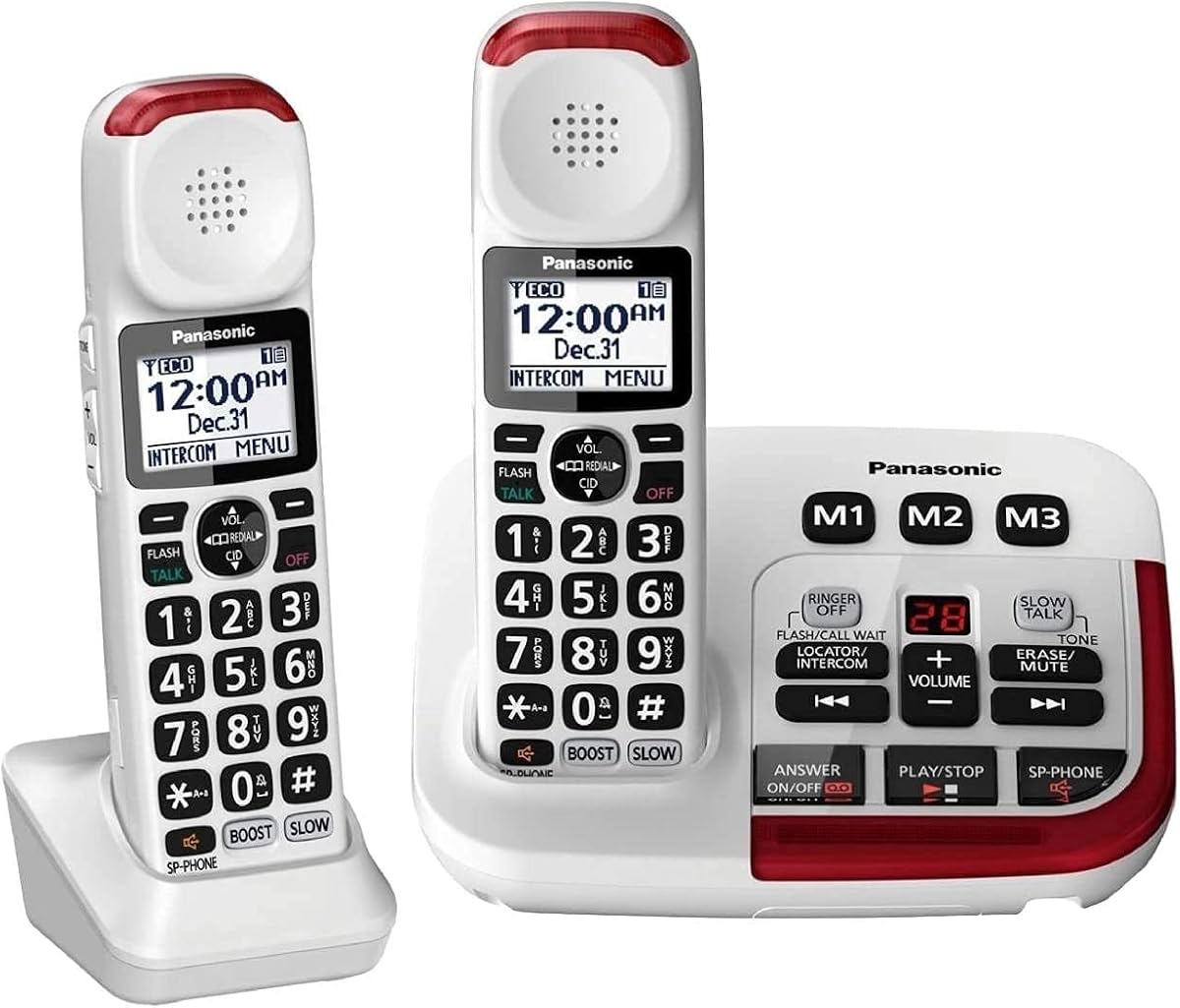
The Panasonic KX-TGM420W is designed to filter out background noise for clearer calls. It includes a 40dB voice volume booster and a unique slow talk feature that decelerates speech. This is particularly helpful for understanding rapid speakers.
We may earn a commission when you buy through this link, at no additional cost to you.
The handset and base both feature bright visual ringers for enhanced visibility. With a 250-number call block and intercom functionality, it serves well for busy homes. It combines technology with practical usability.
While the initial investment is higher, the features justify the cost. The slow talk feature alone is a game-changer for those with cognitive decline. It prioritizes quality of conversation.
This is a top pick for tech-savvy users or those needing cognitive support. If you struggle with noisy environments or fast speech, this model offers advanced tools to help.
Real-time processing slows down the caller's voice to improve comprehension without distorting pitch.
We may earn a commission when you buy through this link, at no additional cost to you.
The SWISSVOICE Big Button Phone features four large photo memory buttons. This allows users to see a picture of the person they are calling instead of a name. It is incredibly helpful for those with memory issues.
We may earn a commission when you buy through this link, at no additional cost to you.
It comes with an additional cordless handset and is hearing aid compatible. The ringer volume can be increased up to 90dB. The interface is designed to minimize confusion and maximize connection.
While user reviews suggest it may lack some advanced features, its simplicity is a strength. For grandparents or elderly parents with dementia, the visual cues are invaluable. It simplifies the act of dialing.
Choose this if visual identification is your top priority. It is a heartwarming gift that bridges the gap between technology and memory, making staying in touch easier.
Photographic memory buttons reduce the cognitive load required to dial numbers.
We may earn a commission when you buy through this link, at no additional cost to you.
This version of the Panasonic KX-TGM420W comes with two handsets and supports expansion to six. It shares the noise reduction and slow talk features of the base model. It is a complete premium solution for multi-line households.
We may earn a commission when you buy through this link, at no additional cost to you.
The high volume booster and clear digital answering machine add to its value. With talk caller ID and keypad, users get all the convenience features one could ask for. It supports a large home network.
The price is higher due to the number of handsets and advanced features. However, if you need multiple stations, it is cost-effective compared to buying them separately. It ensures every room has a clear phone.
This is the ultimate choice for large estates or multi-generational homes. If you want premium audio and flexibility for multiple users, this system delivers superior performance.
The ability to add up to six handsets ensures comprehensive coverage for large homes.
We may earn a commission when you buy through this link, at no additional cost to you.
The Amplified Landline Phone uses a bright LED flash to alert you of incoming calls. Combined with a 100dB ringer, this ensures you never miss a call even if your hearing is poor. It is simple yet effective.
We may earn a commission when you buy through this link, at no additional cost to you.
It includes three picture buttons for speed dialing family members. The 80dB receiver gain ensures voice volume is clear. The user-friendly design makes it a good option for those with arthritis.
While programming the memory keys can be slightly tricky, the result is worth it. Once set up, dialing is as easy as pressing a picture. The flash light adds a layer of safety.
Choose this if you need a low-cost, high-volume option with visual aids. It is a solid backup or primary phone for seniors who need extra help hearing the phone ring.
The LED light provides a silent alert for those who may not hear the ringer.
We may earn a commission when you buy through this link, at no additional cost to you.
Selecting the right phone requires understanding your specific hearing needs and home setup. This guide breaks down the critical factors to consider before making a purchase to ensure the device fits your lifestyle.
Captioned telephones use internet or phone services to display text of spoken words. Ensure the phone supports a service available in your region and that you have a stable internet connection if required. This feature is vital for users who miss words during conversations.
Look for models that offer both auto-captioning and assisted options for better accuracy. Check if the service is free or requires a monthly subscription. Understanding the ongoing costs and technical needs will help you avoid disappointment after purchase.
Different phones offer varying decibel levels of sound amplification. Standard phones provide around 20dB, but those with hearing loss may need 40dB to 53dB. Check the product specifications for the receiver gain to ensure it matches your hearing aid settings.
Higher amplification helps you hear clearly without distortion. If you use hearing aids, look for compatibility features like neck loops or audio jacks. Proper amplification ensures you can hear the speaker even in noisy environments.
Large, backlit displays make reading text and seeing phone numbers easier for those with poor vision. Touchscreens offer modern convenience, but physical buttons may be easier for users with dexterity issues. The clarity of the text is as important as the size.
Choose a device with high contrast and adjustable font sizes. Ensure the interface is intuitive and does not require complex navigation. A simple layout reduces frustration and makes daily use more enjoyable.
A loud ringer is essential to alert you when a call is coming in. Look for ringers that exceed 90dB and include visual alerts like flashing lights. These alerts are crucial for individuals who might not hear the sound.
Flash indicators provide a silent notification method that works well in noisy rooms or for those with profound hearing loss. Combining audio and visual alerts ensures you are never caught off guard by an incoming call.
Hearing aid compatibility (HAC) prevents interference between your phone and your hearing aid. Look for models with T-coil or neck loop jacks to connect your hearing aid directly to the phone. This reduces feedback and improves audio clarity.
Compatibility allows you to keep your hearing aid in place while talking. It ensures the phone works seamlessly with your existing medical devices. This feature is critical for comfort and reducing sound distortion.
Corded phones offer reliability during power outages, which is vital for emergency communication. Cordless models provide mobility around the house, allowing you to answer calls from anywhere. Consider your need for movement versus security.
Hybrid systems with both base and handset options offer the best of both worlds. If you have mobility issues, a base station with a portable handset can be a practical solution. Decide based on how much you move around your home.
Extra features like photo dialing, caller ID, and speed dial can simplify the calling process. These tools help users with memory issues identify contacts quickly. Answering machines with visual displays add convenience for those who miss calls often.
Look for call blocking features to reduce spam calls. Ensure the phone supports backup batteries for power outages. These small details can significantly improve the user experience and safety of the device.
Prices for these phones range significantly based on features. Determine your budget and prioritize must-have features like captioning or amplification. Check the warranty terms to ensure you are covered for repairs.
Investing in a durable model with a solid warranty can save money in the long run. Consider the long-term value of the device versus the initial cost. A reliable phone is a long-term communication tool.
Start by reading the manual carefully to understand all buttons and settings. Connect the phone to a power source and the phone line or internet connection as instructed. Ensure the ringer volume is set high enough for you to hear.
Calibrate the hearing aid compatibility settings if your phone supports it. Use the speed dial or photo dial features to program frequently called numbers. This saves time and reduces stress when you need to call family.
Keep the phone in a dry, cool place to avoid damage. Regularly clean the display and keypad with a soft cloth. If the phone has a backup battery, check it periodically to ensure it works during outages.
Many captioned telephone services are free for residents with certified hearing loss, but the device itself usually has a cost. You may need to register with the service provider to get captions. Always check the specific requirements for your region.
Most modern captioned phones require high-speed internet to display real-time captions accurately. Some older models use phone lines but may have slower speeds. Check the specific product requirements before buying to ensure you have the right setup.
Yes, many models are hearing aid compatible and come with audio jacks or T-coil support. This allows your hearing aid to connect directly to the phone for clear sound. Verify compatibility with your specific hearing aid model.
Corded phones stay in one place and work during power outages, while cordless phones offer mobility around the home. Cordless units require charging but provide convenience. Hybrid options combine both a base station and a portable handset.
Standard phones produce about 20dB of sound, while amplified phones can reach up to 100dB. This makes it much easier for users with hearing loss to hear the ring and the speaker. Choose a model that fits your hearing needs.
Yes, many captioned phones include LED flash lights that blink when a call comes in. These visual alerts ensure you never miss a call even in noisy environments. Look for this feature if you have trouble hearing the ringer.
Choosing the right captioned telephone can significantly improve your communication and quality of life. Whether you prioritize real-time captions, high volume, or simple photo dialing, there is a model suited for your needs.
Prioritize features like captioning accuracy, amplification levels, and ease of use. Ensure the device is compatible with your home setup and hearing aids. A well-chosen phone helps you stay connected to your loved ones without frustration.
Remember that prices and availability may change. Check current deals and verify service requirements before purchasing. Taking the time to compare these models ensures you invest in a device that truly helps.