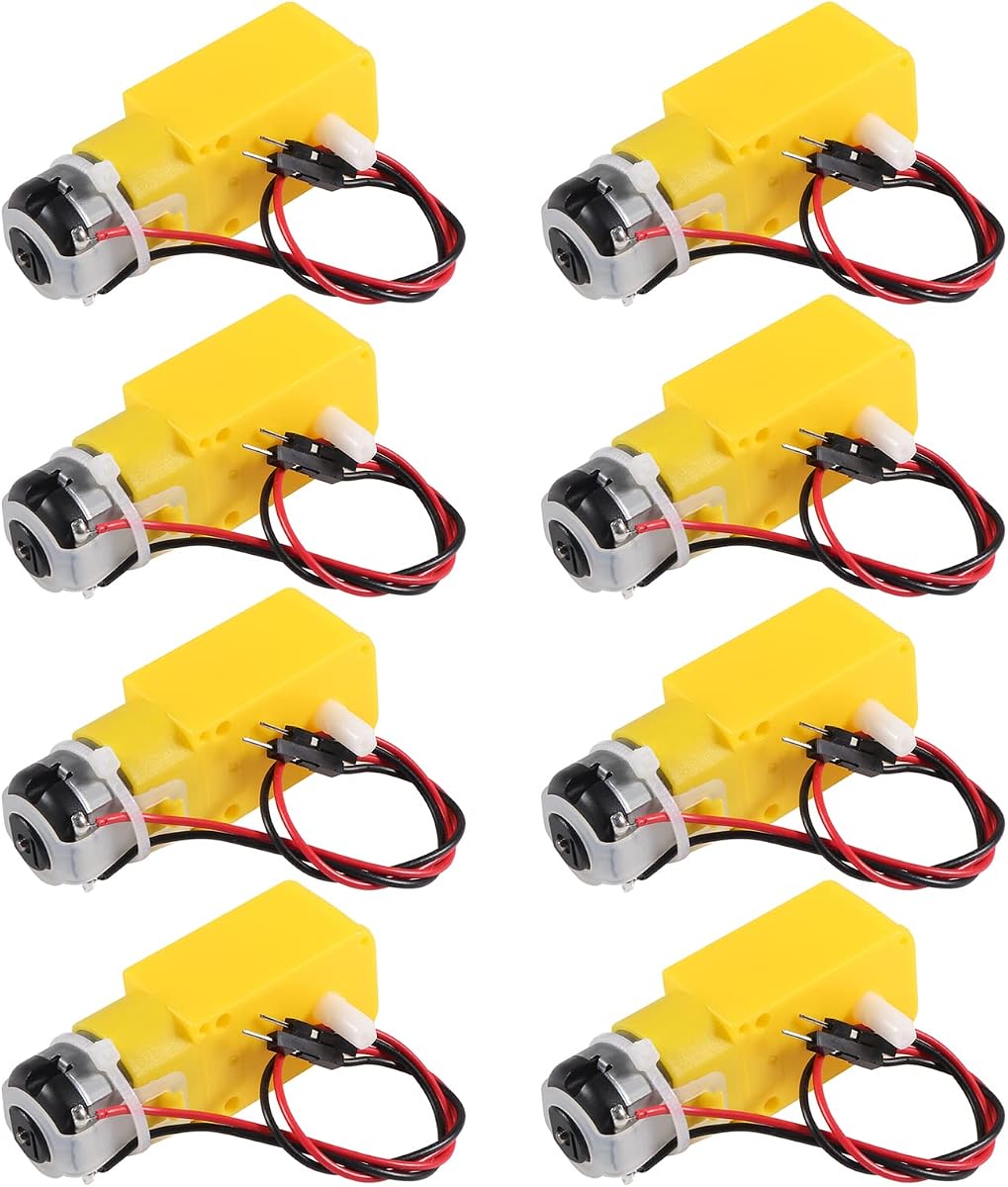
TT Motor Dual DC Gearbox
4.5Editor score
Eight motors four wheels
48 to1 gear ratio
Easy breadboard connection
This guide compares the top DC motors for robots including torque specs and voltage ranges to help hobbyists select reliable components for their builds.
DC motors for robots are essential components that drive movement and precision in automated systems. Choosing the right motor ensures your project achieves optimal speed torque and energy efficiency for reliable operation in diverse applications.
We evaluated ten leading options based on torque output voltage compatibility gear types and user ratings. Each product was analyzed for build quality ease of integration and suitability for common robotics tasks like smart cars or industrial actuators.
Every selection includes detailed specs pros and cons to guide your decision making. Prices may vary over time so verify current listings before purchasing to ensure you get the best value for your specific robotic design needs.
4.5Editor score

4.7Editor score

4.6Editor score
This side-by-side comparison highlights key specifications across all ten motors to help you quickly identify the best fit for your project requirements and constraints.


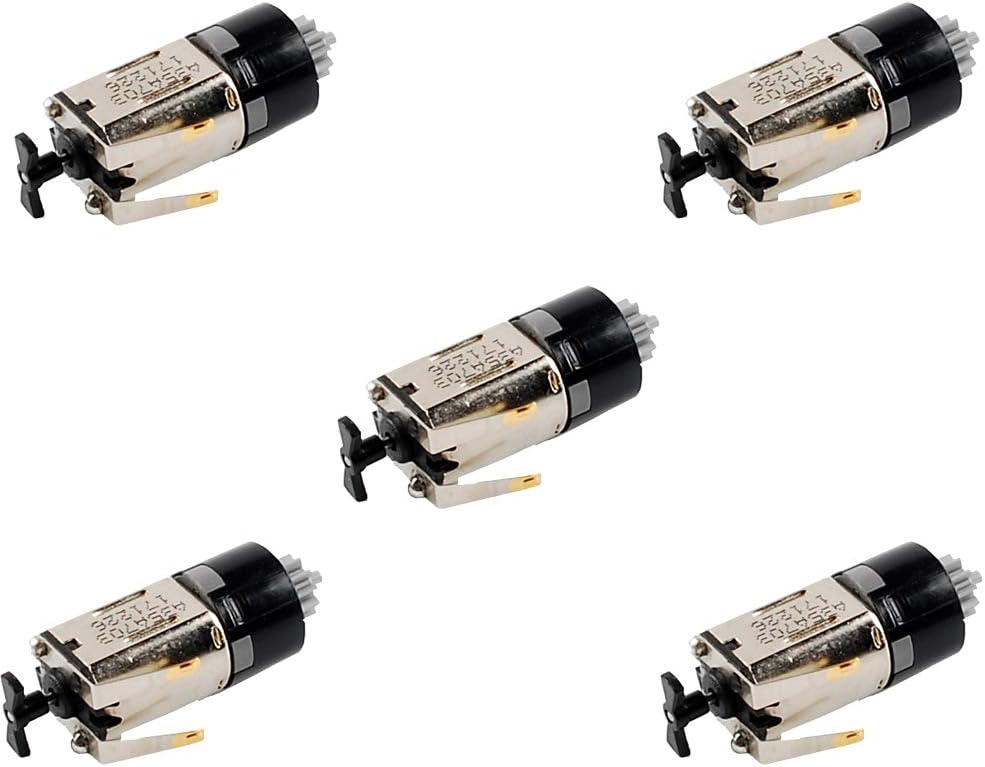

This upgraded TT motor set earns top honors with its all-metal gearbox and integrated 12 PPR Hall encoder. It achieves a 4.7 rating from users who praise its high torque and precise motion control for advanced robotics.
We may earn a commission when you buy through this link, at no additional cost to you.
The 1:90 gear ratio delivers 1.8 kg.cm stall torque ideal for heavy loads. The AB-Phase Hall encoder provides real-time position feedback enabling closed-loop control in smart cars and automated systems.
While it costs more than basic TT motors the reliability and control features justify the investment. You must ensure the encoder receives 3.3V to 5V separately from the motor supply.
Buy this if you need robust performance and closed-loop feedback for competitive or industrial robot builds. Its durability and integration features make it a standout choice for serious hobbyists.
The all-metal gearbox and shaft ensure long service life under high stress. The 1:90 reduction provides significant torque for lifting or driving larger robot chassis.
The 12 PPR encoder outputs two 90-degree quadrature signals for accurate speed and position measurement. This enables advanced PID control for smoother and more predictable robot movement.
We may earn a commission when you buy through this link, at no additional cost to you.
This high-power planet gear motor stands out with 90kg.cm torque and 200W output. It receives a 4.6 rating for reliable performance in demanding applications like rotating tables and automated locking systems.
We may earn a commission when you buy through this link, at no additional cost to you.
The 6 to 22V range and metal planetary gearbox handle heavy loads efficiently. The 8mm D-shaft allows secure connections to pulleys or gears for industrial strength automation projects.
Its size and power require a robust power supply and mounting setup. Ensure your controller can handle the current draw at higher voltages for optimal performance.
Select this for projects needing maximum torque like heavy lifting or slow precise rotations. It is ideal for professional or advanced DIY robots where power is critical.
With 200W power and 90kg.cm torque this motor overcomes high resistance easily. It supports continuous operation in demanding environments without overheating quickly.
The broad 6 to 22V range adapts to various battery packs. Reversing polarity changes rotation direction enabling bidirectional control without complex electronics.
We may earn a commission when you buy through this link, at no additional cost to you.
This value pack offers eight TT motors and four wheels for Arduino projects. It holds a 4.5 rating for easy setup and consistent performance in educational or entry-level smart cars.
We may earn a commission when you buy through this link, at no additional cost to you.
The 1:48 gear ratio provides balanced speed and torque for small chassis. Pre-terminated wires connect directly to breadboards simplifying wiring for beginners without soldering.
These motors suit lightweight projects under moderate load. For heavy or high-duty use consider upgrading to all-metal gear versions for better longevity.
Choose this to equip multiple robots or spare parts affordably. It is perfect for classrooms or hobbyists starting simple mobile robot builds.
Eight motors and four wheels in one package save time sourcing parts. This makes it ideal for group projects or multiple test builds without extra cost.
Wires with 2.54mm male plugs match standard breadboard headers. No soldering required lets you focus on coding and mechanics rather than wiring.
We may earn a commission when you buy through this link, at no additional cost to you.
This 12V motor provides encoder feedback for precise speed control. It earns a 4.4 rating for smooth performance in smart cars and models needing consistent motion without external encoders.
We may earn a commission when you buy through this link, at no additional cost to you.
Pure copper coils and metal gears ensure efficiency and longevity. The included mounting bracket and rubber tires allow quick assembly of balanced dual-drive robot platforms.
Operating only at 12V limits battery flexibility. Ensure your power supply matches this voltage to avoid underperformance or overheating.
Buy this for robots needing integrated encoders at moderate cost. It suits DIY smart cars requiring reliable speed tracking without complex hardware.
The built-in encoder simplifies control loops by providing speed data directly. This reduces wiring complexity compared to adding separate sensors to standard motors.
Mounting brackets and rubber tires come included for fast prototyping. This saves time and money when building dual-motor chassis for line followers.
We may earn a commission when you buy through this link, at no additional cost to you.
This CQRobot motor balances compact size with high torque. It holds a 4.6 rating for precision projects like measuring devices or smart balance cars needing steady power in small spaces.
We may earn a commission when you buy through this link, at no additional cost to you.
The 70:1 ratio delivers up to 27 kg.cm torque at 12V. The D-shaped shaft and mounting bracket ensure secure integration into custom chassis or frames.
You must source wheels separately which adds planning time. Verify shaft diameter compatibility with your chosen wheels before ordering to ensure fit.
Choose this for precision robotics needing reliability and torque without bulk. Its quality suits professional models or advanced hobbyist builds.
The 37mm diameter fits tight enclosures easily. This enables smaller robot designs where space for motors is limited.
Metal gears provide consistent power under load. This ensures stable performance even when the robot encounters uneven terrain or obstacles.
We may earn a commission when you buy through this link, at no additional cost to you.
This 2-pack earns a 5.0 rating for quiet high-torque performance in RC cars. The double-shaft design allows flexible mounting options for gears or wheels on both sides.
We may earn a commission when you buy through this link, at no additional cost to you.
All-metal gears and copper windings ensure durability and efficiency. At 350 RPM it delivers strong pulling power for small electric vehicles or crafts.
The double-shaft adds versatility but requires symmetric mounting. Ensure your design accommodates extra length on both motor ends.
Buy this for RC models needing smooth reliable motion. It is ideal for DIY cars where gear connectivity on both sides is useful.
Output on both ends enables direct gear or wheel connections without couplers. This simplifies mechanical designs and reduces part count.
Pure copper rotors increase torque by 30 percent. This ensures reliable power for demanding tasks without excessive heat buildup.
We may earn a commission when you buy through this link, at no additional cost to you.
These micro N20 motors are perfect for compact projects. They receive a 4.6 rating for quality full metal gearboxes and reliable slow-speed output in tiny robot cars.
We may earn a commission when you buy through this link, at no additional cost to you.
The 3mm D-shaft fits small wheels securely. Operating at 3V to 6V suits microcontrollers and battery packs common in small DIY builds.
Torque is low so keep weight minimal for best results. For larger robots consider higher torque alternatives instead.
Choose this for educational microbots or compact models. Their size and quality make them ideal for constrained space designs.
The mini size fits in tight enclosures or small robots. This enables designs impossible with standard sized motors.
Metal gears reduce wear and noise. This ensures longer life than plastic gear alternatives in similar classes.
We may earn a commission when you buy through this link, at no additional cost to you.
These Type 130 motors spin fast up to 16000 RPM at 3V. They score 4.2 for speed in vibration robots fans or solar-powered hobby builds needing lightweight output.
We may earn a commission when you buy through this link, at no additional cost to you.
The six pack provides spares for experiments. Wire leads simplify quick connections. Breadboards or prototypes without soldering.
They lack torque so use only for light loads. For movement requiring traction these may struggle with heavier chassis.
Buy this for brushbots or fan projects where speed matters. It is an affordable high RPM option for hobby electronics.
High RPM enables quick movement or fan blades. This suits projects where speed is priority over raw torque or.
Six motors in a case ensure backups for experiments. This reduces waste when testing multiple robot designs or prototypes.
We may earn a commission when you buy through this link, at no additional cost to you.
This 3V planetary motor offers efficient low current draw. It gets 4.4 ratings for battery-powered robots needing steady torque without draining cells quickly.
We may earn a commission when you buy through this link, at no additional cost to you.
The planetary reducer boosts torque in a small package. Five per pack gives spares for multi-motor setups like differential drive robots.
Speed is low around 180 RPM at 5V. Ensure this meets your project speed needs before purchasing.
Select this for long runtime battery bots needing small motors. It is great for portable or solar robots where efficiency matters.
Low current draw extends battery life significantly. This suits projects running on small cells where energy conservation is key.
Planetary design offers compact torque. It provides smooth output in a smaller frame than spur gear equivalents.
We may earn a commission when you buy through this link, at no additional cost to you.
This small motor offers high speed for RC projects at low cost. It earns 4.4 for simple replacement in Power Wheels or toy cars needing quick upgrades.
We may earn a commission when you buy through this link, at no additional cost to you.
The 12000 RPM output suits light applications. The 2.3mm shaft fits common hobby gears and pulleys for flexible assembly.
It is best for light duty use. For heavy loads or high torque expect limited durability compared to geared options.
Buy this for budget-friendly RC repairs or experiments. It is a cost effective choice for small hobby builds.
Low price allows easy replacements in toys. This keeps projects affordable without compromising basic motor function.
The 2.3mm shaft suits common hobby parts. This simplifies integration with existing pulleys and gears.
We may earn a commission when you buy through this link, at no additional cost to you.
Selecting the right DC motor requires balancing voltage torque speed and mechanical compatibility to match your robot's design and performance goals.
Match motor voltage to your power supply and controller. Motors rated 3V to 6V suit low power projects while 12V or higher handle heavier loads.
Always verify voltage limits to prevent damage or inefficient operation.
Higher torque is essential for lifting or driving larger chassis. Review stall torque values to ensure the motor can handle expected loads.
Under-sized torque leads to stalling or overheating under load.
Gearboxes trade speed for torque. High ratios like 90:1 provide slow but strong output while low ratios suit fast applications.
Select ratios that balance desired robot speed and load capacity.
D-shaped shafts prevent slipping and improve wheel attachment. Check diameter and length to ensure compatibility with your components.
Correct shafts reduce wear and improve mechanical reliability.
Motors with encoders enable precise speed and position control. They are ideal for closed-loop systems needing accurate motion tracking.
Budget for controller support if you choose motor with encoders.
Metal gears and pure copper coils increase durability and efficiency. Plastic gears may suffice for light use but wear faster.
Invest in better materials for long-term reliability.
Efficient motors reduce heat and extend battery life. Consider current draw especially in battery powered projects.
Lower current consumption improves runtime and reduces cooling needs.
Check dimensions and mounting brackets for fit. Pre-terminated wires simplify connections and reduce assembly time.
Ensure physical size fits your robot chassis before purchasing.
Connect motor leads to a suitable motor driver matching voltage and current ratings. Use polarity marking to ensure correct rotation direction for your project.
Secure mounts with brackets to reduce vibration and misalignment. Proper mounting extends motor life and improves robot stability during operation.
Regularly inspect gears and shafts for wear or debris. Keep motors clean and free from dust to prevent overheating and maintain performance.
Geared motors include a gearbox to increase torque and reduce speed. Ungeared motors offer higher speed with lower torque and are used where speed is prioritized over force.
No microcontrollers cannot supply enough current. Use a motor driver or H-bridge to interface safely and control direction and speed from the microcontroller.
Reverse the polarity of the voltage applied to the motor terminals. Motor drivers with H-bridge circuits enable electronic reversal without rewiring.
Overheating occurs from excessive load wrong voltage or poor airflow. Check torque needs supply voltage and ensure the motor is not overloaded.
Use 11.1V or 12V LiPo or lead acid packs. Always include a regulator or check battery discharge curves to ensure stable voltage.
Encoders are optional for simple open-loop robots. They are necessary for precise navigation and closed-loop speed or position control.
The TT Motor with Encoder 2Pack leads for precision control while the Planet Gear Motor offers unmatched torque for heavy tasks. Beginners benefit from the affordable TT Dual Gearbox pack.
Prioritize voltage and torque requirements matching your chassis size and battery capacity. Choose motors with metal gears and proper shafts for reliable long-term operation.
Review current product listings and user feedback before buying. Prices and stock change frequently so confirm details to secure the best motor for your robot.